

Maddy summaryHR 9274, the SHAWL Act, establishes two new Smithsonian museums: the National Museum of the American Latino and the American Women’s History Museum. It authorizes both museums to be located within the National Mall’s "Reserve" area, overriding prior restrictions, and requires federal agencies managing potential sites to transfer jurisdiction to the Smithsonian after notifying congressional committees. The bill mandates that both museums accurately represent diverse cultures, histories, and viewpoints within Latino and women’s communities through exhibits and programs, requiring input from a broad range of community experts. It also requires the Smithsonian to submit biennial reports to Congress detailing compliance with these representation requirements.
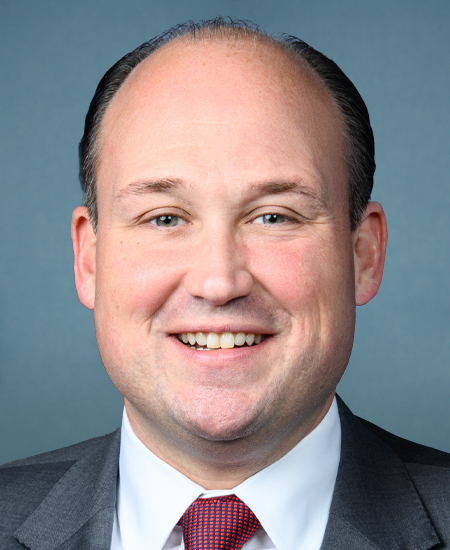
Rep. Nicholas A. Langworthy
Sponsored bills
Freedom from Unfair Gun Taxes Act of 2024 This bill prohibits states or localities from imposing a levy or collecting an excise tax on the sale of a firearm, ammunition, or any part or component thereof, by a manufacture or retailer.
Maddy summaryThis bill defines "sex," "male," and "female" in federal law based on biological characteristics present at birth, specifically referencing reproductive anatomy (e.g., sperm production for males, egg production for females). It mandates that all federal agencies, courts, and laws interpret these terms strictly according to this biological definition, excluding self-identification or gender identity. The bill directly affects how federal programs, regulations, and legal decisions interpret terms like "sex," "gender," and "gender identity" in all federal contexts. Key provisions clarify that "gender" refers only to biological sex differences and explicitly states that gender identity does not override these definitions.
Maddy summaryThis bill imposes sanctions on individuals and entities within the Palestinian Authority (PA) and Palestine Liberation Organization (PLO) that administer or support a system paying terrorists and their families. It targets PA/PLO officials, specific entities like the Commission of Prisoners, and financial institutions processing these payments, requiring property blocking, visa bans, and restrictions on U.S. financial transactions. The sanctions apply if the PA/PLO continues payments described in the Taylor Force Act (2018), which previously mandated ending such payments. The bill terminates if the Secretary of State certifies the PA/PLO has ceased these payments.
Maddy summaryHR 9158 requires U.S. colleges and universities to immediately report to the Student and Exchange Visitor Information System (SEVIS) if a student holding an F-1 or J-1 visa supports a designated foreign terrorist organization. This applies to students on temporary visas for academic or exchange programs who endorse or participate in activities linked to such groups. If verified, the State Department would revoke the student's visa, and Homeland Security would begin removal proceedings. The bill targets specific visa holders directly affected by terrorism-related activity, with no broader policy changes beyond this reporting and enforcement mechanism.
Maddy summaryThis resolution establishes a House task force to investigate the July 13, 2024, attempted assassination of Donald J. Trump in Butler, Pennsylvania. The task force, composed of up to 11 members appointed by the Speaker (with minority leader input), will examine actions by federal, state, local, and private entities related to the incident and must issue a final report with recommendations by December 13, 2024. It has standing committee authority to hold hearings, issue subpoenas, and access relevant records, and will terminate 10 days after submitting its report. The task force directly affects the House of Representatives and the entities under investigation.
Maddy summaryThe 9/11 Responder and Survivor Health Funding Correction Act of 2024 makes several key changes to the World Trade Center Health Program that serves 9/11 responders and survivors. It allows licensed mental health providers (not just physicians) to conduct mental health evaluations for program participants and extends the time period for adding new health conditions from 90 to 180 days. The bill also adjusts enrollment calculations by removing deceased individuals from program counts and provides $2.97 billion in new funding for fiscal year 2024 with a minimum annual funding level of $20 million for 2025. These changes aim to improve access to care while ensuring stable, long-term funding for the program that provides medical services to those affected by the 9/11 attacks.
Maddy summaryThe SAVE Act (HR 8281) requires U.S. citizens to provide documentary proof of citizenship when registering to vote in federal elections. It defines acceptable proof as documents like passports, REAL ID-compliant IDs, military IDs, or birth certificates, and mandates that states verify citizenship using information from government agencies like DHS and Social Security. States must establish processes for voters without required documentation to provide an attestation under penalty of perjury. The law also requires states to remove noncitizens from voter rolls when verified evidence shows they're not citizens. This bill directly affects all applicants registering to vote in federal elections and state election officials who must implement these requirements.
Maddy summaryHR 7053, the Orphan Well Grant Flexibility Act of 2024, modifies a 2005 law to give states more flexibility in using federal grants to plug abandoned oil and gas wells (called "orphaned wells"). It removes the requirement for states to measure methane emissions or conduct specific activities to qualify for these grants, allowing states to choose whether to use pre-plugging data for estimates. The bill also directs the Interior Secretary to commission a National Academies study, within 18 months, examining how plugging these wells affects local economic development, housing, and water quality in communities with many plugged sites. This study will involve input from at least one state per U.S. region and consult with agencies like HUD and the oil and gas compact commission.
Maddy summaryHR 5473, the Promoting Resilient Buildings Act of 2023, amends federal disaster recovery laws to improve how states and local governments use federal funds for building resilience. It updates the hazard mitigation revolving loan program under the Stafford Act to require that states implement building codes, standards, and any state or local amendments to those codes when applying for loans. This change directly affects state and local governments administering federal disaster mitigation funds, ensuring their updated building requirements are considered. The bill streamlines the process by removing outdated language and explicitly including state/local code modifications in the program's requirements.