

Maddy summaryThe GOOD Act requires all federal agencies to publish their non-binding policy guidance documents (like memos, letters, or blog posts) on a single, centralized online repository within 180 days of enactment. It directly affects every federal agency by mandating that all such documents - excluding those already exempt under the Freedom of Information Act - be organized into clear categories on agency websites. Key provisions include designating a central website by the Office of Management Budget Director, maintaining rescinded guidance with clear disclaimers, and ensuring public access to all published guidance. The bill focuses solely on improving transparency in how agencies share interpretive guidance, not on changing policy substance.
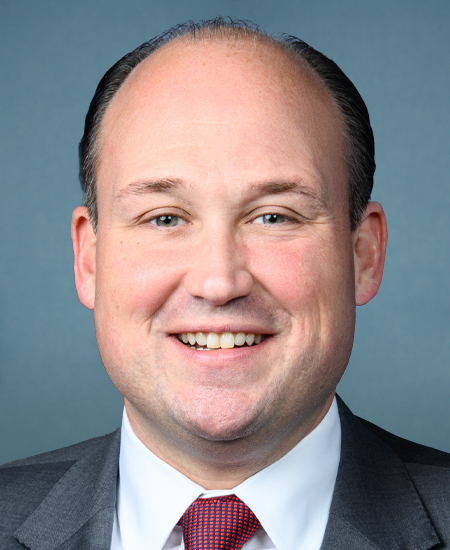
Rep. Nicholas A. Langworthy
Sponsored bills
Maddy summaryHRES 1365 is a non-binding House resolution calling for the immediate termination of Kimberly Cheatle as U.S. Secret Service Director. It directly addresses the Secret Service Director and the executive branch, though it has no legal force to remove her from office. The resolution’s sole provision is a formal request for her termination, reflecting the sponsors' position on her leadership. As a symbolic gesture, it does not change her employment status or require any action from the President or Secret Service.
Maddy summaryHJRES 164 is a congressional resolution seeking to block a rule issued by the Department of Commerce regarding firearms license requirements. It directly targets the rule published in the Federal Register (89 Fed. Reg. 34680), which would have revised licensing procedures for firearms dealers. If passed, the resolution would prevent this rule from taking effect by invoking the congressional disapproval process under federal law. The bill does not create new regulations but aims to halt an existing rule affecting gun license applicants and dealers.
Maddy summaryThis bill prevents the Department of Energy from setting or enforcing new dishwasher energy efficiency standards unless three conditions are met: the standard must be technologically feasible and economically justified, not increase net costs to consumers (including purchase and maintenance), and result in significant energy savings. It directly affects the Department of Energy (as the rulemaker) and dishwasher manufacturers/consumers (as the affected parties). The bill amends existing law to add these requirements to the process for establishing dishwasher energy conservation standards, without changing current efficiency levels. It focuses on procedural barriers to new rules rather than altering actual energy performance.
Maddy summaryHR 8970, the Illegal Offender Registry Act, requires the Department of Homeland Security to create a public online database within 180 days of enactment. The database will list non-citizens without lawful U.S. immigration status who have been convicted of a felony and are physically present in the country, including their name, the felony crime committed, and their residential locality. This affects individuals in this specific immigration and criminal status category by making their personal details publicly accessible online through the DHS website. The bill mandates this database as a new requirement for tracking certain non-citizens with felony convictions.
Maddy summaryHR 8941, the "No Tax on Tips Act," creates a new tax deduction for workers who receive cash tips. It allows employees to deduct the full amount of cash tips they report to their employer (via statements required under tax law) from their taxable income, reducing their overall tax burden. This deduction applies to both itemizing and non-itemizing taxpayers and is exempt from standard limitations on miscellaneous deductions. The provision takes effect for taxable years beginning after December 31, 2024, directly benefiting service industry workers like servers and bartenders who rely on cash tips.
Maddy summaryThis bill (HR 2365, Public Law 118-66) directs the U.S. Department of Health and Human Services (HHS) to establish the National Parkinson’s Project. It requires HHS to create and update a coordinated national plan for preventing, diagnosing, treating, and researching Parkinson’s disease and related disorders (including multiple system atrophy and progressive supranuclear palsy), while coordinating federal research and care efforts across agencies like the NIH, CDC, and VA. The law mandates annual progress assessments, an advisory council with patient advocates and diverse experts, and annual reports to Congress on federal Parkinson’s programs and recommendations for improvement. It affects federal agencies managing Parkinson’s-related programs and aims to improve care coordination and research efficiency for patients and caregivers, with the law sunsetting in 2035.
Maddy summaryHJRES 170 is a resolution seeking congressional disapproval of a federal rule that would have required new housing projects financed by the Department of Housing and Urban Development (HUD) or the Department of Agriculture (USDA) to meet specific energy efficiency standards. The rule, published in April 2024, aimed to set these standards for new construction in federally subsidized housing. If passed, this resolution would block the rule under the Congressional Review Act, making it legally void. It directly affects developers and builders of HUD- and USDA-financed housing by removing the requirement to comply with these energy standards.
Maddy summaryThis bill rescinds unspent funds from specific federal programs. It targets leftover money from pandemic relief (like the CARES Act and American Rescue Plan) and certain infrastructure initiatives (including education stabilization funds and transportation programs like the Congestion Mitigation Program). The rescission is limited to amounts already allocated for Israel, Ukraine, and Indo-Pacific security supplements under recent appropriations. Unspent funds must be returned to the Treasury, with no new spending created.
Maddy summaryThis bill amends the Northern Border Security Review Act to establish a new annual deadline for threat analysis (September 2, 2025, and each year after) and requires the Department of Homeland Security to update its northern border strategy within 90 days of each analysis. It mandates that the Secretary provide a classified briefing to congressional committees within 30 days of each threat analysis and develop performance measures for U.S. Customs and Border Protection's Air and Marine Operations to secure the northern border in air and maritime areas within six months of enactment. The bill directly affects the Department of Homeland Security and congressional committees by imposing specific reporting deadlines and review requirements. These changes focus on improving the frequency and structure of security assessments without altering existing border security operations.