

Maddy summaryHRES 1430 is a procedural resolution that establishes the process for the House of Representatives to consider six specific bills. It sets rules for debate, amendment, and voting on these bills, which cover topics including the CCP Initiative program, pandemic response agreements requiring Senate ratification, funding restrictions on universities with Confucius Institutes, clean vehicle credit changes, foreign investment rules in agriculture, and fiscal year 2025 appropriations. This resolution does not change policy itself but enables the House to move forward with considering these other bills.
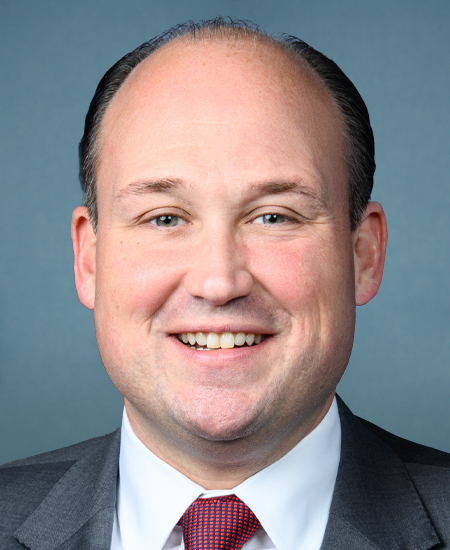
Rep. Nicholas A. Langworthy
Sponsored bills
Grape Research And Protection Expansion Act or the GRAPE Act This bill requires the federal crop insurance program (FCIP) to provide for the research and development of a policy to insure table, wine, and juice grapes against losses due to a freeze event. (The term policy means an insurance policy, plan of insurance, provision of a policy or plan of insurance, and related materials.) The Federal Crop Insurance Corporation, the agency that finances FCIP operations, must make any resulting policy available that meets specified FCIP requirements. The FCIP must also submit a report to Congress on the research and any resulting policy.
Maddy summaryHR 7923, the SOLAR Act, restricts USDA funding for solar energy projects that convert protected farmland. It prohibits financial assistance for projects converting "covered farmland" (agricultural land protected under existing law) for solar use, except for projects converting less than 1 acre or a small percentage of land (max 5 acres), and only if approved by local counties and municipalities. The bill requires applicants for exceptions to develop a plan protecting soil health during construction and operation, and fully restoring the land after the project ends. It also mandates that funds for decommissioning and land restoration must be secured before USDA disburses project funding.
Maddy summaryHR 7667, the MAPLE Act, amends the seniors farmers' market nutrition program to include maple syrup as an eligible product. This change directly affects seniors who receive nutrition benefits through participating farmers' markets, allowing them to purchase maple syrup with their benefits. The bill adds "maple syrup" to the list of qualifying items previously limited to herbs. It makes a specific, narrow adjustment to the program's eligibility rules without altering other program requirements. This is a procedural amendment focused solely on expanding the range of agricultural products covered.
This resolution supports the designation of National FFA Week. It also (1) recognizes the important role of the National FFA Organization (Future Farmers of America) in developing the next generation of globally conscious leaders who will change the world; and (2) celebrates the 10th anniversary of the Give the Gift of Blue program, which has donated more than 17,000 FFA blue jackets to FFA members in need.
Maddy summaryHR 7015, the CAREERS Act, expands federal funding for workforce training programs to better serve rural communities. It modifies eligibility to include career and technical education schools and requires training programs to align with specific rural industry sectors like broadband, healthcare, agriculture, manufacturing, and water services. The bill mandates grantees to report on employment outcomes for participants and addresses rural workforce challenges such as worker displacement and youth migration. This directly affects rural workforce development boards, training providers, and workers in designated rural industries seeking job skills and career pathways.
Maddy summaryThe SAFER at the Border Act prohibits the U.S. Department of Homeland Security from temporarily admitting (paroling) certain individuals at the border. It defines "known terrorists" (those arrested, charged, or convicted for terrorism), "suspected terrorists" (reasonably suspected of terrorism), and "special interest aliens" (those with potential terrorism links based on travel patterns). The bill explicitly bans parole for these individuals, even for humanitarian reasons or public benefit, and also prohibits parole for refugees. Additionally, it allows states to sue the Department of Homeland Security if they suffer financial harm exceeding $100 from the parole of such individuals.
Maddy summaryThis resolution aims to block a rule issued by the National Highway Traffic Safety Administration (NHTSA) that sets new fuel efficiency standards for passenger cars, light trucks (starting in 2027), and heavy-duty pickup trucks/vans (starting in 2030). If passed, it would prevent this specific rule from taking effect by disapproving it under a congressional review process. The rule directly affects vehicle manufacturers by requiring them to meet these updated fuel economy targets for future model years. This is a procedural resolution, not a new law, focused solely on halting the implementation of the existing NHTSA rule.
Maddy summaryThe Safer Skies Act of 2024 requires certain smaller airlines to adopt the federal security screening program currently used by larger carriers. Specifically, it mandates that airlines operating passenger planes with more than 9 seats (that do not use TSA checkpoints, offer individual seats in advance with public schedules) must comply with the Aircraft Operator Standard Security Program within 360 days of enactment. The Transportation Security Administration must revise its rules to enforce this new requirement. This directly affects regional carriers that currently skip standard airport security screenings but serve passengers under these specific operational conditions. The bill extends existing security standards to cover these previously exempt airlines without creating new security protocols.
Maddy summaryThis bill (HR 9255) is a simple naming resolution that renames a specific U.S. Postal Service facility. It designates the post office at 114 John Street in New York, New York, as the "Jack Greenberg Post Office." The bill requires all federal references to the building (in laws, maps, documents, etc.) to use the new name. This is a procedural change affecting only the official name of that single post office location.