

Maddy summaryHRES 332 is a resolution designating April 11-17, 2025, as "Black Maternal Health Week" to raise awareness about maternal health disparities affecting Black women and birthing people in the U.S. It references CDC data showing Black women are 2-3 times more likely to die from pregnancy-related causes than White women and that the U.S. has the highest maternal mortality rate among developed nations. The resolution emphasizes the need to address systemic inequities contributing to these outcomes without creating new laws or funding. It serves as a symbolic recognition to amplify community-led efforts, such as those by the Black Mamas Matter Alliance, rather than implementing policy changes.
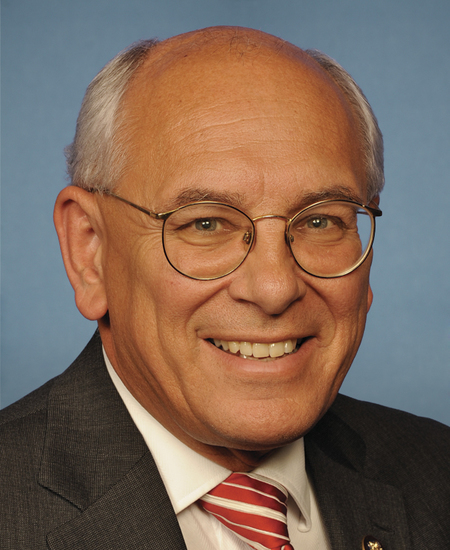
Rep. Paul Tonko
Sponsored bills
Maddy summaryHRES 328 is a non-binding House resolution expressing support for library staff and the essential services libraries provide to communities across the United States. It recognizes libraries as critical infrastructure for community access to information, internet, social services, and safe spaces - especially for underserved groups - and calls for full federal, state, and local funding to sustain these services. The resolution reaffirms the public’s right to free access to information, supports library workers’ rights to unionize and collectively bargain, and defends staff from threats like book bans or intimidation for upholding library missions. It specifically endorses National Library Week and urges protection of civil rights for library workers. (Note: As a procedural resolution, it does not create new law but formally expresses congressional support.)
Maddy summaryHR 2880 provides due process protections for federal employees who are promoted to career positions (in the competitive service, excepted service, or Senior Executive Service) and serve under a probationary period. It requires these employees to be covered by existing federal employment laws, including special protections for Department of Veterans Affairs staff. The bill also allows employees removed from such positions between January 20, 2025, and the law's enactment to be reinstated to their former or equivalent role with backpay. Political appointees are excluded from these protections and reinstatement provisions.
Maddy summaryHR 2895 directs the Secretary of the Interior to study whether Saratoga and Washington Counties in New York should be added to the existing Hudson River Valley National Heritage Area, established by law in 1996. The study will assess the suitability and feasibility of this expansion through consultation with New York state and local historic preservation offices, historical societies, and tourism agencies. This process does not immediately expand the Heritage Area but evaluates if adding these counties aligns with the area's purpose of preserving cultural and natural resources. The bill focuses solely on gathering information for potential future designation, with no current changes to the Heritage Area's boundaries.
Maddy summaryThe Neighborhood Homes Investment Act creates a new tax credit for developers who build or rehabilitate affordable homes in distressed communities. The credit is calculated as the lesser of (1) the difference between development costs and sale price, (2) 40% of development costs, or (3) 32% of the national median home price. It applies only to homes sold to qualified homeowners with income up to 140% of area median income in designated "qualified census tracts" (areas with high poverty rates, low median home values, and low median family income). Developers must meet quality standards and repay the credit if the home is sold within 5 years of the affordable sale. This credit aims to address the "value gap" that prevents housing development in distressed communities by incentivizing affordable home construction and rehabilitation.
Maddy summaryHR 2906, the SERVICE Act, requires federal agencies to submit a detailed report to Congress and the Government Accountability Office (GAO) before reducing their workforce by more than 5% in a fiscal year. The report must analyze financial impacts (including pay, benefits, and replacement costs), mission effects on specific offices/services, and the agency’s analytical basis for the reduction. The GAO must then review the report within 180 days and assess whether it includes all required elements and credible supporting data. This 210-day review period applies to all agencies covered under the law, directly affecting federal workforce planning decisions. The bill aims to ensure transparency and evidence-based decision-making around federal staffing changes.
Maddy summaryThe Pursuing Equity in Mental Health Act (HR 2904) aims to reduce mental health disparities affecting racial and ethnic minority groups by modifying federal grant programs, requiring research on disparities, and funding targeted initiatives. It directs the Health and Human Services Secretary to prioritize grants for community health organizations serving minority populations, mandates a National Institutes of Health study on mental health research gaps in these groups, and establishes training programs for health professionals to address cultural competency in mental health care. The bill also requires a public outreach strategy developed with community input to reduce stigma and improve access to culturally appropriate care, alongside $20 million annually (2026-2031) for this effort. Additional funding includes $150 million yearly for NIH mental health research and $750 million yearly for the National Institute on Minority Health.
Maddy summaryHR 2905, the Ensuring Agency Service Quality Act, requires federal executive agencies and military departments to maintain specific staffing levels as defined by law, overriding prior provisions. It mandates that agency heads notify Congress within seven days if they cannot meet these required staffing levels, providing an explanation for the shortfall. The bill directly affects all executive agencies and military departments covered under Title 5 of the U.S. Code. Its key mechanism is the new staffing requirement combined with the mandatory noncompliance reporting process to Congress.
Maddy summaryThe Vote at Home Act of 2025 requires states to mail ballots to all registered voters for federal elections at least two weeks before Election Day, eliminating unnecessary barriers like notary requirements or excuses for voting by mail. It ensures ballots are accessible to voters with disabilities and provides free postage for all mail-in ballots, making voting more convenient for rural voters, those with disabilities, and people with scheduling conflicts. The bill also expands automatic voter registration through motor vehicle offices, streamlining the process while protecting against errors in registration. These changes aim to increase accessibility and participation in federal elections while reducing election administration costs, with states required to comply for elections beginning in 2026.
Maddy summaryHRES 317 is a non-binding resolution urging the U.S. government to lead global efforts to halt and reverse the nuclear arms race. It calls on the President to pursue negotiations with nuclear-armed states to reduce arsenals, end the U.S. policy allowing first use of nuclear weapons, eliminate immediate launch readiness, stop developing new weapons, and support communities affected by nuclear programs. The resolution emphasizes diplomatic action over military modernization to reduce nuclear risks and prevent catastrophic conflict.