

Maddy summaryThis bill limits how much Social Security can withhold from monthly benefits to recover overpayments. It sets a 10% cap on withholdings for cases without fraud (unless the recipient requests a higher rate), affecting Social Security beneficiaries who received more than they were entitled to. The key provision prevents excessive deductions from monthly payments, ensuring recipients retain at least 90% of their benefit for non-fraudulent overpayments. The law applies to overpayments existing after the bill's effective date.
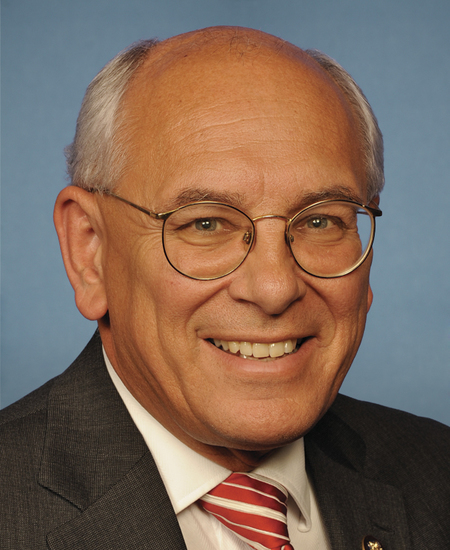
Rep. Paul Tonko
Sponsored bills
Maddy summaryHR 3011 allows the U.S. Postal Service to mail alcoholic beverages under specific conditions, primarily affecting licensed alcohol businesses (like wineries, breweries, and retailers) that register with the USPS. The bill requires shipments to be for personal use only (not resale), include age verification (21+ with ID), and comply with state delivery rules. It explicitly states that state, local, or tribal laws prohibiting alcohol shipments remain in effect and cannot be overridden by this federal law. The USPS must create regulations to implement these rules, and states can sue the USPS for violations under local alcohol laws.
Maddy summaryHR 2998, the Secure E-Waste Export and Recycling Act, prohibits most exports of used electronics (e-waste) like computers, servers, phones, and TVs, except for specific exempted categories. It directly affects businesses exporting used electronics by requiring them to register with the Commerce Secretary, file detailed export information (including consignee details and proof of item condition), and verify that recipients have proper permits for reuse or recycling. Key provisions include banning exports of most e-waste, allowing exemptions only for tested functional devices, destroyed counterfeits, and manufacturer-repaired recalled items, and imposing penalties matching existing export control violations. The bill aims to prevent e-waste from being mislabeled as legitimate exports or ending up as counterfeit goods abroad.
Maddy summaryHRES 341 is a symbolic House resolution expressing support for Earth Day, not a substantive bill. It urges the President to issue an Earth Day proclamation, encourages Americans to address environmental challenges (like climate change and litter), and calls for rejoining the Paris Agreement - though these are non-binding recommendations with no legal force. The resolution references historical environmental legislation (like the Clean Air Act) but does not create new policies, allocate funds, or change regulations. It directly affects no specific group, as it solely serves to affirm environmental values through symbolic recognition. (Note: The document header incorrectly lists "Federal Water Pollution Control Act" as the bill text, but this is a formatting error; the actual resolution is about Earth Day.)
Maddy summaryHRES 340 is a ceremonial resolution recognizing April 2025 as "Community College Month" to celebrate the role of over 1,000 U.S. community colleges. It highlights these institutions' work in providing affordable higher education, workforce training, and economic support - serving 10.2 million students annually and contributing significantly to national economic growth (e.g., generating $898 billion in alumni income in 2020). The resolution emphasizes community colleges' accessibility (average $3,990 tuition for in-district students, 10-mile average student commute) and their role in workforce development across sectors like healthcare and manufacturing. As a non-binding recognition, it does not create new laws or funding.
Maddy summaryThe Hunger-Free Future Act of 2025 amends the SNAP program to require that any update to the thrifty food plan must not increase food insecurity. It mandates that adjustments to the diet cost must continue following existing rules while explicitly ensuring updates do not worsen food insecurity, defined as households lacking adequate food due to insufficient money or resources. This directly affects SNAP beneficiaries by setting a new standard for how the program's cost calculations are reviewed. The bill changes the procedural requirement for SNAP re-evaluations without altering benefit amounts or eligibility rules.
Hot Foods Act of 2025 This bill expands the Supplemental Nutrition Assistance Program (SNAP) to permit the use of SNAP benefits to purchase hot foods or hot food products ready for immediate consumption.
Maddy summaryHR 2396, the Honor Farmer Contracts Act, requires the U.S. Department of Agriculture (USDA) to immediately unfreeze and implement all pre-enactment contracts with farmers and agricultural service entities. The bill mandates rapid payment of all past due amounts owed under these contracts, prohibits canceling signed agreements without a farmer's failure to comply, and requires 60 days' written notice to Congress before closing any local USDA offices like Farm Service Agency or Natural Resources Conservation Service locations. This directly affects farmers and agricultural service providers who have existing contracts with the USDA. The law focuses on ensuring USDA fulfills existing obligations and provides transparency for office closures.
Maddy summaryHR 2357, the Food Secure Strikers Act of 2025, removes a restriction that previously barred workers on strike from receiving Supplemental Nutrition Assistance Program (SNAP) benefits. The bill amends the Food and Nutrition Act of 2008 to eliminate language making workers ineligible for SNAP "as a result of being on strike," ensuring striking workers are not automatically denied food assistance during labor disputes. This change directly affects workers participating in strikes who would otherwise lose access to SNAP benefits. The key mechanism updates the eligibility rules to prevent SNAP ineligibility solely due to strike participation.
Maddy summaryHRES 337 is a symbolic House resolution honoring linemen for their critical role in maintaining power infrastructure and responding to emergencies. It recognizes them as first responders who work in dangerous conditions 24/7 to keep electricity flowing, supporting schools and businesses during storms. The resolution formally supports designating April 18, 2025, as "National Lineman Appreciation Day" to publicly acknowledge their contributions. As a non-binding resolution, it has no direct policy impact or effect on affected individuals.