

Maddy summaryHRES 68 is a symbolic resolution supporting National Catholic Schools Week, which recognizes Catholic schools' educational and community contributions. It does not create new policies or funding but formally endorses the week's goals - highlighting Catholic schools' academic achievements, diverse student enrollment, and role in fostering moral development. The resolution was introduced by multiple House members and passed without opposition, focusing on acknowledgment rather than legislative action. It directly affects Catholic schools by affirming their nationwide impact, though it has no binding effect on federal programs or resources.
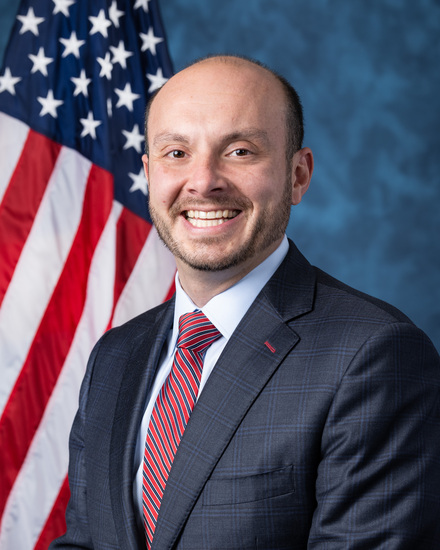
Rep. Andrew R. Garbarino
Sponsored bills
This resolution recognizes and appreciates the dedication and devotion demonstrated by the men and women of law enforcement. It also condemns calls to defund, disband, dismantle, or abolish the police.
Maddy summaryThis bill amends the U.S. Code to expand appeal rights for certain postal employees. It allows non-unionized postal workers in supervisory, professional, technical, clerical, administrative, or managerial roles (covered under the Executive and Administrative Schedule) to directly appeal personnel decisions to the Merit Systems Protection Board (MSPB). Previously, these employees may have lacked this specific appeal path. The change clarifies their eligibility under Section 1005(a)(4)(A)(ii)(I) of Title 39, U.S. Code, ensuring they can seek MSPB review for employment-related disputes.
Maddy summaryThis bill requires the U.S. Postal Service to provide written proposals to supervisors' organizations 60 days before pay/benefit decisions expire or after new collective bargaining agreements are reached. It directly affects postal supervisors and managers covered by collective bargaining agreements regarding their pay policies, schedules, and fringe benefits. The key mechanism establishes clear timelines for negotiations and mandates that any dispute resolution panel must issue a binding final decision within 15 days of receiving input from both parties. This aims to streamline the process for resolving pay and benefits disputes between the Postal Service and supervisory staff organizations.
Maddy summaryThe HEAL Act (HR 603) requires the U.S. Holocaust Memorial Museum Director to study how public elementary and secondary schools teach about the Holocaust and related antisemitism. The study will examine curriculum requirements, teaching methods (like project-based learning), instructional materials, and assessment approaches across states and school districts. It specifically analyzes whether Holocaust education is mandatory, optional, or integrated across subjects, and how schools address antisemitism and genocide prevention. The resulting report, due within 180 days of the study or three years after enactment, will inform Congress but does not change current school policies. This is a data-gathering measure, not a policy mandate.
Maddy summaryThis bill amends the Small Business Investment Act of 1958 to require Small Business Investment Companies (SBICs) licensed by the Small Business Administration to invest at least 15% of their capital in small businesses, up from the previous 5% requirement. The change directly affects SBICs, which are private investment firms that channel capital into small businesses. By raising this minimum investment threshold, the bill aims to increase funding flow to small businesses through these licensed investment vehicles. The provision applies to all new SBIC investments under the amended law.
This concurrent resolution calls on the President to abandon the One China policy in favor of one that recognizes Taiwan as an independent country that is not a part of China. The resolution also urges the President to bolster diplomatic and economic relations between the United States and Taiwan through specified means.
Maddy summaryThis bill requires healthcare providers to give the same medical care to infants born alive during abortions as they would to any newborn, and to immediately admit such infants to a hospital. It mandates reporting of non-compliance to law enforcement and imposes penalties including up to 5 years in prison for violations. Women who undergo abortions can file civil lawsuits seeking money damages for injuries, three times the abortion cost, and punitive damages if care standards are not met. The bill also clarifies that abortion includes intentionally killing an unborn child or terminating pregnancy without specific exceptions (e.g., after viability to preserve life or removing a dead fetus).
Maddy summaryHR 23, the Family and Small Business Taxpayer Protection Act, rescinds unobligated funds previously allocated to the Internal Revenue Service (IRS) under the Inflation Reduction Act of 2022. Specifically, it cancels unused balances from certain IRS funding provisions (sections 10301(1)(A)(ii), (iii), (B), (2), (3), (4), and (5)) of the Inflation Reduction Act. This bill does not change tax laws or directly affect taxpayers; it only redirects unspent IRS budget authority. The provision applies solely to funds that were not obligated by the IRS as of the bill’s enactment date.
Maddy summaryThe Protect Local Farms Act (HR 353) would override state laws that require overtime pay for agricultural workers after fewer than 60 hours in a workweek. It amends federal labor law to preempt any state regulation setting a lower maximum workweek threshold (e.g., 40 or 50 hours) for farm employees. This directly affects agricultural employers and workers in states with stricter overtime rules, such as California or New York, by replacing those state standards with the federal 60-hour threshold. The bill does not change federal overtime rules but ensures states cannot impose more stringent requirements on farm labor.