

Improving the Federal Response to Organized Retail Crime Act of 2023 This bill requires various federal agencies to develop a strategy to improve coordination with state and local law enforcement entities to address organized retail crime. Specifically, the bill requires the Department of Justice, the Department of Homeland Security, the U.S. Postal Service, and other relevant agencies to improve federal information sharing about organized retail crime networks; assist state and local law enforcement in compiling materials and evidence necessary to prosecute organized retail crime; and increase cooperation and information sharing between federal agencies, the retail industry, and retail crime task forces. The bill also requires the Government Accountability Office to report on coordination between the private sector and law enforcement to deter and investigate organized retail crime.
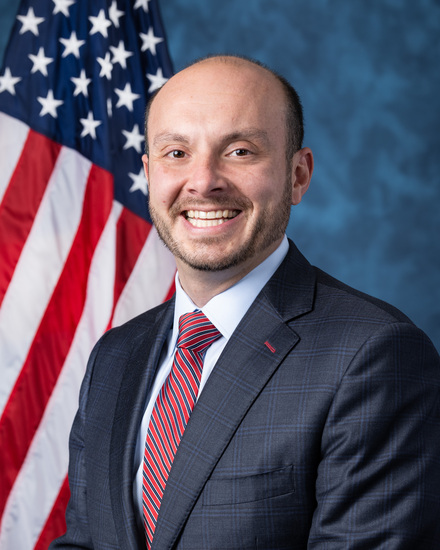
Rep. Andrew R. Garbarino
Sponsored bills
Stop Enabling Repeat Violence and Endangering Our Communities Act or the SERVE Our Communities Act This bill authorizes the Bureau of Justice Assistance to make grants to states and local governments for mentoring, transitional services, and training to help offenders successfully reintegrate back into the community after incarceration. To be eligible for a grant, a state or local government must take steps to prevent repeat offenses by violent offenders and allow a state court or magistrate to consider the danger an individual poses to the community when determining bail or pretrial release conditions.
Qualified Immunity Act of 2023 This bill provides statutory authority for qualified immunity for law enforcement officers in civil cases involving constitutional violations. Current law provides a statutory civil cause of action against state and local government actors (e.g., law enforcement officers) for violations of constitutional rights, also known as Section 1983 lawsuits. The Supreme Court has also found an implied cause of action against federal law enforcement officers in certain situations (e.g., Fourth Amendment violations), also known as Bivens lawsuits. However, under the judicial doctrine of qualified immunity, government officials performing discretionary duties are generally shielded from civil liability, unless their actions violate clearly established rights of which a reasonable person would have known. The bill provides statutory authority for these principles with respect to law enforcement officers. Specifically, under the bill, law enforcement officers are entitled to qualified immunity if (1) at the time of the alleged violation, the constitutional right at issue was not clearly established or the state of the law was not sufficiently clear for every reasonable officer to know that the conduct was unconstitutional; or (2) a court has held that the specific conduct at issue is constitutional. The bill applies to federal, state, and local law enforcement officers. It also specifies that law enforcement agencies and local governments may not be held liable if their officers are entitled to qualified immunity.
Maddy summaryThis concurrent resolution (HCONRES 4) expresses congressional support for U.S. law enforcement agencies and condemns efforts to defund or dismantle them. It does not create new funding or policy changes but formally rejects "misguided and dangerous efforts to defund and dismantle" police departments, citing officer safety concerns and rising fatalities. The resolution specifically references the 2021 increase in law enforcement deaths (458 officers killed) and opposes rhetoric that "vilifies" officers, while emphasizing their role in community safety and crisis response. It is a symbolic statement with no binding legal or financial impact.
Maddy summaryHCONRES 5 is a symbolic Congressional resolution expressing support for law enforcement officers and condemning calls to defund or dismantle local police departments. It highlights officer safety concerns, references rising fatalities in 2021, and argues that reduced funding would harm community safety. The resolution does not alter funding, create new laws, or change policy - it solely states Congress's position through non-binding language. It was introduced in January 2023 by a bipartisan group of House members.
Maddy summaryHJRES 8 proposes a constitutional amendment to permanently set the Supreme Court's size at nine justices. The bill would require any future changes to the Court's composition to follow this specific number, locking in the current structure. It does not alter the existing Court size (which has been nine since 1869) but aims to prevent future adjustments through legislative action. The amendment must be ratified by three-fourths of state legislatures within seven years to take effect. This is a procedural proposal focused on constitutional structure, not a direct policy affecting citizens or programs.
Maddy summaryThis bill would block federal funding to any state or local government that permits non-citizens to vote in federal, state, or local elections. States and localities seeking federal funds must certify they do not allow non-citizen voting as a condition of receiving those funds. The rule applies only to new funding agreements entered into after the bill's enactment, not existing contracts. It directly affects state and local government budgets by tying federal financial assistance to compliance with citizenship requirements for voting.
Faster Payments to Veterans' Survivors Act of 2022 This act modifies policies and procedures related to the payment of benefits under certain life insurance programs administered by the Department of Veterans Affairs (VA). If a primary beneficiary has not made a claim for payment within one year (currently two years) after the death of the insured under the National Service Life Insurance (NSLI) program or the United States Government Life Insurance (USGLI) program, the VA is authorized to make payment to another designated beneficiary as if the primary beneficiary had predeceased the insured. If no designated beneficiary makes a claim within two years (currently four years) after the death of the insured, the VA is authorized to make a payment to a person the VA deems to be equitably entitled to such benefit. The act also modifies the beneficiary designation process under NSLI and USGLI. Specifically, if a person does not designate a beneficiary for insurance, or if the designated beneficiary predeceases the insured person, the VA must determine the beneficiary in a specified order of succession. Additionally, the act requires the VA to improve its processes and procedures with respect to identifying, locating, and paying hard-to-find beneficiaries of life insurance policies, including by improving its website search tools.
Strengthening VA Cybersecurity Act of 2022 or the SVAC Act of 2022 This act requires the Department of Veterans Affairs (VA) to seek to enter into an agreement with a federally funded research and development center to provide a cybersecurity assessment of five high-impact VA information systems and the effectiveness of the VA's information security program and information security management system. The VA must submit a plan to Congress to address the findings of the assessment. The Government Accountability Office must review the assessment and the VA's response to the assessment and report its findings to Congress.
This act designates the facility of the United States Postal Service located at 15 Chestnut Street in Suffern, New York, as the Sergeant Gerald T. "Jerry" Donnellan Post Office.