

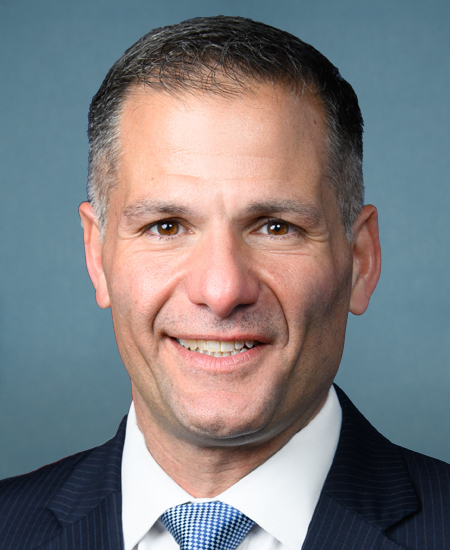
Photo of Marcus J. Molinaro
R United States House · District 19 · New York

Rep. Marcus J. Molinaro

Compare
Total votes
1,210
all sessions
Attendance
96%
45 missed
Near the chamber average
With party
85%
of cast votes
Lower than 92% of chamber peers
Bipartisan score
8%
crosses aisle rarely
Higher than 91% of chamber peers
Sponsored
528
bills & resolutions
Higher than 78% of chamber peers
Committees
0
assignments
528 bills and resolutions

Sponsored bills

Total
528
Primary
48
Co-sponsor
480
This page
528
matching current filters
Primary HR 3104
In committee · United States House · Lead sponsor
Helping Our Heroes Act

Helping Our Heroes Act This bill allows a charitable tax deduction for the service of bona fide volunteer firefighters and emergency medical and rescue personnel. The amount of the deduction is $20 for each hour of service provided by such personnel, limited to 300 hours with respect to any individual in a taxable year. The deduction is available to taxpayers who do not otherwise itemize their deductions.

In committee May 5, 2023 0 co-sponsors
Co-sponsor HR 3125
In committee · United States House · Co-sponsor
To amend the Internal Revenue Code of 1986 to increase the information reporting threshold for slot winnings.

Maddy summaryHR 3125 raises the IRS reporting threshold for slot machine winnings from $1,200 to $5,000 per single play. This means casinos and other businesses operating slot machines no longer need to report winnings under $5,000 to the IRS for individual plays. The $5,000 threshold will automatically adjust annually for inflation starting in 2025. The bill affects casinos' reporting obligations but does not change tax liability for gamblers. It becomes effective for winnings after December 31, 2023.

In committee May 5, 2023 1 co-sponsor
Co-sponsor HR 3074
In committee · United States House · Co-sponsor
Due Process Continuity of Care Act

Maddy summaryThis bill removes a restriction that previously barred people in jail or prison while awaiting trial from receiving Medicaid health benefits. It directly affects individuals in custody pending legal proceedings by allowing states to provide Medicaid coverage for their medical care during this time. The bill also allocates $50 million in planning grants to help states develop systems to enroll these individuals, recruit healthcare providers who can serve them, and establish electronic billing for services provided in correctional facilities or through outpatient care. Key provisions require states to assess healthcare needs, eliminate policy barriers, and create plans to increase provider participation in Medicaid for this population.

In committee May 5, 2023 1 co-sponsor
Co-sponsor HR 3065
In committee · United States House · Co-sponsor
School Access to Naloxone Act of 2023

Maddy summaryThis bill creates federal grants for school districts to provide emergency opioid overdose treatment (like naloxone) in public and private elementary and secondary schools. It requires schools to have trained staff (such as nurses or designated personnel), maintain accessible supplies of the medication, and confirm their state has liability protections for staff using it during an emergency. The law directly affects K-12 schools by mandating specific emergency protocols for opioid overdoses. It does not change state laws but requires schools to verify existing state protections before receiving funds.

In committee May 5, 2023 1 co-sponsor
Co-sponsor HR 2965
In committee · United States House · Co-sponsor
Autism Family Caregivers Act of 2023

Maddy summaryHR 2965, the Autism Family Caregivers Act of 2023, establishes a federal pilot program to provide free or low-cost evidence-based skills training for family caregivers of children (ages 0-9) with autism spectrum disorder or other developmental delays. It authorizes $10 million annually to fund grants for eligible organizations (like nonprofits, health centers, and community groups) to teach caregivers practical strategies for communication, social engagement, daily living skills, and managing challenging behaviors. The program requires local stakeholder committees - including caregivers, healthcare providers, and community representatives - to ensure cultural relevance, and mandates annual evaluations to assess impacts on children's well-being and caregiver support.

In committee May 5, 2023 1 co-sponsor
Co-sponsor HR 2891
In committee · United States House · Co-sponsor
SAFE Banking Act of 2023

Maddy summaryThe SAFE Banking Act of 2023 would protect banks and financial institutions that provide services to state-legal marijuana businesses and hemp-related businesses by preventing federal regulators from taking adverse actions against them solely for serving these businesses. It clarifies that income from state-legal marijuana businesses can be considered for mortgage applications, and requires regulators to update guidance on suspicious activity reports related to these businesses. The bill does not require financial institutions to serve these businesses, but ensures they won't face penalties for doing so. It extends similar protections to hemp-related businesses, which have faced banking challenges despite being federally legal under the 2018 Farm Bill.

In committee May 3, 2023 1 co-sponsor
Co-sponsor HR 3000
In committee · United States House · Co-sponsor
Tax-Free Pell Grant Act

Tax-Free Pell Grant Act This bill excludes from gross income, for income tax purposes, any amount received as a federal Pell Grant. It also expands the definition of qualified tuition and related expenses under the American Opportunity and Lifetime Learning tax credit to include computer or peripheral equipment (up to a maximum of $1,000), child and dependent care expenses, and course materials.

In committee Apr 28, 2023 1 co-sponsor
Co-sponsor HR 3005
In committee · United States House · Co-sponsor
Postal Police Reform Act of 2023

Maddy summaryThe Postal Police Reform Act of 2023 updates federal law to explicitly include "Postal Service police officers" alongside Postal Inspectors as authorized personnel for enforcing regulations on U.S. Postal Service property. It clarifies that the Postmaster General can establish and post rules for protecting postal property, with violations punishable by fines or up to 30 days in jail. This change directly affects USPS police officers (by formalizing their role), the Postmaster General (by expanding regulatory authority), and anyone on postal property who must follow posted rules. The bill makes existing enforcement procedures more explicit without altering penalties or creating new requirements.

In committee Apr 28, 2023 1 co-sponsor
Co-sponsor HR 2955
In committee · United States House · Co-sponsor
Stop Institutional Child Abuse Act

Maddy summaryHR 2955, the Stop Institutional Child Abuse Act, establishes a Federal Work Group to improve data collection and best practices for youth in residential programs (like therapeutic schools, treatment centers, and group homes). The Work Group, composed of federal agency representatives and diverse stakeholders, must develop national data standards, create risk assessment tools, and issue biennial reports with recommendations to enhance safety, reduce restraints, and expand community-based alternatives. It directly affects youth with mental health, substance use, or disability needs placed in these facilities, as well as agencies overseeing them. The bill also mandates a National Academies study to examine funding, oversight, and barriers to community care. These mechanisms aim to standardize data tracking and promote less restrictive, trauma-informed care for youth in residential programs.

In committee Apr 28, 2023 1 co-sponsor
Co-sponsor HR 2949
In committee · United States House · Co-sponsor
PSLF Payment Completion Fairness Act

Maddy summaryThe PSLF Payment Completion Fairness Act (HR 2949) amends the Higher Education Act to clarify eligibility for the Public Service Loan Forgiveness (PSLF) program. It revises Section 455(m)(1)(B) by removing the phrase "is employed" and related text, replacing it with "has been" to focus solely on payment completion. This change ensures borrowers qualify for loan forgiveness once they've made 120 qualifying payments, regardless of current employment status. The bill directly affects federal student loan borrowers working in public service jobs who are seeking loan forgiveness under the PSLF program.

In committee Apr 27, 2023 1 co-sponsor
Showing 431 to 440 of 528 bills
Previous 1 … 43 44 45 … 53 Next