

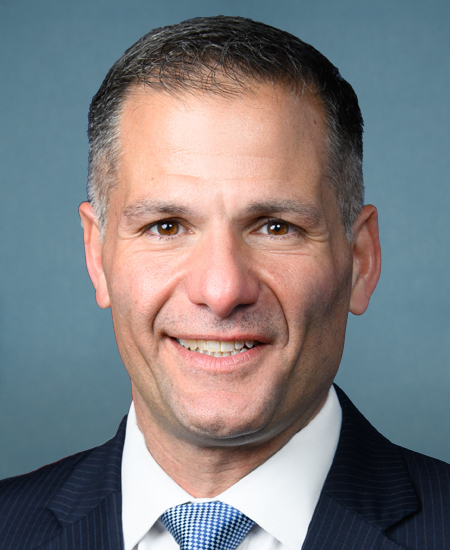
Photo of Marcus J. Molinaro
R United States House · District 19 · New York

Rep. Marcus J. Molinaro

Compare
Total votes
1,210
all sessions
Attendance
96%
45 missed
Near the chamber average
With party
85%
of cast votes
Lower than 92% of chamber peers
Bipartisan score
8%
crosses aisle rarely
Higher than 91% of chamber peers
Sponsored
528
bills & resolutions
Higher than 78% of chamber peers
Committees
0
assignments
528 bills and resolutions

Sponsored bills

Total
528
Primary
48
Co-sponsor
480
This page
528
matching current filters
Co-sponsor HR 3090
In committee · United States House · Co-sponsor
PAST Act of 2023

Maddy summaryThe PAST Act of 2023 amends the Horse Protection Act to ban specific devices used to cause pain (soring) in horses at shows, particularly affecting Tennessee Walking Horses, Racking Horses, and Spotted Saddle Horses. It defines prohibited "action devices" (like boots or chains causing friction) and requires licensed, conflict-free inspectors at events to enforce rules. The bill increases penalties for violations to up to $5,000 fines or 3 years in jail, and mandates longer disqualifications for repeat offenses (180 days → 1 year → 3 years). Horse show organizers, exhibitors, and participants must comply with these new inspection and penalty requirements.

In committee May 12, 2023 1 co-sponsor
Co-sponsor HR 3253
In committee · United States House · Co-sponsor
Reservist Pay Equity Act of 2023

Reservist Pay Equity Act of 202 3 This bill increases the rate of the differential wage payment tax credit from 20% to 50% and requires that the maximum dollar amount of such credit be adjusted for inflation after 2023. The credit is allowed to employers for their employees who are active duty members of the uniformed services.

In committee May 11, 2023 1 co-sponsor
Co-sponsor HR 3240
In committee · United States House · Co-sponsor
To amend title 36, United States Code, to grant a Federal charter to the Veterans Association of Real Estate Professionals.

Maddy summaryHR 3240 grants a federal charter to the Veterans Association of Real Estate Professionals (VAREP), a California-based nonprofit already recognized as a veterans service organization under IRS tax law. The bill establishes specific rules for VAREP, requiring it to maintain its tax-exempt status, submit annual reports to Congress, and follow restrictions like not issuing stock, making political contributions, or claiming government authority. VAREP must continue its existing mission of supporting veterans through financial literacy programs, housing assistance (including foreclosure prevention), workforce development, and suicide awareness initiatives. This charter does not create new government benefits but formally recognizes and regulates this specific organization's federal status.

In committee May 11, 2023 1 co-sponsor
Co-sponsor HR 3238
In committee · United States House · Co-sponsor
Affordable Housing Credit Improvement Act of 2023

Maddy summaryHR 3238, the Affordable Housing Credit Improvement Act of 2023, updates the Low-Income Housing Tax Credit (LIHTC) program to increase the availability of affordable housing across the United States. The bill makes several key changes including increasing state funding formulas, modifying tenant eligibility rules to better serve vulnerable populations (such as domestic violence victims and students), and expanding credit eligibility for projects in rural and Native American communities. Specific provisions raise the credit for properties serving extremely low-income households, clarify rules around tenant income increases, and require housing providers to protect victims of domestic violence. The bill also updates terminology from "low-income" to "affordable" throughout the tax code and enhances program transparency through data sharing requirements. These changes aim to make the LIHTC program more effective at creating and preserving affordable housing units for low-income households nationwide.

In committee May 11, 2023 1 co-sponsor
Co-sponsor HR 1697
In committee · United States House · Co-sponsor
Promoting Precision Agriculture Act of 2023

Maddy summaryHR 1697, the Promoting Precision Agriculture Act of 2023, directs the Secretary of Agriculture to develop voluntary, industry-led standards for precision agriculture equipment within two years. These standards aim to improve compatibility between farm technologies like GPS systems, soil sensors, and data software, helping farmers reduce input waste (such as water, fertilizer, and fuel) and boost efficiency. The bill requires coordination with the FCC and NIST to address cybersecurity, connectivity needs, and the role of 5G/AI in farming, while mandating annual GAO assessments to track adoption and standard effectiveness. It directly affects farmers using precision tools, technology providers, and standards organizations, without imposing new regulations.

In committee May 11, 2023 1 co-sponsor
Co-sponsor HR 3199
In committee · United States House · Co-sponsor
Pay Our Correctional Officers Fairly Act

Maddy summaryThe Pay Our Correctional Officers Fairly Act adjusts pay for Bureau of Prisons employees currently assigned to the "Rest of U.S." pay locality. It directs that if an employee's worksite is within 200 miles of another pay locality, they will be paid according to the nearest locality with the highest pay rate - replacing the lower "Rest of U.S." rate. This applies to correctional officers and other Bureau of Prisons staff, but excludes employees whose worksite is more than 200 miles from any other locality. The change takes effect 180 days after the bill is enacted.

In committee May 10, 2023 1 co-sponsor
Co-sponsor HR 3179
In committee · United States House · Co-sponsor
Supporting Apprenticeship Colleges Act of 2023

Maddy summaryHR 3179, the Supporting Apprenticeship Colleges Act of 2023, provides federal grants to colleges offering construction and manufacturing apprenticeship programs. It funds two key initiatives: (1) Community Outreach Grants to help colleges recruit students and partner with employers, especially in rural areas and for underrepresented groups like first-generation, minority, and nontraditional students; and (2) Student Support Grants to improve retention through services like career advising, mental health resources, and childcare. The bill allocates $5 million annually (2024-2028) for these programs, with each college receiving up to $500,000 per grant. It directly affects apprenticeship colleges, their students, and local employers by expanding access to skilled trades careers.

In committee May 10, 2023 1 co-sponsor
Co-sponsor HRES 376
In committee · United States House · Co-sponsor
Expressing the sense of the House of Representatives that the United States Postal Service should take all appropriate measures to ensure the continuation of door delivery for all business and residential customers.

Maddy summaryHRES 376 is a non-binding resolution expressing the House of Representatives' view that the U.S. Postal Service (USPS) must maintain door-to-door delivery for all residential and business customers. It cites concerns that ending this service would disproportionately affect elderly and disabled individuals who rely on secure, convenient mail access for essential items like medications. The resolution notes that voluntary shifts to centralized pickup in 2013 affected only 0.8% of businesses, highlighting dependence on in-person delivery for security and revenue. It urges USPS to avoid reducing door delivery or requiring customers to pay for it.

In committee May 9, 2023 1 co-sponsor
Co-sponsor HR 2535
In committee · United States House · Co-sponsor
Stronger Engagement for Indian Health Needs Act of 2023

Stronger Engagement for Indian Health Needs Act of 2023 This bill elevates the current position of the Director of the Indian Health Service within the Department of Health and Human Services (HHS) to Assistant Secretary for Indian Health within HHS.

In committee May 8, 2023 1 co-sponsor
Co-sponsor HR 3111
In committee · United States House · Co-sponsor
Words Matter Act of 2023

Maddy summaryThe Words Matter Act of 2023 replaces the outdated term "mental retardation" with "intellectual disability" across numerous federal laws and regulations. It amends over 20 provisions in the U.S. Code, Social Security Act, and other statutes - including healthcare, disability programs, and legal definitions - to update terminology used in areas like nursing home care, criminal justice, and federal grants. The bill explicitly states this is a purely linguistic change, not a policy shift, and does not alter eligibility, benefits, or program requirements for individuals with intellectual disabilities. It affects all federal programs and legal references that previously used the terms "mental retardation," "mentally retarded," or "developmentally disabled."

In committee May 5, 2023 1 co-sponsor
Showing 421 to 430 of 528 bills
Previous 1 … 42 43 44 … 53 Next