

Maddy summaryHR 4335, the VA Loan Informed Disclosure Act of 2023, requires mortgage lenders to include specific information about VA home loan programs in standard mortgage disclosures. The bill amends the National Housing Act to mandate that lenders provide details on VA loans (guaranteed under Title 38) alongside other loan options, including assumptions about prevailing interest rates. This change directly affects lenders processing VA-guaranteed mortgages, ensuring borrowers receive clearer comparisons between VA loans and other financing. The law does not require lenders to verify borrower eligibility for VA loans, only to include the specified disclosure language.
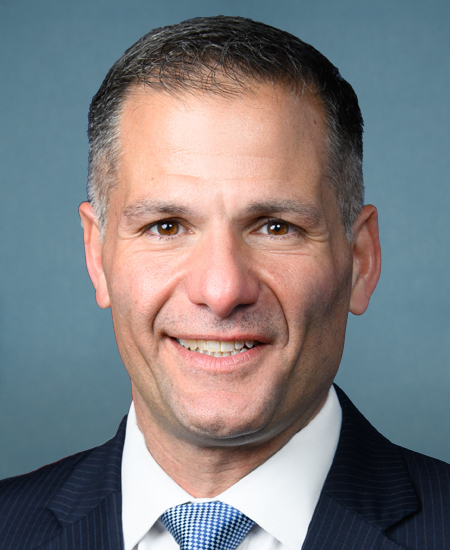
Rep. Marcus J. Molinaro
Sponsored bills
Maddy summaryThe HERO Act establishes a national data system to track suicides among public safety officers, including firefighters, EMTs, police, and telecommunicators, collecting detailed statistics by age, gender, occupation, and employment status (career, volunteer, or retired). It mandates annual reports to Congress and public availability of findings to identify suicide trends and effective interventions. The bill also funds peer-support wellness programs for fire/EMS departments, behavioral health programs for healthcare providers, and resources to train mental health professionals on treating public safety personnel. All data collection and program provisions include strict privacy safeguards to protect confidentiality and prohibit using suicide data to deny survivor benefits.
Maddy summaryThis bill amends the Acer Access and Development Program under the Agricultural Act of 2014 to require the USDA Secretary to solicit input from maple industry stakeholders six months before each grant application cycle. It directly affects maple producers and industry groups by mandating their input on research and education priorities before funding decisions are made. The key provision establishes a formal consultation process for the program, ensuring stakeholder priorities inform grant allocations. The amendment also updates the program’s timeline, changing the reference from 2023 to 2028 for future grant cycles.
Maddy summaryHR 3519, the Hot Foods Act of 2023, amends the Food and Nutrition Act of 2008 to allow Supplemental Nutrition Assistance Program (SNAP) benefits to be used for hot foods or hot food products ready for immediate consumption at participating retailers. This change directly affects SNAP recipients who purchase such hot foods and retailers that sell them. The key provision removes the previous exclusion of hot foods from SNAP eligibility, while adding a limit that no more than 50% of a retailer's total gross sales from SNAP can come from hot foods. The bill clarifies that hot foods can be purchased for home or immediate consumption, aligning SNAP rules with current retail practices for prepared foods.
Maddy summaryThis bill renames the U.S. Food for Peace program after Peter O'Brien and makes key changes to how agricultural aid is delivered. It prohibits using cash, food vouchers, or foreign-sourced food for aid (section 2d), requires that at least 50% of annual funds be used for procuring U.S. agricultural commodities (section 2b(5)), and mandates annual reports to Congress on fund usage (section 2b(6)). These changes directly affect U.S. farmers supplying aid and international recipients of food assistance. The bill focuses on strengthening domestic agricultural exports within the Food for Peace program while adding transparency requirements.
Maddy summaryHRES 521 is a formal resolution censuring Representative Adam Schiff (D-CA, 30th District) for conduct deemed "unbecoming" of a House member. The resolution alleges Schiff repeatedly made false claims about Trump-Russia collusion, including spreading Steele Dossier information and releasing a flawed FISA memo, and misled the public during impeachment proceedings. If passed, it would require Schiff to appear in the House chamber for a public reading of the censure resolution. The resolution also directs the House Ethics Committee to investigate Schiff's "falsehoods and misrepresentations." This is a symbolic procedural action, not a law changing policy or affecting constituents.
Maddy summaryThis bill creates the "Boots to Business Program" to provide entrepreneurship training to military members, veterans (including those discharged under non-dishonorable conditions), and their spouses. It offers online courses, in-person classes, and business planning support to help these individuals start small businesses, with training covering topics like business plans, funding, and local resources. The program, running through 2028, requires collaboration with Veteran Business Outreach Centers and mandates sharing materials with the Departments of Defense, Labor, and Veterans Affairs. Annual reports will track participation, demographics, business startup rates, and program effectiveness.
Maddy summaryHouse Resolution 527 (HRES 527), introduced on June 20, 2023, is a symbolic resolution condemning the rise in antisemitic violence and harassment targeting Jewish Americans. It directly addresses Jewish Americans affected by recorded increases in antisemitic incidents, including attacks on synagogues and hate speech. The resolution calls on all members of Congress to denounce antisemitism, commit to combating it, and advance accurate Holocaust education while countering Holocaust denial. As a non-binding resolution, it expresses congressional solidarity but does not create new laws or funding.
National AI Commission Act This bill establishes a National Artificial Intelligence (AI) Commission in the legislative branch. The purpose of the commission is to support the role of the United States in mitigating the risks of AI through appropriate regulation while also supporting U.S. innovation and opportunities with respect to AI. The commission must be bipartisan, with an equal number of members appointed by the Democratic and Republican parties. Members must have a background in (1) computer science or other technical experience in AI, (2) civil society, (3) industry and workforce, or (4) government. The commission must review the federal government's current approach to AI oversight and regulation and recommend a comprehensive, binding regulatory framework in its final report.
Maddy summaryHR 4091 amends the SUPPORT for Patients and Communities Act to require that reports on substance use disorder data also include information about mental health conditions and mental health treatment services. This change applies to data reported by Medicaid managed care organizations to the Centers for Medicare & Medicaid Services (CMS). The new reporting rules will take effect 12 months after the bill is enacted, expanding existing data collection to cover both substance use and mental health care.