

Closing Loopholes for the Overseas Use and Development of Artificial Intelligence Act or the CLOUD AI Act This bill prohibits certain transactions between a U.S. person (i.e., natural person or entity) and an entity located in China or Macau when the transactions support remote access to certain integrated circuits. Specifically, the bill prohibits a U.S. person (and any foreign branch of a U.S. person) from providing support to an entity in China or Macau for the remote or cloud use of integrated circuits covered by export control classification numbers 3A090 or 4A090. (The classification numbers cover certain high-performance integrated circuits, computers, electronic assemblies, and related components.) The bill directs the Department of Commerce to establish the ban no later than 180 days after the bill is enacted and to issue the regulations necessary to implement the bill.
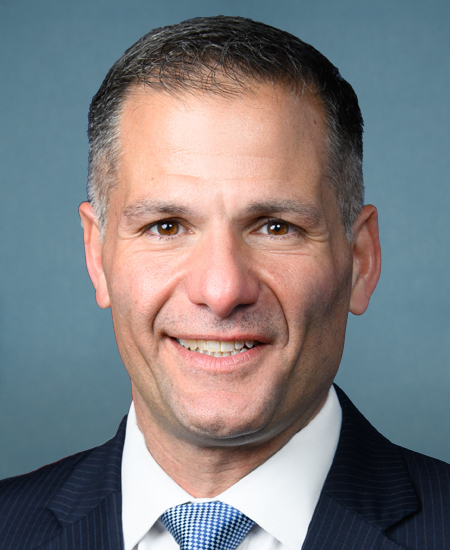
Rep. Marcus J. Molinaro
Sponsored bills
Maddy summaryHRES 580 is a symbolic resolution expressing the House's support for designating "Journeyman Lineworkers Recognition Day." It honors lineworkers who work in hazardous conditions (such as at heights near live wires) and respond to disasters like hurricanes and wildfires, while recognizing their contributions and the legacy of Henry Miller, an early electrical worker who died on the job. The resolution has no legal effect - it solely encourages public recognition and reflection on these workers' service.
Child Care Investment Act of 2023 This bill increases the employer-provided child care tax credit, the amount excludable from gross income for dependent care flexible spending accounts, and makes the household and dependent care tax credit refundable. Among other provisions, the bill increases the rate of the employer-provided child care tax credit from 25% to 50% and increases the maximum credit amount from $150,000 to $500,000. It also increases (1) the pre-tax deduction for dependent care flexible spending accounts from $5,000 to $10,000, plus an additional $2,000 for each eligible dependent; and (2) the rate of the household and dependent care tax credit and makes such credit refundable.
Maddy summaryThe IDEA Full Funding Act (HR 4519) mandates specific annual increases in federal funding for special education programs under the Individuals with Disabilities Education Act (IDEA). It requires Congress to appropriate increasing amounts each fiscal year - from $5.87 billion for 2024 up to $55.53 billion for 2033 - to reach 40% of the national average per-pupil expenditure for public schools by 2033. This directly affects all public school districts serving students with disabilities, as federal IDEA funding supports their special education services. The bill sets fixed dollar amounts or percentage targets (whichever is greater) for each fiscal year, aiming to gradually close the long-standing gap between promised and actual federal funding. It does not alter eligibility for services but mandates higher, phased funding levels to meet the 40% target.
Cybersecurity for Rural Water Systems Act of 2023 This bill amends the Department of Agriculture (USDA) Circuit Rider Program to include cybersecurity technical assistance for rural water systems serving fewer than 10,000 people. Under the program, USDA provides technical assistance to rural water systems that are experiencing day-to-day operational, financial, or managerial issues. Specifically, the program's cybersecurity technical assistance must (1) assess system efficacy in protecting against cyber threats; and (2) implement cybersecurity plans, procedures, and technologies to protect against cyber threats. The bill also reauthorizes the Circuit Rider Program through FY2028.
Pharmaceutical Security Production Act This bill establishes the Commission on Strengthening the Domestic Pharmaceutical Supply Chain. The commission must assess the security and vulnerabilities of the domestic pharmaceutical supply chain in the United States and recommend improvements, including by developing metrics for domestic manufacturing programs, proposing solutions to strengthen the domestic manufacturing workforce, and evaluating ways to support a financial market for domestically manufactured products. The commission terminates four years after the bill is enacted.
Maddy summaryHR 4413, the Stamp Out Lyme Disease Act, authorizes the U.S. Postal Service to sell a special semipostal stamp (where the price exceeds regular postage) to fund Lyme disease research. The extra revenue from stamp sales will be sent directly to the National Institute of Allergy and Infectious Diseases (NIAID) for tick-borne illness research, with funds specifically protected from being used to offset NIAID's regular budget. The stamp would be available for at least six years, beginning one year after the bill becomes law, and the proceeds cannot reduce other federal funding for NIAID. This bill creates a new public funding mechanism for research, directly affecting those who purchase the stamp and the NIAID research programs.
Maddy summaryHR 4498, the Jobs of the Future Act of 2023, requires the U.S. Department of Labor and the National Science Foundation to produce two reports analyzing how artificial intelligence impacts the U.S. workforce. The reports must identify data gaps, industries most affected by AI, vulnerable worker demographics (like specific age, gender, or economic groups), and needed skills for AI-related jobs. They will also propose methods to reskill workers, expand access to AI education, and support community colleges and minority-serving institutions. The bill does not fund programs or change laws but mandates this analysis to inform future workforce policies.
Maddy summaryHR 4453, the "No CCP Financial Apps on Government Devices Act," requires federal agencies to remove financial applications domiciled in China or controlled by Chinese entities (with ≥10% voting interest) from government devices within 180 days of enactment. It directly affects all federal employees and agencies using government-issued devices for work. The bill includes exceptions for law enforcement, national security, and security research activities, requiring agencies to document risk mitigation for any permitted use. Financial regulators may also test covered apps under national security protocols to ensure no sensitive data access.
Maddy summaryThe Project Safe Neighborhoods Reauthorization Act of 2023 extends federal funding for the Project Safe Neighborhoods (PSN) program through fiscal years 2024-2028, replacing its previous authorization period. The bill directly affects state, local, tribal, and federal law enforcement agencies, prosecutors, and community groups that receive PSN grants to reduce violent crime. Key provisions allow grantees to use funds for hiring crime analysts, covering overtime for officers and assistants, purchasing technology for crime reduction, and supporting multi-jurisdictional task forces. It also requires annual reports from the Attorney General detailing fund usage, community outreach, and violent crime statistics (including murder, robbery, and assault) in each program area. The program operates across all 94 U.S. federal judicial districts and territories.