

Naturally Offsetting Emissions by Managing and Implementing Tillage Strategies Act of 2023 or the NO EMITS Act of 2023 This bill directs the Department of Agriculture (USDA) to carry out activities to improve soil health, including to address climate change. Specifically, USDA must establish a program that provides agricultural producers incentives (i.e., payments) for and technical assistance with adopting or maintaining practices or cropping systems to improve soil health, award grants to states and Indian tribes for implementing soil health programs, and use a portion of funds of the Commodity Credit Corporation to provide agricultural producers with technical assistance for mitigating and adapting to climate change. The bill also (1) makes practices related to livestock production eligible for certain competitive grants under the On-Farm Conservation Innovation Trials program, and (2) increases funding for the program.
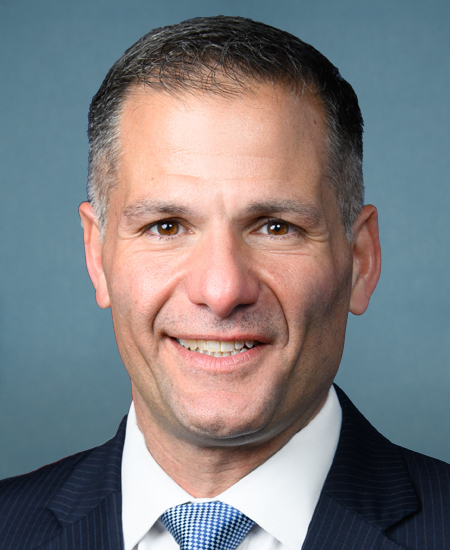
Rep. Marcus J. Molinaro
Sponsored bills
Maddy summaryHR 5545 requires the U.S. Agency for International Development (USAID) to create and implement a Global WASH in Healthcare Facilities Action Plan. The bill targets healthcare facilities in low- and middle-income countries - where 1 in 5 lack basic water access and 79% lack sanitation - to improve water, sanitation, and hygiene services. Key provisions mandate handwashing stations at all care points, safe waste disposal, menstrual health support, and integration with pandemic preparedness. USAID must report annually on progress, spending, and outcomes like reduced infections, using World Health Organization metrics. The law directly affects patients, healthcare workers, and facilities in high-priority countries identified by USAID.
Maddy summaryHR 5517 creates a Capacity Building Grant Program to fund predevelopment activities like planning, community mapping, and feasibility studies, and a HOST (Hospitality and Outdoor-Recreation Supporting Tourism) Grants program to support tourism infrastructure, marketing, and event activities. The bill increases federal funding for Tribal organizations and Native Hawaiian organizations to 100% for HOST grants and sets aside 5% of funding for Tribal communities, 20% for rural areas, and 40% for outdoor recreation. It modifies existing economic development programs to include these new provisions and defines key terms related to tourism and outdoor recreation activities. This legislation directly affects local communities, Tribal organizations, Native Hawaiian organizations, and tourism-related businesses seeking federal economic development support.
Maddy summaryThe Humane Cosmetics Act of 2023 bans cosmetic animal testing in the United States, prohibiting companies from conducting or contracting such testing after its enactment (effective 1 year later). It also bans selling or transporting cosmetics developed using animal testing conducted after that date within U.S. interstate commerce. The law directly affects cosmetic manufacturers, retailers, and suppliers operating in the U.S. market, requiring them to use non-animal testing methods for safety evaluations. Exceptions exist for foreign regulatory requirements or when no alternative testing methods are available for specific ingredients.
Maddy summaryHR 3152, the "Fight CRIME Act," aims to maintain international restrictions on Iran's missile-related activities by requiring diplomatic efforts to extend these restrictions before they expire in October 2023. The bill mandates annual reports detailing U.S. diplomatic strategies, potential impacts of expiration, and measures to deter missile technology transfers to Iran. It establishes sanctions against foreign individuals or entities that knowingly support Iran's missile or drone programs, including asset freezes and visa restrictions. These sanctions apply regardless of whether UN restrictions remain in effect after their expiration, directly affecting foreign entities involved in these activities.
Maddy summaryThis bill requires federal agencies to acquire and maintain opioid overdose reversal kits (like naloxone) and train employees annually on their use, effective within 270 days of enactment. It mandates these actions for all federal agencies - including the Veterans Health Administration - while providing non-mandatory guidance to private employers on similar practices. The law directly affects federal workplaces by making kits and training a requirement, and indirectly encourages private employers to adopt similar safety measures. Key provisions include a 270-day deadline for the Labor Department to issue regulations for federal agencies and non-binding guidance for other employers. The bill focuses on practical workplace safety measures without altering existing federal health or safety laws.
No Fortune for Fraud Act This bill prohibits a Member of the House of Representatives from receiving compensation for a biography, a media appearance, or other creative work if the Member is convicted of specified felony offenses (e.g., bribing public officials or defrauding the government) or offenses related to violations of campaign finance laws. A Member who violates the prohibition shall be subject to a civil penalty of up to $10 million for each violation.
Maddy summaryHR 5355, the Save Our Airports Reporting Act, requires the FAA Administrator to submit biannual progress reports to Congress on developing a national transition plan for fluorine-free firefighting foam at airports. The reports must detail progress in providing certified commercial airports (part 139 airports) and local authorities with EPA guidance on environmental limits, DoD transition plans, decontamination best practices, and implementation timelines. The reporting continues until the FAA notifies Congress the transition plan is complete. This bill directly affects FAA operations, certified airports, and local airport safety oversight authorities. It is a procedural requirement focused on transparency, not a direct policy change to firefighting standards.
Maddy summaryThis bill requires the Bureau of Prisons to develop and implement a strategy for scanning all incoming mail at federal prisons to stop fentanyl and other synthetic drugs from entering facilities. It directs the Bureau to evaluate existing scanning technology within 180 days and submit a detailed plan to Congress within 90 days, including how to provide digital copies of mail to inmates within 24 hours and physical copies within 30 days (if safe). The strategy must achieve 100% mail scanning capacity at all federal prisons, prioritize high-security facilities, and include a budget proposal for fiscal years 2024-2026. This directly affects federal prisons, inmates, and Bureau employees by changing mail processing procedures to enhance safety and reduce staffing burdens from manual mail checks.
Maddy summaryHR 5238 (PLAY Act of 2023) expands the child and dependent care tax credit to cover expenses for youth physical activities (e.g., fitness memberships, activity fees, and equipment) for dependents aged 4-18, with a $1,000 annual limit per taxpayer (or $2,000 for joint returns). It also increases the annual limit for employer-sponsored dependent care flexible spending arrangements from $10,000 to $12,000 for single parents. The bill creates a new $100 million HHS grant program (2024-2025) to fund recreational youth sports programs that reduce family costs, promote physical activity, and avoid competitive/elite sports or facility construction. These provisions directly affect families with children participating in non-competitive physical activities and eligible organizations like local governments or nonprofits.