

Maddy summaryHR 7291, the Broadband Industry Development Act, creates competitive grants under the Workforce Innovation and Opportunity Act to fund training programs preparing workers for careers in the broadband industry. Eligible entities - including community colleges, labor organizations, nonprofits, and industry groups - can apply for grants to offer pre-apprenticeship and apprenticeship programs. Grantees must provide 25% of the grant amount in non-Federal funds (cash or in-kind) and the bill specifies that no new federal funding is authorized - existing Department of Labor appropriations will cover these grants. The law directly affects workers seeking broadband industry jobs and the organizations delivering their training.
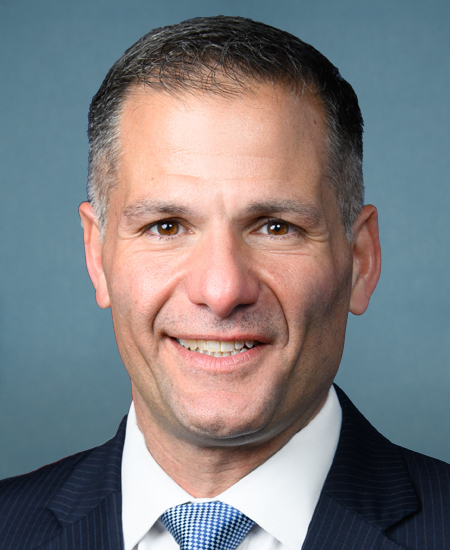
Rep. Marcus J. Molinaro
Sponsored bills
Maddy summaryThis bill temporarily doubles the deduction limit for state and local taxes (SALT) for married couples filing jointly in 2023. It increases the cap from $10,000 to $20,000 for taxpayers with adjusted gross income under $500,000. The change applies only to joint returns filed for taxable years beginning after December 31, 2022, and before January 1, 2024 (i.e., 2023 tax returns). This directly affects married couples in high-tax states who previously faced a "marriage penalty" due to the lower SALT deduction limit.
Maddy summaryHR 7212, the PEER Support Act, establishes a formal profession for peer support specialists - individuals with lived experience in mental health or substance use recovery who provide support to others. It requires the Office of Management and Budget to add "peer support specialist" to the Standard Occupational Classification system by January 2025 and creates a new Office of Recovery within SAMHSA to lead workforce development, share best practices, and support training and certification. The bill also mandates a report analyzing state criminal background check policies for peer specialists, aiming to reduce barriers to certification. This directly affects states implementing certification systems, peer specialists seeking employment, and SAMHSA’s operations in mental health services.
Maddy summaryThis House resolution (HRES 986) condemns New York Governor Hochul's 2025 budget proposal, which the resolution claims reduces school funding for hundreds of schools while allocating billions for migrant services like housing, health care, and transportation. The resolution has no legal effect and serves only as a symbolic statement by House members urging the governor to reverse the budget changes. It does not alter funding or policy but expresses disapproval of the budget's priorities as described in the resolution.
Maddy summaryHR 7108, the Expanding Access to Mental Health Services in Schools Act of 2024, authorizes federal grants to help high-need public schools hire and retain mental health staff. It targets schools that meet specific criteria: being in the top 15% of need (based on student poverty or other metrics) and failing to meet minimum staffing ratios for counselors, psychologists, or social workers. Grants fund recruitment (through salary stipends or loan repayment), retention (via professional development or incentives), and evidence-based mental health services, with grantees required to contribute 25% matching funds and report annually on provider numbers, demographics, and student-to-provider ratios. The program runs through 2029 and requires all services to comply with privacy laws like FERPA.
Maddy summaryHR 7125, the "No Funds for Forced Labor Act," directs the U.S. Treasury to instruct American representatives at international financial institutions (like the World Bank) to oppose loans for projects that use or risk using forced labor, particularly those linked to Xinjiang. It requires these institutions to vet projects for forced labor risks, detail mitigation efforts, and report annually to Congress on implementation. The bill specifically targets projects involving state-owned entities in Xinjiang or those with credible forced labor allegations, as cited in congressional reports. This policy change aims to prevent U.S.-aligned funding from supporting forced labor practices globally.
Reducing Accidents In Locomotives Act or the RAIL Act This bill addresses safety requirements for rail carriers and trains transporting hazardous materials. Specifically, the Department of Transportation (DOT) must issue safety regulations for trains carrying hazardous materials to require that rail carriers (1) provide state emergency response commissioners with advance notice and information about the hazardous materials; (2) reduce blocked rail crossings; and (3) comply with certain requirements regarding train length and weight specifications, track standards, speed restrictions, and response plans. DOT must also establish requirements for wayside defect detectors. These are used by railway systems alongside the tracks to detect defects and failures (e.g., wheel bearing failures). Current federal regulations do not require their use, but federal guidance does address their placement and use. Under the bill, DOT must issue regulations establishing requirements for the installation, repair, testing, maintenance, and operation of wayside defect detectors for each rail carrier operating a train carrying hazardous materials. Further, these regulations must establish requirements that safety placards be able to withstand heat in excess of 180 degrees. The bill also increases the maximum fines DOT may impose on rail carriers for violating safety regulations, requires DOT to update rail car inspection regulations and audit the federal inspection program, phases out certain railroad tank cars by May 1, 2028 (one year sooner than required under current law), expands training for local first responders, and imposes a new fee on certain rail carriers.
Maddy summaryThe Recruiting Families Using Data Act of 2023 requires states to develop annual "family partnership plans" to improve recruitment and retention of foster and adoptive families. These plans must include input from foster/adoptive families, youth with foster care experience, and community providers, and detail how states will use data to address racial disparities, reduce group care placements, and match families to children’s needs. States must annually report on foster family demographics, underutilized placements, challenges faced by caregivers, and progress toward increasing kinship and culturally matched placements. The bill applies to all states receiving federal foster care funding under the Social Security Act, mandating these updates in their annual federal child welfare reports to Congress starting in 2025.
Maddy summaryHR 7056, the Access to Family Building Act, establishes federal rights for individuals to access assisted reproductive technology (ART) like IVF without unreasonable restrictions, directly affecting patients seeking fertility treatments and health care providers offering ART services. The bill prohibits states from imposing limitations on ART that are more burdensome than those for comparable medical procedures, fail to advance safety, or unduly restrict access, while allowing health and safety regulations that are necessary and least restrictive. It creates federal enforcement mechanisms, including lawsuits by the Attorney General or affected individuals to challenge violating state laws, and preempts conflicting state regulations. The bill explicitly preserves state authority over health/safety regulations and does not alter existing state insurance coverage laws for ART.
Maddy summaryHR 6964 limits how much federal transit agencies can pay upfront for new buses. It requires agencies to have a signed contract with the bus manufacturer, pre-approval, and meet existing rules before making any advance payment. The bill specifically caps advance payments at 20% of the total bus purchase price and prohibits payments without the manufacturer providing a financial guarantee. This directly affects transit agencies receiving federal funds for purchasing bus vehicles. The key change is imposing a strict 20% limit on upfront payments to reduce financial risk.