

Maddy summaryThe Great Lakes Mapping Act of 2025 requires the National Oceanic and Atmospheric Administration (NOAA) to create high-resolution maps of all Great Lakes lakebeds by December 31, 2030. This includes collecting detailed depth measurements, cataloging existing data, and managing metadata, with NOAA coordinating with Great Lakes states, regional councils, and existing initiatives. The bill mandates that partial maps be shared publicly during the project and the full map with supporting data must be released within 180 days of completion. It authorizes $50 million annually (2025-2029) for this effort, with funds available through 2030. The law directly affects NOAA and its partners, enabling improved resource management and navigation through publicly accessible lakebed data.
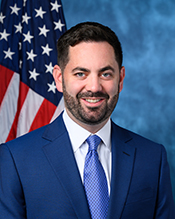
Rep. Michael Lawler
Sponsored bills
Maddy summaryThis bill establishes federal minimum standards for collective bargaining rights for public employees and supervisors. The Federal Labor Relations Authority would determine if state laws provide these rights, and if not, would establish them for affected employees. The bill guarantees public employees the right to form unions, bargain collectively, and engage in concerted activities, while requiring public employers to recognize unions and put agreements in writing. It also prohibits strikes or lockouts that would disrupt emergency services. This would apply to public employees in states that don't meet the federal standards for collective bargaining rights.
Maddy summaryThe Affordable Housing Credit Improvement Act of 2025 would reform the Low-Income Housing Credit program, which provides tax credits to developers of affordable housing. It would increase state allocations based on population with annual cost-of-living adjustments, modify tenant eligibility rules to allow higher income limits for some residents, and add protections for domestic violence victims in housing. The bill would simplify rules for rural and Native American housing projects, clarify credit eligibility requirements, and require greater transparency in program administration. These changes would directly affect developers, property owners, and low-income tenants in housing projects that receive LIHC tax credits.
Maddy summaryHR 2729, the "Carnivals are Real Entertainment Act," creates a new temporary work visa category for carnival and circus workers. It directly affects mobile entertainment providers (like traveling carnivals, circuses, and affiliated food/game concession services) and their workers who perform essential tasks such as transporting, assembling, operating, and maintaining rides and equipment at seasonal fairs and festivals. The bill amends immigration law to define "mobile entertainment workers" as those entering temporarily for functions integral to these operations, subject to labor program requirements similar to other temporary work visas. It requires the Departments of Homeland Security and Labor to issue implementing rules within one year of enactment.
Maddy summaryThe Invest to Protect Act of 2025 establishes a $50 million annual grant program (2027-2031) for local governments employing fewer than 175 law enforcement officers, including counties, municipalities, and Tribal governments. Grants fund de-escalation training, victim-centered domestic violence response training, evidence-based safety training for scenarios like mental health crises or active shooters, recruitment/retention bonuses (capped at 20% of salary), and mental health resources for officers. Recipients must report on program use, disclose bonus amounts publicly, and comply with audits to prevent misuse of funds. The bill aims to improve officer safety and community relations through targeted support for smaller law enforcement agencies.
Maddy summaryHR 586, the Vietnam Veterans Liver Fluke Cancer Study Act, directs the Department of Veterans Affairs (VA) to study cholangiocarcinoma (bile duct cancer) rates among veterans who served in the Vietnam theater during the Vietnam era. Using data from the VA Central Cancer Registry and CDC cancer registries, the study will compare cancer incidence rates between these veterans and the general U.S. population, broken down by age, gender, race, ethnicity, and location. The VA must submit an initial report to Congress within one year of the study’s completion, including findings and recommendations for addressing any identified health issues, with ongoing follow-up reports to track trends. This bill specifically affects Vietnam-era veterans who served in Vietnam, focusing on data collection and analysis rather than immediate policy changes.
Maddy summaryHR 2678, "Ellie’s Law," authorizes $20 million annually from fiscal years 2026 through 2030 for the National Institute of Neurological Disorders and Stroke to conduct new research on unruptured brain aneurysms. The funding specifically aims to study diverse patient populations by age, sex, and race, addressing gaps in current research. This bill directly affects the estimated 6.8 million Americans with unruptured brain aneurysms - particularly women and people of color, who face higher rupture risks - by advancing medical understanding of the condition. The law requires the funds to supplement, not replace, existing research budgets.
Maddy summaryThe Tax Fairness for Workers Act (HR 2671) would allow certain employees to deduct work-related expenses directly from their gross income. Specifically, it creates an above-the-line deduction for union dues (amending IRC Section 62(a)(1)) and reinstates a deduction for other out-of-pocket work costs like uniforms or tools (amending IRC Section 67(g)), effective for 2025 tax years. This directly affects union members and workers with significant job-related expenses who previously could not deduct these costs. The bill removes the prior limitation that barred these deductions, making them available without needing to itemize. The policy change simplifies tax filing for affected workers by treating these expenses as deductible business costs.
Maddy summaryThis bill, HR 2253 (Puppy Protection Act of 2025), sets new federal standards for commercial dog dealers who sell puppies to the public. It requires specific housing sizes based on dog size (e.g., 12-30 square feet per dog), daily exercise in safe outdoor areas, clean water and nutritious food twice daily, and annual veterinary exams including dental checks. The bill also limits breeding frequency (max 2 litters in 25 months), sets age minimums for breeding (18 months for small dogs, 2 years for large dogs), and mandates health screenings to prevent genetic diseases. These requirements apply directly to commercial dealers, with final regulations to be issued within 18 months of enactment.
Maddy summaryThis bill automatically provides dependency and indemnity compensation to survivors of veterans who died by suicide and had a service-connected mental disorder. It directly affects surviving spouses, children, and parents of these veterans. The key change requires the Veterans Affairs Secretary to pay compensation without needing additional proof that the suicide was directly linked to the mental disorder, as long as the veteran had a service-connected mental health condition. This streamlines the process for families who previously faced complex claims.