

Safeguard American Voter Eligibility Act or the SAVE Act This bill requires individuals to provide documentary proof of U.S. citizenship when registering to vote in federal elections. Specifically, the bill prohibits states from accepting and processing an application to register to vote in a federal election unless the applicant presents documentary proof of U.S. citizenship. The bill specifies what documents are considered acceptable proof of U.S. citizenship, such as identification that complies with the REAL ID Act of 2005 that indicates U.S. citizenship. Further, the bill (1) prohibits states from registering an individual to vote in a federal election unless, at the time the individual applies to register to vote, the individual provides documentary proof of U.S. citizenship; and (2) requires states to establish an alternative process under which an applicant may submit other evidence to demonstrate U.S. citizenship. Each state must take affirmative steps on an ongoing basis to ensure that only U.S. citizens are registered to vote, which shall include establishing a program to identify individuals who are not U.S. citizens using information supplied by certain sources. Additionally, states must remove noncitizens from their official lists of eligible voters. The bill allows for a private right of action against an election official who registers an applicant to vote in a federal election who fails to present documentary proof of U.S. citizenship. The bill establishes criminal penalties for certain offenses, including registering an applicant to vote in a federal election who fails to present documentary proof of U.S. citizenship.
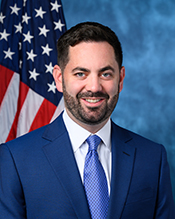
Rep. Michael Lawler
Sponsored bills
Maddy summaryThis bill amends federal law (18 U.S.C. § 1362) to explicitly include broadband internet access service infrastructure under protections against destruction. It directly affects entities that operate or damage broadband facilities, such as internet service providers, infrastructure owners, and individuals who might intentionally destroy such infrastructure. Key changes expand the definition of protected "means of communication" to specifically cover broadband facilities and broaden liability to include "any other person or entity" beyond government-controlled systems. The amendment removes the prior exemption for infrastructure used in "military or civil defense functions," ensuring all broadband infrastructure receives equal legal protection. This strengthens existing penalties for damaging broadband networks but does not create new regulatory requirements for service providers.
Maddy summaryHR 2767, the BRAIN Act, aims to advance brain tumor research and improve patient care by requiring the NIH to create a public database of tumor samples collected with federal funding. It authorizes $50 million annually for a Glioblastoma Therapeutics Network to accelerate treatment development and $10 million for cellular immunotherapy research (including CAR-T therapies) targeting brain tumors. The bill also mandates a national awareness campaign to increase understanding of cancer clinical trials and biomarker testing, plus $5 million yearly for pilot programs studying survivor care coordination and follow-up services. Additionally, it directs the FDA to issue guidance ensuring brain tumor patients can access clinical trials. These provisions directly affect patients, researchers, and healthcare providers focused on brain tumors and rare cancers.
Maddy summaryHR 2783, the Infrastructure Project Acceleration Act, fast-tracks large-scale manufacturing projects in the U.S. by waiving certain federal environmental reviews. It applies to projects costing $1 billion or more that require federal approvals, directly affecting major manufacturers seeking to build or expand facilities. Key provisions exclude projects from needing permits under the Clean Water Act (Section 404) and the Endangered Species Act (Sections 7, 9, 10), modify National Environmental Policy Act (NEPA) reviews to accept equivalent state/Tribal environmental processes, and limit court challenges by barring judicial review of approvals for these projects. The bill aims to speed up manufacturing projects in critical sectors like defense and healthcare while reducing reliance on foreign manufacturing.
Maddy summaryThis bill requires the U.S. government to strengthen measures against hostage-taking by Iran and other adversaries. It mandates annual reports on $6 billion in Iranian funds transferred to Qatar (including certifications on humanitarian use), reviews of past hostage cases in Iran to identify individuals for sanctions, and restrictions on Iranian diplomats at the UN who face terrorism-related sanctions. The bill also directs the Secretary of State to evaluate whether U.S. passports should be invalid for travel to Iran due to detention risks, and requires a strategy to deter hostage-taking by U.S. adversaries. These provisions aim to hold accountable those involved in hostage-taking while protecting U.S. citizens.
Maddy summaryHR 1793, the Veterans Readiness and Employment Transparency Act of 2025, requires the Department of Veterans Affairs (VA) to improve access to vocational rehabilitation services for veterans with service-connected disabilities. The bill mandates a dedicated VA hotline, updated regional office websites with contact details, and requires VA counselors to hold monthly staff Q&A sessions and provide in-person briefings at local educational institutions (or virtual briefings for institutions over 150 miles away). It also requires the VA to submit an annual report detailing the number of veterans requesting, receiving, and being denied extensions to their rehabilitation program periods. These provisions directly affect veterans using VA vocational rehabilitation programs and VA regional office staff responsible for delivering those services.
Maddy summaryHR 1423, the Guard and Reserve GI Bill Parity Act of 2025, expands GI Bill benefits to National Guard members who serve on full-time National Guard duty or active duty under Title 32. It removes previous exclusions by counting this service toward eligibility for Post-9/11 educational benefits, just like active-duty service. The change applies retroactively to service performed since September 11, 2001, allowing affected veterans to access benefits they were previously denied. This policy adjustment directly affects National Guard members who completed qualifying full-time duty since 2001.
Maddy summaryHRES 164 is a procedural resolution that would expedite the House's consideration of H.Res. 23, which proposes permitting parental remote voting by proxy. This resolution would immediately move H.Res. 23 to the floor for debate with only one hour of time equally divided between the Rules Committee chair and ranking minority member. It would prevent amendments to H.Res. 23 and require the "previous question" to be ordered for its adoption. The bill itself does not change voting rules but sets the process for debating the underlying resolution. H.Res. 23, if adopted, would directly affect parents seeking to vote remotely via proxy, but HRES 164 only governs the House's procedural steps.
Maddy summaryHR 2726, the Paula Bohovesky and Joan D’Alessandro Act, amends federal sentencing law to increase mandatory minimum prison time for certain sex crimes against children. It directly affects individuals convicted of sexual offenses where the victim was under 18 years old. The key provision adds a requirement that if the victim is a minor and the crime was a sexual offense, the mandatory minimum sentence becomes 14 years (previously applicable only to other cases). This change applies to federal prosecutions under Title 18, U.S. Code, Section 3559.
Maddy summaryThe PEER Support Act creates a new federal job classification for peer support specialists - individuals with lived experience in mental health or substance use recovery who provide support to others - by 2026. It establishes an Office of Recovery within the Substance Abuse and Mental Health Services Administration (SAMHSA) to lead training, certification, and career development for these specialists, including sharing best practices with states. The bill also requires a federal report analyzing state criminal background check laws for peer support specialists and recommending ways to reduce barriers to certification. This legislation directly affects peer support specialists, state certification programs, and federal agencies managing mental health services.