

Maddy summaryThis bill, HR 2102 (Major Richard Star Act), allows veterans with combat-related disabilities to receive both full military retired pay and veterans' disability compensation simultaneously, without the previous offset that reduced retired pay. It directly affects veterans already eligible for both benefits due to combat-related injuries, removing the requirement that their retired pay be reduced by the disability compensation amount. The key provision amends Title 10 and Title 38 to eliminate the offset rule (sections 5304 and 5305 of Title 38) for these veterans. The change applies to payments starting after the bill’s enactment date, effective for all qualifying veterans. This is a policy change to increase financial support for affected veterans, not a new benefit.
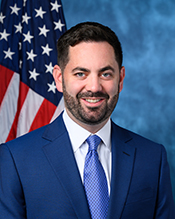
Rep. Michael Lawler
Sponsored bills
Maddy summaryThis bill changes visa rules for foreign graduate students pursuing STEM master's or doctoral degrees in the U.S. It requires these students to apply for admission before starting their program and adds background checks and credential verification to their visa process. It also creates a new pathway to permanent residency for STEM degree holders who secure jobs in their field at median wage levels, and allows students to seek permanent residency while on student visas (dual intent). The bill directly affects international students in STEM fields, U.S. universities, and employers hiring these graduates.
Maddy summaryThe Home Run for Kids Act would create a new federal tax credit allowing parents or guardians to deduct up to $200 per year for equipment costs related to their dependent children's participation in organized sports, games, or hobby programs for kids under 19. The credit applies only to equipment (not fees or other expenses) and phases out for taxpayers with adjusted gross income above $150,000. It would take effect for tax returns filed in 2024 and later.
Maddy summaryHR 2630, the Youth Suicide Prevention Research Act, amends the Advancing Research to Prevent Suicide Act to require the National Science Foundation (NSF) to prioritize research on adverse childhood experiences and toxic stress as key factors in youth suicide prevention. This change directly affects the NSF's research funding decisions under existing law, directing it to include these specific areas in its studies on childhood suicide. The bill does not create new funding but expands the scope of research the NSF must consider when conducting or supporting suicide prevention studies. It aims to strengthen the evidence base for understanding risk factors in youth mental health.
Maddy summaryThe IDEA Full Funding Act (HR 2598) mandates specific annual federal funding levels for the Individuals with Disabilities Education Act (IDEA), directly affecting schools and students with disabilities nationwide. It requires the federal government to appropriate either a fixed dollar amount or a specified percentage (increasing annually from 4.5% to 40%) of a calculated total - based on the number of eligible students and average per-pupil costs - starting in fiscal year 2026 through 2035. The bill sets clear, escalating funding targets, with the higher of two calculated amounts (dollar figure or percentage) becoming available for obligation each fiscal year. This establishes a binding financial commitment to address long-standing underfunding of special education services under IDEA.
Maddy summaryThis bill adjusts Medicare Advantage (MA) payment calculations to address unexpected increases in hospital wage costs. It directly affects MA plans operating in geographic areas where hospital wage indexes rose more than 20% between years, which could lead to underfunded payments. The key mechanism adds a new adjustment requiring Medicare to increase national growth percentages for these areas based on actual wage index changes, calculated using hospital payment data. Related provisions ensure these adjustments don't alter overall payment benchmarks and require transparency by publishing detailed hospital payment data for each area starting in 2026.
Maddy summaryHRES 284 is a symbolic congressional resolution expressing support for National Child Abuse Prevention Month. It does not create new laws or allocate funds but formally recognizes child abuse as preventable and emphasizes the importance of public awareness, prevention programs like Healthy Families America, and support for survivors. The resolution highlights the societal benefits of preventing adverse childhood experiences (ACEs) and urges continued efforts to build resilient families. It directly affects no individuals or entities, as resolutions like this serve only to communicate congressional sentiment.
Maddy summaryHR 2561, the "One Vote One Choice Act," prohibits states from using ranked choice voting (RCV) in elections for federal offices, including U.S. President, Congress, and other federal positions. It amends the Help America Vote Act of 2002 to add a new section explicitly stating that states may not conduct federal elections using RCV systems where voters rank candidates by preference. This policy change directly affects all states that currently permit or plan to implement RCV for federal races, requiring them to switch to traditional single-choice voting methods. The law applies to elections held on or after its enactment date, with no exceptions for federal elections.
Maddy summaryThis bill raises the asset limits for Supplemental Security Income (SSI) recipients to allow more savings without losing benefits. It increases the individual resource limit from $2,250 to $20,000 (in 2025) and the couple limit from $1,500 to $10,000, with automatic annual inflation adjustments based on the Consumer Price Index. These changes directly affect low-income seniors and people with disabilities who rely on SSI. The bill eliminates the current "savings penalty" that previously forced recipients to spend down savings to qualify. The new limits will adjust each year to maintain their real value against inflation.
Maddy summaryThis bill prohibits the District of Columbia from using ranked choice voting in any election, including those for local or federal offices and ballot initiatives. It amends the Help America Vote Act to add a new provision (Section 305) explicitly banning ranked choice voting systems where voters rank candidates by preference. The law directly affects DC voters and election administrators by requiring all District elections to use traditional single-choice voting instead. This is a procedural change to federal election law, not a new voting right or policy.