

Maddy summaryThe PUPP Act of 2025 creates a federal grant program to fund housing for unhoused people who have pets. It authorizes $5 million annually (2026-2030) for grants to local governments, nonprofits, or housing providers to build or retrofit properties that offer both human housing and pet-friendly accommodations. Key requirements include on-site veterinary care for pets (spaying, vaccinations, etc.), supportive services like mental health counseling for residents, and coordination with local animal care providers. This directly affects unhoused individuals with pets - often excluded from standard shelters - and the organizations managing these housing programs.
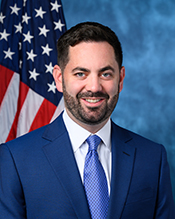
Rep. Michael Lawler
Sponsored bills
Maddy summaryThis bill restricts travel for certain foreign officials attending UN meetings in New York. It requires the Secretary of State to limit movement for: (1) Iranian officials, (2) officials linked to designated Foreign Terrorist Organizations, and (3) officials from UN bodies the U.S. does not join. Specific restrictions include confining travel to direct airport-to-UN routes, limiting stays to one day before/after meetings, and restricting non-member UN officials to a 25-mile radius around the UN headquarters (excluding universities). The bill explicitly excludes U.S. citizens and legal residents from these rules.
Maddy summaryThe Ending Trading and Holdings in Congressional Stocks (ETHICS) Act requires members of Congress, their spouses, and dependent children to divest or place most personal investments in qualified blind trusts. It bans the purchase of covered investments (including stocks, commodities, and derivatives) after enactment, with current members having 90 days to sell existing holdings and new members having 90 days after taking office to divest. The bill includes specific exceptions for diversified mutual funds, Treasury securities, and certain family business investments while establishing enforcement mechanisms including civil penalties of up to 10% of the value of noncompliant holdings. The law applies to members serving terms beginning after January 31, 2023, and mandates public online disclosure of financial information through updated government databases.
Maddy summaryHR 4895, the Afghan Adjustment Act, creates a pathway to conditional permanent resident status for Afghans who supported U.S. military or government efforts in Afghanistan. Eligible individuals include Afghan citizens or nationals who were employed by or on behalf of U.S. forces, worked with U.S. intelligence, or were part of specific Afghan security forces (including members of the Afghanistan National Defense and Security Forces), and who served for at least one year during the relevant period. The bill establishes a 4-year conditional period before full permanent residency is granted, requires security checks similar to refugee processing, prohibits fees for processing applications, and creates a referral system for processing applications from Afghans still in Afghanistan. It also provides eligibility for benefits available to refugees and establishes an Interagency Task Force to oversee implementation.
Maddy summaryThe Warehouse Worker Protection Act establishes new requirements for employers in warehouse facilities to protect workers from harmful quotas and workplace surveillance practices. It requires employers to provide written descriptions of quotas and workplace monitoring to workers, prohibits quotas that interfere with breaks, safety compliance, or anti-discrimination rights, and gives workers the right to access their work speed data. The bill creates a Fairness and Transparency Office within the Department of Labor to enforce these requirements and investigate violations, with enforcement also involving the Federal Trade Commission. Employers with more than 200 employees at covered warehouse facilities (including distribution centers, couriers, and warehouses) are directly affected by these new requirements, which include new protections against retaliation for workers who exercise these rights.
Maddy summaryHR 4891, the Secure Our Embassies Act, requires the State Department to improve coordination among security personnel at overseas diplomatic posts. It directly affects Regional Security Officers (RSOs), Diplomatic Technology Officers (DTOs), and others by mandating role-specific counterintelligence and security training to address cyber threats, insider risks, and regional security challenges. The bill also requires the Secretary of State to submit a report within 180 days detailing current training standards, planned improvements, and resource needs for implementing these security protocols. This focuses on concrete policy changes to enhance embassy security through better training and interdepartmental collaboration.
Maddy summaryHR 4831 (ENFORCE Act) strengthens federal enforcement against specific child exploitation crimes. It removes the statute of limitations for offenses involving obscene visual representations of child sexual abuse, adds these crimes to sex offender registration requirements, and mandates courts to handle related evidence in ways that protect victims (e.g., keeping depictions with the government or court). The bill also creates a presumption for pretrial detention and extended supervised release for violations of these specific provisions. These changes directly affect individuals convicted under sections 1466A, 2252A, and related child exploitation laws, as well as federal courts handling such cases.
Maddy summaryThe Advancing Research on Agricultural Soil Health Act of 2025 requires the U.S. Department of Agriculture to develop a standardized method for measuring soil carbon within 270 days of enactment. It establishes a national Soil Carbon Inventory and Analysis Network to track soil carbon changes across agricultural lands and create predictive models showing how farming practices affect carbon sequestration. The bill includes provisions for voluntary reporting of soil carbon data by farmers and ranchers, with technical assistance provided in multiple languages and formats. It authorizes $2 million annually for methodology development and $17.5 million for the Soil Carbon Inventory and Analysis Network, with requirements for stakeholder consultation including socially disadvantaged farmers and ranchers.
Maddy summaryThis bill creates an exemption from annual visa caps for foreign nationals who earned a U.S. doctoral degree (or terminal degree in fields without doctoral options) from an accredited U.S. institution. To qualify, they must have a job offer in their field paying above the median wage for that occupation in their area, and meet labor certification requirements. It also allows doctoral students on F-1 visas to pursue permanent residency while studying, removing barriers to dual intent under current immigration rules. The bill directly affects international doctoral students and graduates seeking permanent residency in the U.S. who meet these specific educational and employment criteria.
Maddy summaryThis resolution (HRES 618) formally commends the U.S. Coast Guard, specifically Air Station Corpus Christi and the crew of helicopter CG-6553 (including Lt. Ian Hopper, Lt. Blair Ogujiofor, AMT3 Seth Reeves, and AST3 Scott Ruskan) for their rescue efforts during the July 4, 2025, catastrophic flooding in Texas. The bill highlights their actions in saving 165 lives and evacuating 15 people amid rapidly rising rivers and severe weather, including 3 aborted landing attempts due to poor conditions. It recognizes their response as one of the most consequential rescue operations in U.S. history, emphasizing Coast Guard professionalism during the disaster. As a commemorative resolution, it does not enact policy but serves as a formal expression of gratitude to the Coast Guard personnel and all first responders.