

Maddy summaryThe INSPECT Act of 2025 requires the Nuclear Regulatory Commission (NRC) to assign a dedicated inspector to each permanently closed commercial nuclear power plant. This inspector will monitor decommissioning work and the transfer of spent nuclear fuel from storage pools to dry storage facilities. The assignment lasts only for the duration needed to complete the fuel transfer process. If a plant has no active decommissioning or fuel transfer work, the NRC may reassign the inspector to other duties.
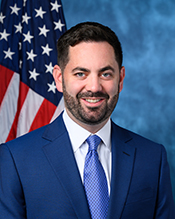
Rep. Michael Lawler
Sponsored bills
Maddy summaryThe College Transparency Act requires the federal government to create a new student data system that collects and shares information about college enrollment, costs, completion rates, and post-graduation outcomes. This system will directly affect colleges and universities (which must submit data), students (whose information is collected with privacy protections), and families (who will access the data to make informed education decisions). The bill mandates the development of a public website providing customizable, aggregate data on student demographics, costs, and outcomes, while prohibiting the collection of sensitive information like health records or political affiliation. The system aims to reduce reporting burdens on institutions by consolidating data collection and making information more transparent for prospective students. It includes strong privacy and security requirements to protect student information, with the data system to be developed within four years of the bill's enactment.
Maddy summaryThis bill, HR 4808, grants Diplomatic Security special agents the authority to record investigations without requiring individual pre-approval from the Secretary of State for each instance. It delegates this approval authority to the Assistant Secretary or Principal Deputy Assistant Secretary for Diplomatic Security, streamlining the process for critical investigations. The bill requires the State Department to update its Foreign Affairs Manual within 90 days to reflect this change. The policy directly affects Diplomatic Security agents conducting investigations under the State Department Basic Authorities Act.
Maddy summaryThis bill updates the TRICARE Young Adult Program to make healthcare coverage more accessible for military dependents. It directly affects young adults (ages 21-26) who are children of active-duty service members, by eliminating a separate premium they previously paid for coverage. Key changes include removing an extra cost for young adults and adjusting eligibility rules to simplify enrollment. These amendments aim to reduce out-of-pocket expenses and streamline access to health insurance under the program.
Maddy summaryThis bill strengthens protections for police dogs and horses used in law enforcement by increasing penalties for harming them, including up to 15 years in prison for using deadly weapons. It requires the Transportation Secretary to create emergency medical guidelines for treating injured police animals and establish regulations allowing their transport to veterinary facilities without waiting for human patients. The rules ensure emergency medical personnel can provide care to police dogs during transport or at the scene of an incident. These changes apply to dogs and horses serving federal, state, or local law enforcement agencies in roles like crime detection, disaster response, or military operations.
Maddy summaryThe Biochar Research Network Act of 2025 establishes a national network of up to 20 research sites to study how biochar (a charcoal-like substance) improves soil health, carbon sequestration, and farming practices. It directs the Agriculture Department to fund research testing biochar across diverse soils, climates, and agricultural systems to assess its impact on crop yields, climate mitigation, and profitability for farmers, ranchers, foresters, and land managers. The bill authorizes $50 million annually from 2026 to 2030 for this research, focusing on practical, science-based guidance for sustainable biochar use. The network will generate data to help land managers adopt biochar for soil health, carbon reduction, and resilience to extreme weather.
Maddy summaryHR 1549, the China Financial Threat Mitigation Act of 2025, requires the U.S. Treasury Department to conduct a study and issue a report within one year of enactment on financial risks posed by China's financial sector. The report must assess impacts on U.S. and global financial systems, evaluate U.S. protective policies, analyze transparency of Chinese economic data, and recommend actions for international cooperation. The Treasury must submit this unclassified report to relevant congressional committees and publish it online, with a possible classified annex. This bill mandates a review process but does not enact new financial regulations or directly affect businesses or citizens.
Maddy summaryHR 4691, the "Responsive Counterterrorism Policy Act," requires the U.S. Department of State’s Bureau of Counterterrorism to create and annually update country- or region-specific counterterrorism strategies for areas with significant terrorist threats or ongoing U.S. counterterrorism engagement. These strategies must identify specific threats, set clear objectives, outline coordination with U.S. agencies and international partners, include measurable success metrics, and align with broader foreign policy goals. The bill mandates initial and annual congressional briefings on strategy development, implementation, and how strategies guide funding and diplomatic efforts. It does not authorize new funding or military action but focuses on improving coordination, accountability, and planning for existing counterterrorism programs. The Bureau of Counterterrorism serves as the lead entity for developing and maintaining these strategies.
Maddy summaryThis bill requires local governments receiving federal housing funds to track and report on zoning rules that limit housing supply. It mandates annual plans detailing current policies and future steps to adopt specific reforms, such as allowing duplexes in single-family zones, reducing parking requirements, or streamlining permits. The focus is on gathering data to identify barriers - like restrictive zoning - rather than forcing immediate changes. Localities must submit these reports every five years, but the information cannot be used for enforcement or to mandate policy shifts.
Maddy summaryHR 4698, the PAAW Act, prohibits the National Institutes of Health (NIH) from conducting or funding research that causes significant pain or distress to dogs or cats. This directly affects NIH-funded studies involving these animals, specifically banning research assigned to USDA-defined severe pain categories (D or E). The law takes effect 90 days after enactment and relies on existing USDA pain classification standards under the Animal Welfare Act. It creates a clear policy change limiting NIH research involving dogs and cats when severe pain is anticipated.