

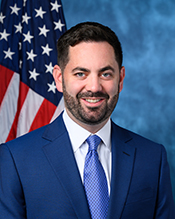
Photo of Michael Lawler
R United States House · District 17 · New York On the 2026 ballot

Rep. Michael Lawler

Compare
Total votes
1,879
all sessions
Attendance
99%
27 missed
Near the chamber average
With party
85%
of cast votes
Lower than 91% of chamber peers
Bipartisan score
8%
crosses aisle rarely
Higher than 89% of chamber peers
Sponsored
2,547
bills & resolutions
Higher than 99% of chamber peers
Committees
6
assignments
2,547 bills and resolutions

Sponsored bills

Total
2,547
Primary
194
Co-sponsor
2,353
This page
2,547
matching current filters
Co-sponsor HR 4995
In committee · United States House · Co-sponsor
Enduring Welcome Act of 2025

Maddy summaryThis bill permanently establishes the Coordinator for Afghan Relocation Efforts (CARE) within the State Department, expanding their role to prioritize family reunification for U.S. military personnel and veterans with Afghan allies. It mandates the Coordinator to collect detailed data on Afghan applicants (including special immigrant visa seekers, refugees, and parolees), vetting timelines, and pending family reunification cases into a centralized database. The Coordinator must report this data to Congress every 90 days to ensure transparency and inform policy decisions. The law directly affects Afghan allies and their families seeking U.S. relocation, particularly those connected to U.S. military service.

In committee Aug 19, 2025 1 co-sponsor
Primary HR 4997
In committee · United States House · Lead sponsor
Modernize Diplomatic Security Training Act

Maddy summaryThis bill requires specific counterintelligence training for certain Diplomatic Security special agents. It mandates that agents assigned to primary counterintelligence roles or high-risk, high-threat diplomatic posts must complete mandatory training provided by the State Department's Office of Counterintelligence. The training is a new requirement added to the 1986 Diplomatic Security Act, applying only to agents in these defined positions. The law directly affects those Diplomatic Security special agents working in counterintelligence or high-risk locations.

In committee Aug 19, 2025 0 co-sponsors
Co-sponsor HR 1316
Signed into law · United States House · Co-sponsor
Maintaining American Superiority by Improving Export Control Transparency Act

Maddy summaryThis bill requires the U.S. Department of Commerce to issue an annual report to Congress on export license applications and end-use checks for specific foreign entities. The report must include details like applicant names, item descriptions (including export control codes), end-user locations, license decisions, and results of compliance checks, while protecting confidential information. It specifically applies to entities in certain countries (Country Group D:5) listed on U.S. export control sanctions lists. The goal is to increase transparency in export licensing without disclosing sensitive enforcement details.

Signed into law Aug 19, 2025 1 co-sponsor
Co-sponsor HRES 651
In committee · United States House · Co-sponsor
Supporting the commemoration of August 14, 2025, as the 90th anniversary of the establishment of Social Security.

Maddy summaryHRES 651 is a non-binding resolution supporting the commemoration of August 14, 2025, as the 90th anniversary of the Social Security Act's signing on August 14, 1935. It recognizes the Social Security Act as a landmark law establishing federal economic security for elderly Americans and acknowledges the program's role as a vital part of the nation's social safety net over 90 years. The resolution does not create new policies or affect any individuals or programs; it is purely symbolic recognition of the anniversary. It was introduced by Representatives Bresnahan, Tenney, Lawler, Nunn, Kiggans, Kean, and Fitzpatrick.

In committee Aug 15, 2025 1 co-sponsor
Co-sponsor HR 4979
In committee · United States House · Co-sponsor
Tick Identification Pilot Program Act of 2025

Maddy summaryHR 4979, the Tick Identification Pilot Program Act of 2025, allows the CDC to award grants to state health departments to create programs where residents can submit photos of ticks they encounter online. The programs must provide users with a tick species ID, disease risk estimate, and prevention advice within 72 hours, while tracking location, date, and environmental details of each encounter. States with high Lyme disease rates and strong implementation plans receive priority for funding. The initiative directly affects the public (especially in tick-prone areas) and state health agencies, focusing on improving early detection and public education through a centralized data system. The CDC will report annual data on program participation and outcomes to Congress from 2026-2029.

In committee Aug 15, 2025 1 co-sponsor
Co-sponsor HR 4980
In committee · United States House · Co-sponsor
BITE Act

Maddy summaryThe BITE Act establishes a national system to prevent diseases spread by ticks, mosquitoes, and fleas. It requires the Health Secretary to create a system with six key parts: a public vector identification service, an AI-powered early warning system using weather and habitat data, insurance claims monitoring for early outbreak detection, emergency room symptom tracking, targeted public education campaigns, and a goal to reduce Lyme disease by 25% by 2035. This system integrates human, animal, and environmental data (One Health approach) and serves both civilians and military medical facilities. The bill directly affects public health agencies, healthcare providers, and communities in areas with vector-borne diseases. Its key mechanism is using real-time data from multiple sources to predict and prevent disease outbreaks before they spread widely.

In committee Aug 15, 2025 1 co-sponsor
Co-sponsor HR 4977
In committee · United States House · Co-sponsor
Connected MOM Act

Maddy summaryHR 4977, the Connected MOM Act, requires the U.S. Department of Health and Human Services (HHS) to study Medicaid coverage of remote health monitoring devices (like blood pressure cuffs and pulse oximeters) for pregnant and postpartum women. Within 18 months of enactment, HHS must report to Congress on current state practices, barriers to coverage, and how these affect maternal and child health outcomes. Six months after the report, HHS must update state Medicaid resources, such as telehealth toolkits, to align with the report's recommendations. The bill directly affects pregnant and postpartum women enrolled in state Medicaid programs by aiming to improve access to these monitoring tools. It does not change Medicaid rules immediately but sets a process for future policy adjustments based on the findings.

In committee Aug 15, 2025 1 co-sponsor
Primary HR 4983
In committee · United States House · Lead sponsor
KOTEL Act

Maddy summaryThe KOTEL Act repeals Section 414 of the 1986 Omnibus Diplomatic Security and Antiterrorism Act, which prohibited U.S. territories from participating in certain land-use programs. This bill directly affects U.S. territories (such as Puerto Rico, Guam, and the U.S. Virgin Islands) by removing a barrier that previously excluded them from land-use opportunities. The key mechanism is the repeal of the specific prohibition, allowing territories to access existing land-use initiatives without the prior restriction. The change eliminates a regulatory barrier without creating new programs or funding.

In committee Aug 15, 2025 0 co-sponsors
Co-sponsor HR 4981
In committee · United States House · Co-sponsor
Stamp Out Lyme Disease Act

Maddy summaryThis bill creates a special postage stamp that allows the public to voluntarily contribute to Lyme disease research. All money from stamp sales will go directly to the National Institute of Allergy and Infectious Diseases (NIAID) at the NIH, with proceeds specifically designated for Lyme disease and tick-borne illness research. The funds cannot be used to offset other NIH research funding, and the stamp would be available for at least six years after the law takes effect. It directly affects the public (through voluntary purchases) and NIAID (as the recipient of dedicated research funding).

In committee Aug 15, 2025 1 co-sponsor
Co-sponsor HR 4961
In committee · United States House · Co-sponsor
Public Utility Remediation and Enhancement for Water Act

Maddy summaryHR 4961, the Public Utility Remediation and Enhancement for Water Act, creates a federal grant program to help municipal water systems address harmful chemicals like PFAS (perfluoroalkyl substances) in drinking water. The bill authorizes $200 million annually (2026-2028) to fund 75% of costs for planning, building, or upgrading treatment systems to prevent or treat these emerging contaminants. It directly affects publicly owned water treatment facilities by providing financial support to comply with federal water pollution standards for these chemicals. The program requires states to manage grants similarly to existing water fund programs, with non-federal funds covering the remaining 25% through local or private sources.

In committee Aug 13, 2025 1 co-sponsor
Showing 701 to 710 of 2,547 bills
Previous 1 … 70 71 72 … 255 Next