

Maddy summaryThis bill changes Medicaid payment rules to provide more financial support for safety-net hospitals - those serving high numbers of low-income patients. It allows states to use unspent federal funds from prior years to increase payments to these hospitals, without exceeding the overall annual funding cap. States cannot recoup payments already made to hospitals under older rules, and must report any increased payments in their annual Medicaid reports. The changes apply to payments for Medicaid plan years starting after the bill's enactment.
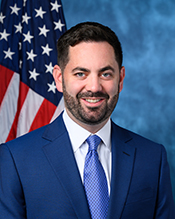
Rep. Michael Lawler
Sponsored bills
Maddy summaryHR 5075, the GRACE Act, requires schools receiving federal education funds to allow religious exemptions from vaccination requirements without requiring documentation. It directly affects K-12 public schools and school agencies that receive federal funding, as they must permit students (or their parents/guardians for minors under 18) to skip vaccinations based on religious belief. The key provision mandates that schools cannot demand proof of a religious belief to grant such exemptions. This changes how schools handle vaccination policies for enrollment, attendance, and school activities when receiving federal education dollars.
Maddy summaryHJRES 116 is a ceremonial resolution honoring 13 U.S. service members who died in the August 26, 2021, Abbey Gate bombing at Kabul's airport. It designates a National Day of Remembrance for those who perished during the Afghanistan withdrawal, expresses condolences to their families, and commemorates their service. The resolution does not create new policies or funding but formally recognizes their sacrifice and the role they played in saving lives during the evacuation. It directly affects the Gold Star families of the named service members and the broader public through this national acknowledgment.
Maddy summaryThis bill requires the Health and Human Services and Labor Secretaries to review all federal grant programs supporting the nursing workforce and submit a report to Congress within one year. The report must include recommendations to improve specific goals: increasing nursing faculty (especially in underserved areas), creating pathways for experienced nurses to become faculty, and expanding opportunities for licensed practical nurses to become registered nurses. It does not create new funding or programs but mandates a comprehensive review of existing initiatives. The bill directly affects federal agencies managing nursing workforce grants and aims to identify ways to strengthen nursing education pipelines.
Maddy summaryThe Safe Embassies Act requires the U.S. government to provide Congress with a detailed explanation of the national security benefits before re-opening a diplomatic post (such as an embassy or consulate). This change modifies the existing Diplomatic Security Act by adding a specific requirement for the executive branch to justify how reopening a post supports national security. The bill directly affects the Department of State and the President, who must now include this justification in congressional notifications. The key provision is the new mandate for a clear national security rationale, ensuring Congress receives concrete reasoning before such decisions are finalized.
Maddy summaryHR 5053, the Protecting Public Naval Shipyards Act of 2025, prohibits workforce reductions at public naval shipyards due to budget cuts or fund reprogramming. It specifically protects 12 categories of critical shipyard jobs, including welders, pipefitters, nuclear maintenance staff, engineers, apprentices, and infrastructure support roles. The bill ensures these positions remain exempt from hiring freezes or layoffs during fiscal adjustments, maintaining operational capacity. It does not override existing procedures for addressing employee misconduct or poor performance. The law directly affects federal shipyard workers at public naval facilities, safeguarding key technical and maintenance roles.
Maddy summaryHR 5024, the Transit Funding Flexibility Act, removes a population restriction that previously limited certain federal transit grants to urban areas with fewer than 200,000 residents. It requires transit agencies receiving these grants to annually certify they maintain local funding for operating costs covered by federal money. If an agency fails to maintain this local funding, the bill mandates a 1/3 reduction in their next year's federal grant amount. This bill directly affects public transit agencies in smaller urban areas that now gain access to operating cost funding, while requiring them to sustain local financial commitments.
Maddy summaryHR 5023, the Fentanyl Kills Act, redefines "trafficked fentanyl" to broadly cover activities like producing, distributing, financing, or transporting illicit fentanyl, its precursors, or related substances - both domestically and internationally with intent to distribute in the U.S. It directly affects individuals involved in fentanyl trafficking by automatically classifying such offenses as "attempted murder" under existing federal law. The bill adds specific definitions for trafficking activities (including manufacturing, distributing, or possessing intent) and mandates that convicted traffickers face penalties under murder statutes. This changes sentencing by treating fentanyl trafficking as an attempted homicide, increasing penalties for those involved in the supply chain.
Maddy summaryThis bill streamlines defense cooperation between the U.S., Australia, and the United Kingdom under the AUKUS security pact. It removes bureaucratic barriers by allowing direct reexports of U.S. defense articles between these governments without presidential consent, and eliminates certification requirements for commercial technical assistance agreements with Australia or the UK. Key provisions include exempting authorized transfers (including intra-governmental and entity-level movements) from certain export controls and Foreign Assistance Act rules. The changes specifically target defense-related items and services shared among the three nations, reducing administrative hurdles for military collaboration. This affects U.S. defense exports, Australian and UK government entities, and authorized defense contractors involved in AUKUS partnerships.
Maddy summaryHR 4994, the Safe Air on Airplanes Act, requires the Federal Aviation Administration to update regulations to phase out bleed air systems in aircraft. It prohibits new aircraft designs from using these systems, mandates filters to remove oil fumes in new aircraft by 2031 (7 years after enactment), and sets a 30-year phase-out schedule for existing aircraft designs (25% without bleed air by 2031, 50% by 2041, 100% by 2051). The bill directly affects aircraft manufacturers and airlines, as it changes requirements for cabin air systems that pull engine air for ventilation. These changes focus on modifying manufacturing standards and air quality systems in turbine and turbo-prop aircraft.