

Maddy summaryThe Brownfield Revitalization and Remediation Act (HR 5472) allows businesses to immediately deduct the full cost of cleaning up contaminated properties (brownfields) instead of spreading these costs over time through depreciation. It restores this immediate deduction for cleanup costs incurred between 2012 and 2024, and again after 2029 (excluding 2025-2029), while expanding eligible costs to include assessment, investigation, and monitoring activities at brownfield sites. The bill also treats pollutants and contaminants as hazardous substances for tax purposes, making more cleanup expenses deductible under the Internal Revenue Code. This policy change directly affects businesses undertaking environmental remediation at brownfield sites across the United States.
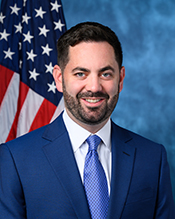
Rep. Michael Lawler
Sponsored bills
Maddy summaryHR 5454, the Medicare Advantage Prompt Pay Act, requires Medicare Advantage plans to pay 95% of valid claims (with complete data) within 14 days for electronic claims or 30 days for paper claims, starting January 1, 2027. Plans that miss these deadlines must pay interest at standard government rates and face $25,000 civil penalties per violation. The bill also mandates annual reports showing payment rates for in-network versus out-of-network claims and interest paid. This directly affects Medicare Advantage insurers and healthcare providers (like doctors and hospitals) who bill these plans.
Maddy summaryThis bill requires a GAO study to evaluate early detection methods for pediatric liver disease, including adding bilirubin measurement to newborn screening panels and assessing trends in transplant wait-list mortality. It also mandates a public education program to inform families about early signs of liver disease and the safety of living liver donation, using existing HHS resources without new funding. The law directly affects infants and children with liver conditions like biliary atresia and liver cancer, aiming to improve early intervention. Key provisions include a study on cost-effective screening and a program to educate pediatric providers and families about warning signs.
Maddy summaryHR 5245 reorganizes the Department of State by creating new management positions and bureaus to improve administrative efficiency and service delivery. The bill establishes an Under Secretary for Management, a Chief Information Officer for Diplomatic Technology, and new bureaus including Consular Affairs, Diplomatic Technology, and Asset Management. It includes specific provisions for modernizing consular systems, managing historic reception areas, and setting protocols for closing overseas posts. The bill authorizes funding for these new structures for fiscal years 2026 and 2027.
Maddy summaryHRES 733 is a symbolic resolution designating the week of September 20-27, 2025, as "National Estuaries Week." It expresses congressional support for raising public awareness about the economic and ecological importance of coastal estuaries, which support millions of jobs, generate significant economic output, and provide critical services like flood protection and habitat for fish and wildlife. The resolution acknowledges estuaries' role in sustaining employment, economic growth, and environmental health without creating new policies or funding. It directly affects the public, government officials, and conservation organizations by highlighting estuaries' value through a designated awareness week.
Maddy summaryThe Stop CMV Act of 2025 requires hospitals to screen all infants under 21 days old for congenital cytomegalovirus (CMV), a virus that can cause hearing loss and developmental delays. States must establish screening standards - including parent notification - within two years of the law’s enactment, or the federal Advisory Committee on Heritable Disorders will set them. The bill provides federal grants for states to implement screening, improve data systems, and fund research on CMV prevention, diagnostics, and treatments through the CDC and NIH.
Maddy summaryThis bill creates a 70% tax credit for eligible small businesses to cover costs of installing diaper changing stations and dispensers in restrooms. It applies to businesses with annual gross receipts under $5 million or fewer than 100 full-time equivalent employees. To qualify, businesses must ensure both men’s and women’s restrooms at each location have accessible diaper changing stations (free to use) and diaper dispensers. The credit is capped at $10,000 per business location annually and applies to expenses like station installation, labor, and restroom renovations meeting the "family bathroom requirement." The credit begins for tax years starting after December 31, 2025.
Maddy summaryThis bill requires the 988 Suicide Prevention Lifeline to establish a dedicated "Press 3" option (via IVR) for LGBTQ+ youth seeking crisis support, directly affecting LGBTQ+ youth who face a four times higher suicide risk than peers. It mandates that at least 9% of funds allocated for the lifeline's services be reserved specifically for these specialized LGBTQ+ youth services. The bill amends existing law to formalize this dedicated resource, building on current services that handled over 1.5 million contacts from LGBTQ+ youth in 2025. This creates a concrete policy change for accessing tailored crisis support without altering other lifeline operations.
Maddy summaryThis bill ensures Medicare coverage for new medical devices designated as "breakthrough devices" during a 4-year period after FDA approval. To qualify, devices must meet specific criteria, including FDA priority review, clinical data from Medicare beneficiaries, and a safety review showing benefits outweigh risks. Medicare must finalize coverage decisions within 6 months of manufacturer applications and before the 4-year period ends. The law appropriates $10 million annually (2025-2030) for Medicare to administer this process.
Maddy summaryHRES 723 is a ceremonial resolution recognizing the 180th anniversary of the United States Naval Academy, established on October 10, 2025. It formally commemorates the Academy's founding, historical contributions, and legacy of producing naval and marine leadership. The resolution highlights the Academy's role in educating graduates who have served in major conflicts, earned military honors, and held significant national leadership positions. As a symbolic gesture with no policy changes or direct impact on constituents, it serves solely to honor the institution's history and ongoing mission.