

Maddy summaryThis bill permanently bans nitazenes and all structurally related synthetic opioids under federal law, creating a broad definition that covers numerous chemical variations designed to evade current restrictions. It directly affects anyone manufacturing, distributing, or possessing these substances without authorization, including illicit drug producers and users. The key mechanism is a class-wide Schedule I classification that includes specific structural features (like modified benzimidazole rings) and excludes new analogs from legal loopholes. This approach aims to prevent new nitazene variants from entering the illegal market and addresses their role in overdose deaths. Substances previously temporarily banned under similar rules will now be permanently prohibited as of the bill's enactment.
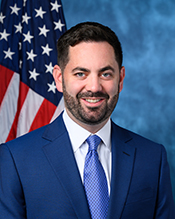
Rep. Michael Lawler
Sponsored bills
Maddy summaryHR 5401, the Pay Our Troops Act of 2026, ensures military personnel, civilian Defense workers, and supporting contractors receive pay during government funding gaps in fiscal year 2026. It appropriates emergency funds for active-duty service members, reserves, and their supporting personnel (including Coast Guard staff under DHS) if regular appropriations aren't enacted by the end of the fiscal year. The bill provides necessary pay and allowances during any period when full-year funding is unavailable, covering both active service and support roles. Funding expires when regular appropriations are passed, a funding resolution is enacted, or January 1, 2027, whichever comes first. This is a procedural measure to prevent pay delays for military and support staff during fiscal year 2026 funding lapses.
Maddy summaryThis bill prohibits state and local law enforcement from arresting, detaining, or assisting the International Criminal Court (ICC) in arresting foreign nationals based on ICC warrants or indictments. It bans the use of local resources (funds, personnel, equipment) for ICC-related enforcement and overrides any conflicting state or local laws. Exceptions only apply if Congress authorizes a specific case or the President certifies national security necessity. The law directly affects state/local police, courts, and officials by restricting their ability to cooperate with ICC actions.
Maddy summaryHR 5404, the "Make America Healthy Again Act of 2025," makes Executive Order 14212 legally binding by codifying it into law. This order established the President’s Make America Healthy Again Commission, which focuses on health initiatives. The bill does not create new programs, funding, or policy changes - it only gives existing executive branch directives the force of law. It directly affects the commission’s operations but does not alter healthcare policy or impact specific groups.
Equal COLA Act This bill applies a cost-of-living adjustment (COLA) for annuities paid under the Federal Employees Retirement System that is equal to the increase in inflation, regardless of the amount of the increase. Specifically, for any year in which the Consumer Price Index (CPI) has increased over the previous year, the COLA amount shall be increased by the change in the CPI from the previous year. Current law applies an adjustment equal to the change in CPI only if the change is 2% or less. If the change is between 2% and 3%, the adjustment is limited to 2%. If the change is more than 3%, the adjustment is limited to 1% less than the change.
Saving the Civil Service Act This bill generally prohibits changes to the classification of positions in the competitive service and excepted service unless certain conditions are met. (Competitive service positions are subject to competitive examination while excepted service positions are appointed under one of five schedules. Competitive service positions have notice and appeal requirements for adverse actions that are not applicable to most excepted positions, including those of a confidential, policy-determining, policy-making, or policy-advocating character under Schedule C.) On October 21, 2020, President Donald Trump issued an executive order that placed executive agency positions that are of a confidential, policy-determining, policy-making, or policy-advocating character, and that are not normally subject to change as a result of a presidential transition, under a new Schedule F in the excepted service. The order was subsequently revoked by President Joe Biden. The bill prohibits executive agency positions in the competitive service from being placed in the excepted service, unless such positions are placed in a schedule in the excepted service as in effect on September 30, 2020. The bill also prohibits positions in the excepted service from being placed in any schedule other than the aforementioned schedules. Additionally, agencies may not (1) transfer occupied positions from the competitive or excepted service into Schedule C without the consent of the Office of Personnel Management, or (2) transfer employees in the excepted service to another schedule or transfer employees in the competitive service to the excepted service without employee consent.
Maddy summaryHRES 716 is a symbolic resolution designating September 15-19, 2025, as "National Clean Energy Week" to raise awareness about clean energy. It encourages voluntary actions like investing in clean energy technologies but does not create new laws, funding, or requirements. The resolution cites the clean energy sector's economic role (noting 8.5 million U.S. jobs in 2024 per the Department of Energy) and applauds national laboratories. As a non-binding gesture, it directly affects no individuals or entities but aims to promote existing clean energy initiatives.
Maddy summaryThe Azerbaijan Sanctions Review Act of 2025 requires the President to review within 180 days whether 53 specific Azerbaijani officials meet criteria for sanctions under the Global Magnitsky Human Rights Accountability Act. These officials include military commanders, security service heads, and judges implicated in human rights violations related to the Nagorno-Karabakh conflict. The review must include a detailed justification and determine if sanctions should be imposed on individuals linked to alleged war crimes, arbitrary detention, and torture of Armenians. The bill mandates this assessment without imposing new sanctions, focusing instead on evaluating existing legal authority for action.
Maddy summaryThis symbolic resolution (HRES 700) condemns the assassination of Charlie Kirk, a conservative campus advocate and founder of Turning Point USA, who was killed on September 10, 2025, at Utah Valley University. It expresses the House's deepest condolences to Kirk’s family, including his wife and children, and honors his work promoting civil discourse among college students. The resolution does not create new laws or policies but serves as a formal expression of the House’s stance on the incident. It directly affects no individuals or groups through legislative action, as it is purely a ceremonial statement.
Maddy summaryThis bill would establish September 11 as a permanent legal public holiday for federal employees and agencies. It amends Title 5 of the U.S. Code to add "September 11 Day of Remembrance" to the list of designated federal holidays, following Labor Day. The change would require federal offices to close on September 11 each year, directly affecting federal workers and government operations.