

Maddy summaryHR 5452, the Safe Streets for All Reauthorization and Improvement Act, modifies the existing Safe Streets and Roads for All program under the Infrastructure Investment and Jobs Act. It requires at least 20% of annual program funds starting in fiscal year 2024 to support projects focused on pedestrian and cyclist safety, and extends funding authorization with $5 billion allocated for fiscal years 2027 through 2031. The bill directly affects local governments and communities applying for grants to improve street safety infrastructure. Key changes include mandating specific funding allocations for walkable/bikeable projects and securing long-term financial commitments for the program. This is a procedural funding amendment, not a new policy initiative.
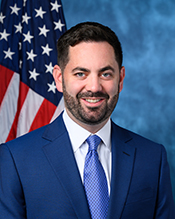
Rep. Michael Lawler
Sponsored bills
Maddy summaryThe GRID Power Act requires the Federal Energy Regulatory Commission (FERC) to create new rules within 180 days that streamline the process for connecting new "dispatchable power" projects - like natural gas plants or battery storage - to the electricity grid. It allows transmission providers (such as utilities and grid operators) to propose prioritizing these projects in the interconnection queue if they demonstrate how the projects improve grid reliability or resilience, with public input required before submission. FERC must review such proposals within 60 days and approve or deny them, while also mandating regular reports on grid conditions and periodic rule updates every five years to address evolving challenges. This bill directly affects transmission providers and new power project developers by accelerating connections for reliable energy sources that help prevent blackouts.
Maddy summaryHRES 744 is a non-binding House resolution supporting the designation of September 21-27, 2025, as "Gold Star Families Remembrance Week." It honors families who lost members in military service (Gold Star Families) and families of veterans, recognizing their sacrifices. The resolution encourages Americans to observe the week through community service and by celebrating the lives of those who died defending the U.S. It does not create new laws or policies but formally recognizes these families annually. This is a commemorative measure, not a legislative change.
Maddy summaryHRES 742 is a ceremonial resolution recognizing the 250th anniversary of the U.S. Navy's founding on October 13, 1775, when the Continental Congress established the first U.S. naval force. It formally acknowledges the Navy's historical role in protecting American interests and its current global presence (over 290 ships, 3,700 aircraft, and 500,000 personnel). The resolution expresses appreciation for Navy personnel past and present and reaffirms congressional support for the Navy as a key element of national defense and global stability. As a commemorative resolution, it has no policy or funding impact - it serves only to honor the Navy's legacy.
Maddy summaryHRES 737 designates September 22 as "National Veterans Suicide Awareness and Remembrance Day" and officially recognizes the Suicide Awareness and Remembrance (SAR) Flag as a national symbol. The resolution requires all federal buildings to display the SAR Flag year-round alongside the American and POW/MIA flags. This resolution aims to raise public awareness about veteran suicide, reduce stigma around mental health care, and honor veterans who died by suicide.
Maddy summaryThis bill amends the federal tax code to exclude certain overtime pay from taxable income. It directly affects workers who earn overtime under the Fair Labor Standards Act (FLSA) or through specific employer-employee agreements meeting defined conditions (like exceeding 40 hours per week or railway work standards). The key provision defines "qualified overtime compensation" to exclude this pay from federal income tax calculations. The change applies to tax returns filed for 2025 and later. This creates a concrete tax exemption for qualifying overtime earnings.
Maddy summaryThis bill requires the State Department to create a "cases of concern" list for U.S. citizens unjustly detained in China and their family members detained to silence advocacy or censor free speech. It mandates a diplomatic action plan within 60 days, including exploring prisoner transfers under Chinese law (like France uses), reviewing exit bans, and providing family resources. The bill also directs the U.S. to consider holding Chinese officials accountable under Magnitsky sanctions for detaining Americans. It directly affects detained U.S. nationals and their families targeted for advocacy, not the detentions themselves.
Maddy summaryThis bill allocates $5 million annually (2026-2030) to states for collecting de-identified stillbirth data through existing health systems, including risk factor analysis. It also provides $1 million yearly to develop standardized guidelines for healthcare providers and public educational materials about stillbirths, requiring consultation with medical professionals, bereavement organizations, and affected families. The bill mandates that all data collection complies with privacy laws and requires the Department of Health and Human Services to publish a public report on stillbirth guidelines within five years. It directly affects state health departments, healthcare providers, and families experiencing stillbirth by improving data quality and access to resources.
Maddy summaryHR 5462, the Michelle Alyssa Go Act, changes Medicaid rules to exclude small mental health facilities with 36 beds or fewer from the definition of "institution for mental diseases" if they meet specific national standards. This directly affects small mental health and substance use disorder treatment facilities (36 beds or less) that comply with evidence-based standards for services, care hours, staffing, and clinical programs. The bill modifies Medicaid funding eligibility by removing these small facilities from the restrictive "institution" category, allowing them to remain eligible for Medicaid coverage under state plans. The change takes effect 180 days after the law is enacted, applying to all state Medicaid plans starting then.
Maddy summaryThis bill reauthorizes federal funding for diabetes programs targeting Type 1 diabetes. It extends annual funding of $160 million for fiscal years 2026 through 2030, continuing existing support for research, treatment, and prevention initiatives. The funds remain available until expended, directly supporting programs serving people with Type 1 diabetes and the organizations delivering these services. The bill makes no changes to program eligibility or structure, only extending current funding levels.