

Maddy summaryHR 9243, the Aviation Medication Transparency Act of 2024, requires the Federal Aviation Administration (FAA) to create and maintain a publicly accessible online list of medications safe for pilots and air traffic controllers (airmen) to take while holding medical certifications. The list must be developed with input from pilots, controllers, and other stakeholders, include "Do Not Issue" medications, specify duty limitations for new medications, and be distributed when airmen first apply for certification. The FAA must publish the initial list within one year of the bill's enactment and update it annually thereafter. This law directly affects airmen seeking or holding medical certifications by providing clear, accessible information about medication safety for aviation duties.
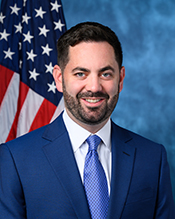
Rep. Michael Lawler
Sponsored bills
Maddy summaryHR 9299, the IRAN Act, requires the U.S. Secretary of State to lead federal efforts promoting internet freedom and access to information in Iran. It amends a 2012 law to mandate specific strategy updates, including evaluating how activists use virtual private networks (VPNs) and satellite tech, developing guidance to prevent sanctions from blocking internet tools for Iranians, and planning to bypass government internet blackouts. The bill directs the State Department to coordinate with Treasury, Commerce, USAID, and intelligence agencies to implement these updates. This affects U.S. government agencies' coordination and aims to improve internet access for Iranian civil society activists.
Maddy summaryThe Safer Skies Act of 2024 requires certain smaller airlines to adopt the federal security screening program currently used by larger carriers. Specifically, it mandates that airlines operating passenger planes with more than 9 seats (that do not use TSA checkpoints, offer individual seats in advance with public schedules) must comply with the Aircraft Operator Standard Security Program within 360 days of enactment. The Transportation Security Administration must revise its rules to enforce this new requirement. This directly affects regional carriers that currently skip standard airport security screenings but serve passengers under these specific operational conditions. The bill extends existing security standards to cover these previously exempt airlines without creating new security protocols.
Maddy summaryThe SPEED Act targets Chinese businesses operating in sub-Saharan Africa accused of causing environmental harm through practices like illegal mining and pollution. It authorizes U.S. sanctions - including visa bans and asset freezes - against foreign entities or individuals responsible for severe environmental incidents, such as water contamination or ecosystem damage. The bill requires the State Department and USAID to develop a 180-day strategy for collaborating with African nations on remediation and accountability. Exceptions cover humanitarian aid, UN operations, and law enforcement, with the law expiring five years after enactment.
Maddy summaryThis bill (HR 9255) is a simple naming resolution that renames a specific U.S. Postal Service facility. It designates the post office at 114 John Street in New York, New York, as the "Jack Greenberg Post Office." The bill requires all federal references to the building (in laws, maps, documents, etc.) to use the new name. This is a procedural change affecting only the official name of that single post office location.
Maddy summaryHR 9274, the SHAWL Act, establishes two new Smithsonian museums: the National Museum of the American Latino and the American Women’s History Museum. It authorizes both museums to be located within the National Mall’s "Reserve" area, overriding prior restrictions, and requires federal agencies managing potential sites to transfer jurisdiction to the Smithsonian after notifying congressional committees. The bill mandates that both museums accurately represent diverse cultures, histories, and viewpoints within Latino and women’s communities through exhibits and programs, requiring input from a broad range of community experts. It also requires the Smithsonian to submit biennial reports to Congress detailing compliance with these representation requirements.
Maddy summaryHJRES 127 is a congressional disapproval resolution targeting a Securities and Exchange Commission (SEC) rule requiring public companies to standardize climate-related financial disclosures. It seeks to block the SEC’s March 2024 rule (89 Fed. Reg. 21668), which would mandate consistent reporting on climate risks for investors. If passed, this resolution would prevent the SEC rule from taking effect, directly affecting publicly traded companies required to comply with the proposed disclosure standards. The bill uses a specific congressional process under Title 5, U.S. Code, to nullify the rule without creating new regulations.
Maddy summaryHJRES 122 is a resolution seeking to block a rule by the Consumer Financial Protection Bureau (CFPB) that would have regulated credit card penalty fees. The rule, published on March 15, 2024, aimed to limit how credit card companies charge fees for late payments or other violations. If approved, this resolution would disapprove the rule under a specific legal process, preventing it from taking effect. This directly affects credit card issuers (banks and financial institutions) by allowing them to continue current fee practices without the proposed restrictions.
Maddy summaryHRES 1394 is a non-binding resolution celebrating the U.S.-India partnership based on shared democratic values, religious pluralism, and human rights, while highlighting the contributions of the Indian diaspora in the United States. It specifically recognizes the 50th anniversary of BAPS Swaminarayan Sanstha's community work, including its spiritual centers (mandirs) and volunteer efforts across the country. The resolution does not create legal obligations but formally acknowledges these ties and achievements.
Maddy summaryHR 9206, the Bunker Buster Act of 2024, authorizes the U.S. President to assist Israel in preparing for potential Iranian nuclear threats. It requires a joint U.S.-Israel study on military needs to counter Iranian nuclear capabilities, including infrastructure for bunker-busting munitions (like the Massive Ordnance Penetrator, or MOP). The bill then permits specific actions - such as building runways for MOP-capable aircraft, storing munitions in Israel, or transferring them under strict conditions - if Iran violates nuclear safeguards and U.S. security interests are at stake. It explicitly states this does not authorize military force against Iran.