

Maddy summaryThe HEALTHY BRAINS Act of 2024 establishes a new NIH research program to study how environmental factors - like pollution, chemicals in air/water, and heavy metals - may contribute to neurodegenerative diseases (e.g., Alzheimer’s, Parkinson’s). It creates "Collaborative Centers for Neurodegenerative Disease Environmental Research" (CCNDERs) at universities and medical institutions, requiring them to conduct interdisciplinary research, develop nationwide data systems, and share findings with the public. The bill authorizes $50 million annually (2026-2030) for this program and mandates biennial reports to Congress on research progress. It directly affects NIH-funded research institutions and aims to advance prevention strategies, not patients or specific communities.
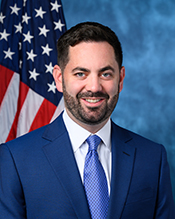
Rep. Michael Lawler
Sponsored bills
Maddy summaryThis bill increases a tax on investment income earned by private colleges and universities from 1.4% to 10%. It also lowers the asset threshold triggering this tax, requiring schools with over $200,000 in endowment assets per student to pay the tax (down from $500,000). The tax applies to investment income for institutions meeting the new threshold, directly affecting larger private colleges with significant endowments. The changes take effect for taxable years starting after the bill becomes law.
Maddy summaryThis bill provides financial aid for higher education to public safety officers and their children. Eligible officers (with at least 8 years of service who commit to 4 more years) or their children under age 27 can receive payments based on VA benefit formulas. Aid covers up to 45 months of full-time study, prioritizes applicants with financial need through a sliding scale, and allows officers to transfer eligibility to children. The program aims to support recruitment and retention in law enforcement by easing education costs.
Maddy summaryHR 9153, the "HAMAS Terrorist Fugitive Act," is a non-binding congressional resolution directing federal agencies to use existing authorities to target specific Hamas leaders. It requires the FBI to add 11 named Hamas figures (including Ismail Haniyeh and Yahya Al Sinwar) to its Most Wanted list and directs the State Department to offer rewards for their arrest or conviction under current programs. The bill does not create new laws or penalties but mandates that agencies coordinate to avoid duplicate rewards. It focuses on holding accountable leaders of Hamas and affiliated groups for the October 7, 2023, attack on Israel, which involved U.S. citizens. This resolution expresses congressional policy but has no legal force beyond directing existing agency actions.
Maddy summaryThis bill imposes sanctions on individuals and entities within the Palestinian Authority (PA) and Palestine Liberation Organization (PLO) that administer or support a system paying terrorists and their families. It targets PA/PLO officials, specific entities like the Commission of Prisoners, and financial institutions processing these payments, requiring property blocking, visa bans, and restrictions on U.S. financial transactions. The sanctions apply if the PA/PLO continues payments described in the Taylor Force Act (2018), which previously mandated ending such payments. The bill terminates if the Secretary of State certifies the PA/PLO has ceased these payments.
Maddy summaryHR 9158 requires U.S. colleges and universities to immediately report to the Student and Exchange Visitor Information System (SEVIS) if a student holding an F-1 or J-1 visa supports a designated foreign terrorist organization. This applies to students on temporary visas for academic or exchange programs who endorse or participate in activities linked to such groups. If verified, the State Department would revoke the student's visa, and Homeland Security would begin removal proceedings. The bill targets specific visa holders directly affected by terrorism-related activity, with no broader policy changes beyond this reporting and enforcement mechanism.
Maddy summaryHR 9144, the Let America Vote Act, requires states to allow voters not registered with a political party (unaffiliated voters) to participate in any primary election for federal, state, or local office - though they cannot vote in primaries for more than one party. It also prohibits states from sharing unaffiliated voters' personal information with political parties or marking them as affiliated with a party solely based on their primary vote. Additionally, the bill bans noncitizens from voting in any taxpayer-funded election for public office and ties federal election administration funding to state compliance with these rules. States must certify adherence to these provisions to receive federal funds for election administration.
Maddy summaryHRES 1381 is a symbolic resolution that commemorates the United States Olympic and Paralympic Teams' historical achievements, including over 5,300 total medals across past Games. It expresses congressional support for U.S. athletes competing in the 2024 Summer Olympics and Paralympics in Paris, France, and commends the Government of France for hosting the events. The resolution also commits to ensuring a safe environment for the 2028 Los Angeles Olympic and Paralympic Games. As a non-binding expression of support, it does not create new laws or allocate funds.
Maddy summaryThe 9/11 Responder and Survivor Health Funding Correction Act of 2024 makes several key changes to the World Trade Center Health Program that serves 9/11 responders and survivors. It allows licensed mental health providers (not just physicians) to conduct mental health evaluations for program participants and extends the time period for adding new health conditions from 90 to 180 days. The bill also adjusts enrollment calculations by removing deceased individuals from program counts and provides $2.97 billion in new funding for fiscal year 2024 with a minimum annual funding level of $20 million for 2025. These changes aim to improve access to care while ensuring stable, long-term funding for the program that provides medical services to those affected by the 9/11 attacks.
Maddy summaryThe BRAIN Act (HR 9113) establishes new research networks and funding mechanisms to advance brain tumor treatment and care. It requires the NIH to create a searchable database of brain tumor biospecimens, authorizes $50 million annually for a Glioblastoma Therapeutics Network, and allocates $10 million yearly for CAR-T cell therapy research. The bill also mandates a national awareness campaign about clinical trials and biomarker testing, and funds pilot programs to improve long-term care for brain tumor survivors. These provisions directly affect researchers, patients, healthcare providers, and survivors, with funding allocated for fiscal years 2026 through 2030.