

Maddy summaryThis resolution (HRES 87) commemorates the 80th anniversary of the liberation of Auschwitz and International Holocaust Remembrance Day. It formally calls on all people in the United States to remember the 1.1 million victims murdered at Auschwitz during the Holocaust, honor Holocaust survivors, and commit to combating anti-Semitism and promoting tolerance. The resolution cites rising anti-Semitic incidents in the U.S. (including a 63% increase in hate crimes from 2022-2023) as context for its commemorative purpose. It makes four specific, non-binding calls: to remember victims, honor survivors, work toward tolerance, and combat all forms of anti-Semitism. As a symbolic resolution, it does not create new laws or directly affect any specific group.
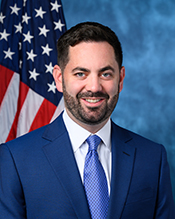
Rep. Michael Lawler
Sponsored bills
Maddy summaryThis bill expands the Anti-Boycott Act of 2018 to cover boycotts promoted or enforced by international governmental organizations (IGOs), not just foreign countries. It adds "international governmental organization" to key definitions in the law and requires the President to annually report to Congress on foreign countries and IGOs that foster or impose such boycotts. The law directly affects U.S. businesses and entities subject to boycotts by IGOs, like the United Nations or World Trade Organization. The changes are technical amendments to existing definitions and reporting requirements.
Medicare Patient Access and Practice Stabilization Act of 2025 This bill increases certain payment adjustments under the Medicare physician fee schedule for services furnished between April 1, 2025, and January 1, 2026.
Maddy summaryThe Fighting Budget Waste Act requires the President and the Office of Management and Budget (OMB) to consider the most recent Government Accountability Office (GAO) report on reducing government waste when preparing the annual federal budget. Specifically, it mandates review of the GAO's findings about cutting fragmentation, duplication, and overlap in federal programs - such as the report titled *Additional Opportunities to Reduce Fragmentation, Overlap, and Duplication and Achieve Billions of Dollars in Financial Benefits* - to identify potential savings. The OMB must also submit a separate report to Congress detailing how it incorporated the GAO's recommendations into the budget submission. This law aims to make the budget process more transparent by formally integrating the GAO's waste-reduction analysis into federal fiscal planning.
Maddy summaryHR 833 creates a federal tax credit for individuals and corporations that contribute to scholarship granting organizations (SGOs) providing scholarships for elementary and secondary education. The credit allows taxpayers to deduct up to 10% of their adjusted gross income or $5,000 (whichever is less) for contributions to SGOs serving students from households with income up to 300% of the area median income. The bill establishes a $10 billion annual cap on the tax credit program, requires SGOs to verify student eligibility and maintain separate accounts, and prohibits government control over SGOs or private schools. It ensures scholarships can be used at public, private, or religious schools without discrimination based on religious character. The tax credit would be available for contributions made after December 31, 2025, with annual volume cap increases based on usage.
Maddy summaryThe Keeping Drugs Out of Schools Act of 2025 establishes a federal grant program to fund partnerships between community coalitions and local schools for evidence-based drug prevention programs. Eligible entities - community coalitions with existing federal grants and formal agreements with at least one school - can receive up to $75,000 annually per school partnership to implement tailored prevention strategies. Funds must supplement, not replace, existing school drug prevention funding, and grantees must submit detailed implementation plans. The program authorizes $7 million annually from 2026 through 2031 to support these school-community partnerships.
Maddy summaryHR 887, the Lower Grocery Prices Act, directs the Government Accountability Office (GAO) to study 20 years of food-at-home cost trends using the Consumer Price Index and other economic data. The GAO must submit a report to Congress within 180 days of the bill’s enactment, detailing its findings and recommendations for lowering grocery costs. This bill does not directly lower prices or change existing policies - it only mandates a study to inform potential future legislative action. The report will be shared with specific congressional committees focused on finance and commerce.
Maddy summaryHCONRES 4 is a symbolic resolution expressing Congress's support for tax-exempt fraternal benefit societies (like mutual aid organizations). It recognizes these groups, which have over 7 million members nationwide, as historically and currently providing critical community benefits - including life/health insurance, charitable work, and volunteer services - valued at over $3.8 billion annually. The resolution affirms that their tax-exempt status under Section 501(c)(8) of the Internal Revenue Code remains beneficial and should continue to be promoted. This is a non-binding expression of congressional sentiment, not a policy change.
Maddy summaryThis resolution expresses the House of Representatives' position that Congress should take steps to prevent the privatization of the United States Postal Service (USPS), ensuring it remains a federal independent agency. It highlights USPS’s constitutional role, self-sustaining nature (relying on service revenue, not taxpayer funds), and critical functions - serving 168 million addresses daily, supporting rural communities, and underpinning e-commerce. The resolution opposes privatization, noting it would raise prices, reduce services, and harm the $1.9 trillion mailing industry. As a non-binding resolution, it reflects the House’s stance but does not create new law or policy.
Maddy summaryHRES 76 is a symbolic resolution recognizing "Gold Shield Families" - the families of fallen police officers, firefighters, EMTs, correction officers, emergency dispatchers, and emergency service providers who died in the line of duty. It formally honors these families for their sacrifices and resilience, affirming that their struggles should not be forgotten. The resolution does not create new policies or funding but serves as a public statement of national appreciation. It directs the House to transmit a copy to the President and make it publicly available for recognition. This is a commemorative measure with no binding policy changes.