

Maddy summaryHRES 73 is a non-binding House resolution condemning Belarus' January 2025 fraudulent presidential election and President Lukashenka’s authoritarian rule. It calls for free and fair elections with international monitoring, demands the immediate release of over 1,200 political prisoners, and supports continued U.S. aid to Belarusian democratic opposition groups. The resolution also condemns Belarus’ support for Russia’s invasion of Ukraine, including hosting Russian weapons and facilitating the abduction of Ukrainian children. As a statement of congressional position, it urges sanctions against regime officials but does not create new legal requirements.
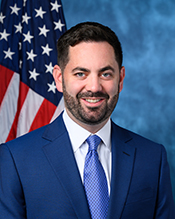
Rep. Michael Lawler
Sponsored bills
Maddy summaryHR 768, the Holocaust Education and Antisemitism Lessons Act, requires the U.S. Holocaust Memorial Museum Director to study how states and school districts currently teach about the Holocaust and antisemitism in K-12 schools. The study will examine curriculum requirements, teacher training, educational materials used, and assessment methods across all states and a representative sample of school districts and schools. It specifically aims to identify gaps, resources needed, and how schools address antisemitism and genocide prevention in their teaching. The Museum must submit a report to Congress within three years of the bill's enactment, detailing findings on current practices and challenges. This bill does not mandate new teaching requirements but seeks to understand existing approaches to Holocaust education.
Maddy summaryHR 817, the Educational Choice for Children Act of 2025, creates a new tax credit allowing individuals to claim up to 10% of their adjusted gross income (capped at $5,000) for charitable contributions to scholarship granting organizations. These organizations provide education scholarships to eligible students from households with income not exceeding 300% of the area median gross income, covering qualified expenses like tuition, curriculum materials, and educational therapies. The bill establishes strict requirements for scholarship organizations, including verifying household income, conducting annual audits, and distributing scholarships to multiple students without government control. It also prohibits government entities from mandating or controlling scholarship organizations or excluding private or religious schools from receiving scholarship funds, while exempting scholarship amounts from taxable income for recipients. The tax credit is limited to $5 billion annually for 2025-2028, allocated on a first-come, first-serve basis.
Maddy summaryHR 801, the Charitable Act, creates a new tax deduction for individuals who do not itemize deductions on their federal tax returns. It allows these taxpayers to deduct up to one-third of their standard deduction amount for charitable contributions in 2026 and 2027. The bill directly affects non-itemizing individual taxpayers by providing a limited, direct deduction for charitable giving without requiring them to itemize. The deduction is capped at 1/3 of the standard deduction amount for those tax years, effective for returns filed in 2027 and 2028.
Illegitimate Court Counteraction Act This bill imposes sanctions against foreign persons (individuals and entities) who assist the International Criminal Court (ICC) in investigating, arresting, detaining, or prosecuting certain individuals. The bill categorizes as protected persons (1) any U.S. individual, U.S. entity, or person in the United States, unless the United States is a state party to the Rome Statute of the ICC and provides formal consent to ICC jurisdiction; and (2) any foreign person that is a citizen or lawful resident of a U.S. ally that is not a state party to the Rome Statute or has not consented to ICC jurisdiction. If the ICC attempts to investigate, arrest, detain or prosecute a protected person, the President must impose visa- and property-blocking sanctions against the foreign persons that engaged in or materially assisted in such actions, as well as against foreign persons owned by, controlled by, or acting on behalf of such foreign persons. The President must also apply visa-blocking sanctions to the immediate family members of those sanctioned. Upon enactment, the bill rescinds all funds appropriated for the ICC and prohibits the subsequent use of appropriated funds for the ICC.
Maddy summaryThis resolution celebrates the historical and ongoing contributions of Hindu Americans to the U.S. economy, culture, and society, including their roles in fields like Ayurveda, yoga, and the arts. It specifically condemns Hinduphobia, anti-Hindu bigotry, hate, and intolerance, addressing rising hate crimes against Hindu places of worship (mandirs) and individuals. As a non-binding symbolic resolution, it does not create new laws or policies but serves to affirm support for Hindu Americans' religious freedom and community.
Maddy summaryHR 733 requires the President to review U.S. sanctions against 48 specific Hong Kong officials within 180 days of the bill's enactment. The review must determine if these officials - such as top government leaders (e.g., Chief Executive John Lee) and judicial figures (e.g., Chief Justice Andrew Cheung) - still meet criteria under four existing sanctions laws. The President must submit a detailed justification to congressional committees, including the Foreign Relations and Financial Services committees. This bill mandates a formal review process but does not alter current sanctions or guarantee any changes. The focus is solely on evaluating whether existing sanctions remain appropriate.
Maddy summaryThis bill creates a new above-the-line tax deduction for performing artists (like musicians, actors, and dancers) to deduct work-related expenses directly from their gross income, rather than itemizing deductions. It sets a $100,000 income threshold (adjusted annually for inflation), phasing out the deduction by 10% for every $2,000 earned above this amount. The bill also explicitly includes commissions paid to an artist’s manager or agent as deductible expenses and raises the $200 "nominal employer" threshold for expense deductions to $500 (with inflation adjustments). These changes apply to tax years beginning after December 31, 2024.
Maddy summaryHRES 63 is a symbolic resolution designating the week of January 26-February 1, 2025, as "National School Choice Week." It expresses the House's support for raising public awareness about educational options - including public schools, charter schools, private schools, online academies, and homeschooling - and encourages parents to explore these choices. The resolution also urges the public to host events during this week to celebrate parental choice in education. As a non-binding resolution, it does not create new policies or alter existing laws.
Maddy summaryHR 643, the Federal Insurance Office Elimination Act, eliminates the Federal Insurance Office within the Treasury Department and removes the position of its Director. The bill updates federal law by deleting references to the office from the Dodd-Frank Act and other legislation, while clarifying that Treasury retains all existing authority over insurance matters. This change directly affects the structure of federal financial regulation by removing a specific oversight role and modifying related statutory language. The bill does not alter insurance policy or create new regulatory requirements, only removing an existing office and its associated references.