

Maddy summaryHR 1033, the COLUMBIA Act of 2025, requires the U.S. Secretary of Education to appoint independent antisemitism monitors at colleges and universities receiving federal funding under the Higher Education Act that have been identified as having a high incidence of antisemitic activity. These monitors must operate under formal agreements with institutions, provide quarterly public reports on progress toward reducing antisemitism, and submit annual recommendations to Congress and school leadership. The bill directly affects federally funded higher education institutions with documented antisemitism concerns, focusing on monitoring and reporting rather than direct sanctions. It mandates transparency through publicly available reports while outlining a structured process for oversight under the Department of Education's authority.
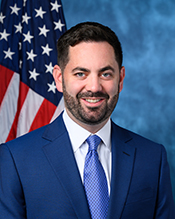
Rep. Michael Lawler
Sponsored bills
Maddy summaryHR 1007, the Antisemitism Awareness Act of 2025, clarifies how the Department of Education enforces Title VI of the Civil Rights Act of 1964 to address discrimination against Jewish individuals. It requires the Department to consider the International Holocaust Remembrance Alliance (IHRA) definition of antisemitism when investigating complaints involving discrimination based on actual or perceived Jewish ancestry or ethnic characteristics. This affects Jewish students and communities in K-12 schools and colleges receiving federal funding, as it ensures antisemitism is assessed under existing civil rights protections. The bill does not create new laws but specifies that the IHRA definition - already used by the Department since 2018 - must be applied in Title VI enforcement cases.
Maddy summaryHR 835, the 9/11 Memorial and Museum Act, provides a one-time federal grant of $5-10 million to the National September 11 Memorial & Museum (operated by an IRS 501(c)(3) organization) for its operations, security, and maintenance. The bill requires the museum to offer free admission to veterans, first responders, and victims' families, plus weekly free public hours, and mandates annual financial audits and public reporting to Congress. Grant funds must be used to preserve the site, educate visitors, and increase access for economically disadvantaged groups. The funding is subject to annual appropriations and does not authorize ongoing federal support beyond the one-time grant.
Maddy summaryHRES 105 is a non-binding resolution affirming that Iran’s nuclear activities pose a threat to U.S. security and regional stability. It states that Iran’s pursuit of nuclear weapons capability - including enriching uranium to near-weapons-grade levels (60-83.7%) and expanding centrifuge infrastructure - threatens the United States, Israel, and allies. The resolution demands Iran immediately halt uranium enrichment, development of nuclear delivery systems, and nuclear warhead programs. It emphasizes all options should be considered to address the threat but explicitly states it does not authorize military force. This resolution serves as a formal congressional statement of concern, not a policy change.
Railway Safety Act of 2025 This bill addresses safety requirements for rail carriers and trains transporting hazardous materials. Specifically, the Department of Transportation (DOT) must issue safety regulations for trains carrying hazardous materials to require that rail carriers or shippers (1) provide state emergency response commissioners with advance notice and information about the hazardous materials; (2) reduce blocked rail crossings; and (3) comply with certain requirements regarding train length and weight specifications, track standards, speed restrictions, and response plans. DOT must also establish requirements for wayside defect detectors. These are used by railway systems alongside the tracks to detect defects and failures (e.g., wheel bearing failures). Current federal regulations do not require their use, but federal guidance does address their placement and use. Under the bill, DOT must issue regulations establishing requirements for the installation, repair, testing, maintenance, and operation of wayside defect detectors for each rail carrier operating a train carrying hazardous materials. The bill also increases the maximum fines DOT may impose on rail carriers for violating safety regulations; requires DOT to update rail car inspection regulations and audit the federal inspection programs; establishes a statutory requirement for freight trains to have at least two crew members, with exceptions; phases out certain railroad tank cars by May 1, 2027; expands training for local first responders; imposes a new fee on certain rail carriers; and authorizes grants to improve railway safety.
Maddy summaryHR 942, the "Banning SPR Oil Exports to Foreign Adversaries Act," prohibits the export of petroleum products drawn from the U.S. Strategic Petroleum Reserve to China, North Korea, Russia, Iran, and any entity owned or controlled by these countries or the Chinese Communist Party. The Secretary of Energy may grant a waiver for such exports if certified as serving U.S. national security interests, but must issue implementing rules within 60 days of enactment. This policy directly affects U.S. energy exports and entities seeking to purchase SPR oil from the listed adversaries.
Maddy summaryThis bill reauthorizes the Dr. Lorna Breen Health Care Provider Protection Act, extending mental health support programs for healthcare professionals through 2030 (previously ending in 2024). It requires funded programs to specifically address reducing administrative burdens on healthcare workers while continuing to promote access to mental health and substance use disorder services. The legislation directly affects healthcare providers across the U.S. who may access these federally supported resources. Key provisions include extending funding periods and mandating that grant recipients focus on easing workplace administrative tasks, alongside maintaining existing awareness initiatives. The bill does not create new programs but continues and refines existing mental health support for the healthcare workforce.
Health Care Workforce Innovation Act of 2025 This bill establishes the Health Care Workforce Innovation Program within the Health Resources and Services Administration to provide grants to federally qualified health centers, rural health clinics, and post-secondary vocational programs for developing education and training for allied health professionals (e.g., professionals providing clinical or non-clinical support services, community health workers, and health education specialists). Specifically, grant recipients must use the funds to carry out innovative, community-based programs to train allied health professionals, with a focus on supporting rural and underserved areas. Grant recipients may use the funds to launch or expand health care professional partnerships (e.g., between a grant recipient and a school), establish apprenticeship or other career programs, or invest in training equipment, among other activities.
Maddy summaryHR 951 authorizes the U.S. Mint to produce commemorative coins (gold $5, silver $1, and half-dollar) in 2028 to mark the 250th anniversary of the Declaration of Independence. Surcharges from coin sales ($35 per gold coin, $10 per silver, $5 per half-dollar) will fund the Stephen Siller Tunnel to Towers Foundation, supporting programs for Gold Star families, first responders, veterans, and their families. The coins must meet specific weight, size, and composition standards, with mintage limits set at 100,000 gold, 500,000 silver, and 750,000 half-dollar coins. All surcharge proceeds directly benefit the Foundation’s existing initiatives, such as mortgage-free housing and scholarships, without requiring additional federal funding.
Maddy summaryHR 921, the Master Sergeant Roddie Edmonds Congressional Gold Medal Act, authorizes the posthumous award of a Congressional Gold Medal to Master Sergeant Roddie Edmonds for his heroic actions during World War II. The bill recognizes Edmonds' defiance of Nazi orders to separate Jewish-American soldiers at Stalag IX-A prisoner camp, where he declared "We are all Jews here" to protect approximately 200 Jewish soldiers, saving their lives. The medal, to be struck by the U.S. Treasury and presented to his son or next of kin, commemorates his actions and his posthumous recognition as "Righteous Among the Nations" by Yad Vashem. This commemorative act does not create new policy or affect any group beyond honoring Edmonds' legacy.