This resolution supports the designation of Career and Technical Education Month to celebrate career and technical education across the United States.
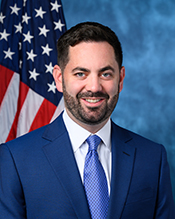
Rep. Michael Lawler
Sponsored bills
Cartel And Radical Terrorist Enforcement Log Act of 2025 or the CARTEL Act of 2025 This bill requires U.S. Customs and Border Protection to publish each month statistics related to encounters and arrests. The report must include, for example, the total number of individuals affiliated with transnational criminal organizations who have repeatedly attempted to cross unlawfully into the United States. The Department of Homeland Security must report annually on foreign terrorist organizations and transnational criminal organizations attempting to move their members or affiliates into the United States through the southern, northern, or maritime border.
Maddy summaryHR 1076, the WARN Act, requires the Comptroller General to study how well local, state, and federal emergency alert systems share timely weather emergency information during events like storms or power outages. The study will examine alert methods (including social media), the clarity of public messages, and outdoor siren systems, using feedback from emergency managers and community groups. It mandates a report to Congress within 18 months of enactment, focusing on identifying improvements to alert systems for public safety. The bill itself does not change existing policies but directs a review to inform future emergency communication strategies.
Protect Our Letter Carriers Act of 2025 This bill requires or authorizes certain actions related to the U.S. Postal Service (USPS). The bill requires the Department of Justice to appoint an assistant U.S. attorney in each judicial district to coordinate and supervise the investigation and prosecution of various crimes related to postal services (for example, assault on a postal service employee, breaking into a post office, or obstruction of mails). The bill also requires the U.S. Sentencing Commission to amend sentencing guidelines to provide that the assault or robbery of a postal employee shall be treated the same as the assault of a law enforcement officer. Additionally, the bill authorizes appropriations for the USPS to install high security collection boxes and replace older versions of the universal mailbox key with electronic versions.
Maddy summaryHR 1046, the Marc Fischer Memorial Act, requires the Bureau of Prisons to implement digital mail scanning technology at all federal prisons to detect fentanyl and other synthetic drugs in inmate mail. It mandates a strategy within 90 days of an evaluation, including 100% scanning of all mail, digital copies of mail to inmates within 24 hours, and physical mail delivery within 30 days for non-contaminated items. The bill directly affects federal prison staff, inmates, and the Bureau of Prisons by aiming to reduce drug-related overdoses and alleviate staff workload tied to mail processing. Implementation must be completed within three years, with annual reports tracking detected drugs and strategy efficiency. The legislation focuses on concrete technological and procedural changes to enhance safety, referencing a successful pilot program at two facilities.

Maddy summaryHR 1102 establishes a commission to study the feasibility of creating a National Museum of Italian American History and Culture in Washington, D.C. The commission, composed of 8 members appointed by congressional leaders, will examine factors like location options, costs, fundraising potential, and impacts on existing museums, and must report back within 18 months. It will not create the museum itself but will develop recommendations for Congress on whether to proceed, with all funding coming from private sources - no federal funds may be used for the commission’s work. The bill focuses solely on the study process, not on building or operating the museum.
Maddy summaryHRES 110 prohibits the distribution of Chinese Communist Party-controlled publications, such as *China Daily*, within House facilities like the Capitol building and House office buildings. It requires the Chief Administrative Officer to immediately stop accepting, distributing, or using internal mail systems for these materials, which are defined as publications registered under the Foreign Agents Registration Act and controlled by the CCP. The resolution does not restrict private receipt of such publications by Members or staff, access through public libraries, or the Library of Congress’s collection. This policy change applies immediately to all House-owned or operated facilities.
Maddy summaryHR 1012, the Spent Fuel Prioritization Act of 2025, amends the Nuclear Waste Policy Act to change how the federal government prioritizes accepting spent nuclear fuel and high-level radioactive waste from civilian power plants. The bill requires the Secretary to prioritize waste based on four specific factors: whether the reactor is decommissioned (highest priority), the population size of the surrounding area, the earthquake hazard level in the area, and national security risks related to local storage. This directly affects nuclear power plant operators and communities near reactors, as waste from plants meeting these criteria would be processed faster for disposal or storage. The law does not create new waste generation but changes the order in which existing waste is managed.
Maddy summaryHR 977, the Support Military Families Act, allows federal employees who are spouses of active-duty military members to work remotely full-time without returning to in-person work. It directly affects eligible military-spouse federal employees in the executive branch who were already permitted telework before January 20, 2025. The bill requires the Government Accountability Office (GAO) to report on the number of affected employees, their typical commute distances, and the estimated economic costs if they were forced to work in-person. This policy change aims to reduce relocation barriers for military families by maintaining existing telework flexibility for these employees.
Maddy summaryThis bill requires annual health assessments for all active-duty military members beginning in 2026. It mandates specific tests including a sports physical, an annual heart test (electrocardiogram), and detailed blood work covering metabolic and blood count panels, plus optional thyroid and heart-related tests if needed. The bill also ensures these assessments include any existing health evaluations required by prior laws, such as those from the 2020 National Defense Authorization Act. The policy directly affects all active-duty service members in the U.S. military.