

Maddy summaryThis bill requires the Transportation Security Administration (TSA) to transition its workforce from a special personnel management system to the standard federal personnel system under Title 5 of the U.S. Code by December 31, 2025. It protects TSA employees by ensuring no reduction in pay, benefits, or retirement rights during the transition, while preserving collective bargaining rights for screening agents. The legislation also mandates consultation with labor unions during the process and requires several reports on workforce issues including recruitment, harassment policies, and workplace safety.
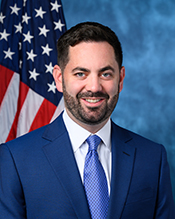
Rep. Michael Lawler
Sponsored bills
Maddy summaryThis bill changes how individual investors in mutual funds (regulated investment companies) are taxed on certain dividends. It allows investors to defer paying tax on capital gain dividends that are automatically reinvested in additional fund shares through a dividend reinvestment plan. The deferred tax is recognized later when the investor sells shares or upon their death. It also establishes that shares acquired through this reinvestment are treated as held for over one year from the start, potentially qualifying for long-term capital gains rates. The rule applies only to individual investors (not estates, trusts, or dependents claimed by others).
Maddy summaryHR 2058 amends the Workforce Innovation and Opportunity Act (WIOA) to formally define "evidence-based" for workforce programs. It specifies that an activity, service, or strategy must demonstrate statistical proof of effectiveness through rigorous studies (like controlled experiments or well-designed evaluations) or show a strong research rationale with ongoing evaluation efforts. This definition directly affects states and local workforce boards receiving WIOA funds, requiring them to describe how they prioritize evidence-based programs in their funding applications. The bill updates WIOA sections to include this definition and mandates states to detail their evidence-based program funding strategies in grant proposals.
Maddy summaryHR 2080, the "Crucial Communism Teaching Act," requires high schools to teach students about communism's historical and current impacts. The bill mandates that students learn communism caused over 100 million deaths globally, understand its dangers, and recognize that 1.5 billion people "still suffer under communism." It directs the Victims of Communism Memorial Foundation to develop a high school curriculum and oral history resources ("Portraits in Patriotism") featuring victim stories, with specific focus on modern examples like Xinjiang human rights abuses and China's actions in Hong Kong and Taiwan. The curriculum must be integrated into social studies, government, history, and economics classes, and updated to cover both historical and current communist regimes.
Maddy summaryHR 2033, the Military Spouse Hiring Act, expands the Work Opportunity Tax Credit to include spouses of active-duty military personnel. It adds "qualified military spouse" as an eligible category for the tax credit, meaning employers who hire such spouses can claim the credit. A "qualified military spouse" is defined as someone certified by a local agency as married to an active-duty service member at the time of hire. The credit applies to hires occurring after the bill's enactment date. This directly affects military spouses seeking employment and employers hiring them, providing a tax incentive to encourage their hiring.
Maddy summaryThe FLASH Act authorizes construction of navigable roads along federal border lands to improve U.S. Customs and Border Protection access and operational control. It requires federal agencies to develop protocols for reducing trash accumulation and environmental degradation from unauthorized border crossings, while targeting illegal cannabis cultivation sites with environmental response initiatives. The bill prohibits using federal funds to provide housing for undocumented immigrants on federal lands and establishes criminal penalties for illegal pesticide use. The legislation affects how federal land management agencies (National Park Service, Bureau of Land Management, etc.) operate along the southern border, with specific reporting requirements for environmental impacts and trash collection.
Maddy summaryHR 862, the TSA Commuting Fairness Act, requires the Transportation Security Administration (TSA) to conduct a feasibility study on whether employees' commute time between duty locations and airport parking/transit stops should count as on-duty hours. The study, due within 270 days of enactment, must examine commute times at small, medium, and large hub airports, average commuting duration, potential employee and agency benefits, and practical tracking methods (like mobile location data). It also must assess costs, including retirement pay implications, for treating commute time as work hours. The study will be submitted to relevant House and Senate committees, but the bill itself does not change current policies.
Maddy summaryHRES 208 is a non-binding House resolution expressing solidarity with New York State corrections officers who are striking over unsafe working conditions. It cites rising assaults on staff (2,070 in 2024), staffing shortages (down to 13,886 officers in 2025), and the HALT Act's restrictions on solitary confinement as key issues driving the strike. The resolution urges the New York State Legislature to repeal the HALT Act and condemns Governor Hochul's response to the strike. As a symbolic gesture, it does not create new law or directly affect policy.
Maddy summaryThis bill increases federal funding for projects improving safety for pedestrians and cyclists. It allows states and local governments to use highway funds for connecting existing bike/pedestrian infrastructure (clause xxix) or reducing safety risks to vulnerable road users (clause xxx), with federal funding covering up to 100% of costs for these projects. The bill also creates flexible financing options, letting local safety plans (like Complete Streets or Vision Zero plans) count toward required local funding shares. It directly affects state transportation agencies and local governments administering federal highway safety programs. The key change is making 100% federal funding available for qualifying pedestrian and cyclist safety projects.
Maddy summaryHR 2012, the Iran Sanctions Relief Review Act of 2025, requires the President to submit a detailed report to Congress before terminating, waiving, or significantly altering U.S. sanctions on Iran. The bill directly affects the President and Congress, mandating a 30-day (or 60-day during specific summer months) congressional review period for such actions. During this period, relevant committees must review the proposal, and Congress can block the action via a joint resolution of disapproval. The bill does not change sanctions policy itself but establishes a formal process for congressional oversight of any major sanctions-related decisions. It applies to sanctions under multiple existing laws, including the Iran Sanctions Act of 1996 and the 2010 Comprehensive Iran Sanctions Act.