

Maddy summaryHR 2121 establishes a 23-member commission to study the feasibility of creating a National Museum of Irish American History in Washington, D.C. The commission, appointed by the President and congressional leaders, will examine key issues like funding sources (without relying on federal appropriations), potential locations, whether to partner with the Smithsonian, and community engagement strategies. It must submit detailed reports within 24 months, including a fundraising plan and recommendations for potential legislation, but does not authorize the museum's construction or funding. The bill focuses solely on gathering data and recommendations to inform future decisions, with the commission terminating 30 days after final reports are submitted.
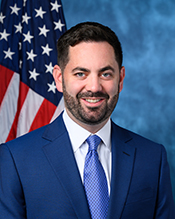
Rep. Michael Lawler
Sponsored bills
Maddy summaryHR 2095, the Postal Police Reform Act of 2025, amends existing law to clarify the roles of USPS police officers and their authority over property. It explicitly includes "Postal Service police officers" alongside Postal Inspectors in Section 3061 of Title 18, U.S. Code, and gives the Postmaster General new authority to create rules for protecting USPS-owned or controlled property. These rules can include fines or up to 30 days in jail for violations, with penalties clearly defined under the law. The bill directly affects USPS police officers and individuals on USPS property by standardizing their regulatory framework.
Maddy summaryHR 2150, the TRACE Act, requires the National Missing and Unidentified Persons System to add a data field indicating whether a missing person’s last known location or unidentified remains were confirmed or suspected to be on Federal land (such as national parks or military bases), including specific location details. This affects federal land management agencies like the National Park Service and U.S. Forest Service, which must provide this data. The bill mandates an annual report to Congress starting in 2025, detailing the number of cases involving Federal land, broken down by agency. The key change is adding standardized tracking for federal land connections to improve data collection and reporting on missing persons cases.
Maddy summaryHR 2092, the SPEAK Act of 2025, requires the Health and Human Services Secretary to create guidance for healthcare entities within one year of enactment. This guidance focuses on improving telehealth access for people with limited English proficiency, directly affecting health IT companies, hospitals, insurers, language service providers, and interpreters. Key provisions include best practices for using interpreters during video appointments, providing multilingual patient materials (like appointment reminders and prescriptions), and making digital health portals accessible. The bill aims to standardize language access in telehealth services without changing existing laws.
Homes for Every Local Protector, Educator, and Responder Act of 2025 or the HELPER Act of 2025 This bill establishes a program administered by the Department of Housing and Urban Development to provide mortgage assistance to law enforcement officers, elementary and secondary school teachers, firefighters, or other first responders. Specifically, these individuals may be eligible for a first-time mortgage on a primary family residence with no down payment. Instead, the mortgage is subject to a one-time, up-front mortgage insurance premium.
Maddy summaryThe Access to Family Building Act establishes legal rights for individuals seeking fertility care and health care providers offering assisted reproductive technology (ART) services. It prohibits states or localities from imposing unreasonable restrictions on ART access - such as excessive costs, health barriers, or arbitrary limitations - that don’t advance safety or health outcomes. The bill allows patients, providers, or insurers to sue to enforce these rights, while explicitly preserving state health/safety regulations that protect patient safety. It does not override existing state insurance laws or require changes to medical facility safety standards. This bill directly affects patients pursuing fertility treatment, fertility clinics, and health insurers covering ART services.
Maddy summaryThe Credit for Caring Act of 2025 creates a federal tax credit for family caregivers of elderly or disabled relatives. It allows eligible caregivers (with over $7,500 in earned income) to claim a credit equal to 30% of qualified caregiving expenses exceeding $2,000, capped at $5,000 per year. Qualified expenses include human assistance, home modifications, respite care, counseling, lost wages for unpaid time off, and transportation, all requiring certification from a licensed healthcare provider that the care recipient has long-term needs. The credit phases out for higher earners (over $75,000 single/$150,000 joint) and requires documentation of expenses and care recipient certification.
Metastatic Breast Cancer Access to Care Act This bill expedites payment of Social Security Disability Insurance (SSDI) benefits and eligibility for Medicare coverage for those with metastatic breast cancer (i.e., breast cancer that has spread to other sites in the body). Specifically, the bill eliminates the 5-month waiting period for SSDI benefits and the subsequent 24-month waiting period for Medicare coverage for individuals with metastatic breast cancer. Under current law, individuals generally must wait 5 months after the onset of disability to begin receiving SSDI benefits and an additional 24 months to become eligible for Medicare.
Resident Education Deferred Interest Act or the REDI Act This bill allows borrowers in medical or dental internships or residency programs to defer student loan payments until the completion of their programs.
Maddy summaryHR 2081, the Donut Dollies Congressional Gold Medal Act, authorizes a Congressional Gold Medal to honor the 627 women who served as Red Cross volunteers in the Supplemental Recreation Activities Overseas (SRAO) program during the Vietnam War. The bill directs the Treasury Secretary to design and strike the medal, which will be presented by Congress and then given to the Smithsonian Institution for display. It also allows the sale of bronze duplicates to cover costs, with proceeds going to the U.S. Mint fund. This commemorative act recognizes the volunteers' service supporting over 280,000 troops through recreation programs across Vietnam from 1965 to 1973.