

Maddy summaryThis bill automatically reduces the interest rate on eligible federal student loans to 2.0% for all borrowers, starting July 1 after enactment. It applies to all federal loans held by the U.S. Department of Education (like Direct Loans) and refinances other federal loans (like older FFELP loans) into new Direct Consolidation Loans at 2.0% interest without requiring borrower action (though borrowers may opt out of refinancing). Key provisions include eliminating origination fees, preserving original repayment terms, and requiring the Department to report annually on participation and delinquency rates. The policy directly affects millions of student loan borrowers with federal loans, lowering their interest costs without altering repayment duration or forgiveness eligibility.
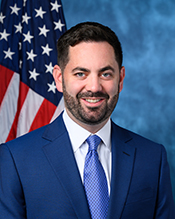
Rep. Michael Lawler
Sponsored bills
Maddy summaryThe Choice in Affordable Housing Act of 2025 aims to increase landlord participation in the Housing Choice Voucher program, which helps low-income families, seniors, and people with disabilities afford housing in the private market. The bill creates new incentives including one-time payments to landlords (up to 200% of monthly rent) for renting to voucher holders in low-poverty areas (census tracts with poverty rates below 20%), security deposit assistance for tenants, and bonus payments to public housing agencies that employ dedicated landlord liaisons. It establishes a $100 million annual fund for these initiatives and requires annual reports on the program's effectiveness in expanding housing options in high-opportunity neighborhoods. These changes directly affect landlords, voucher recipients, and public housing agencies administering the program.
Maddy summaryTim's Act establishes pay parity for Federal wildland firefighters employed by the Department of Agriculture, Department of the Interior, and Tribal Firefighters. It creates special base pay rates that increase General Schedule base rates by specific percentages (1.5% to 42%) based on job grade, and provides incident response premium pay at 450% of hourly rate for qualifying wildfire incidents. The bill also establishes rest and recuperation leave after firefighting operations, requires a public cancer database tracking environmental exposure, and creates a mental health support program for firefighters. Additionally, it addresses retirement benefits, disability annuities, and creates a casualty assistance program for families of firefighters injured or killed in the line of duty.
Maddy summaryThis bill authorizes a posthumous Congressional Gold Medal for actor James Earl Jones to recognize his career achievements in theater and film. It directs the Treasury Secretary to strike a gold medal bearing his name, which will be presented to his son, Flynn Earl Jones, following Jones' passing. The bill also permits the sale of bronze duplicates to cover costs. As a ceremonial honor with no policy changes, it does not affect legislation or government operations.
Maddy summaryHR 1938 requires the Department of Defense to request modifications to stormwater permits at military facilities, mandating quarterly monitoring of PFAS discharges and implementation of best management practices to reduce them. The bill directly affects all Department of Defense facilities subject to federal stormwater permits under the Clean Water Act. It allocates at least 1% of annual PFAS remediation funds specifically for testing stormwater runoff at these sites. The legislation focuses on preventing PFAS contamination in waterways by strengthening monitoring and reduction measures at military operations.
Maddy summaryThe FISH Act of 2025 transfers responsibility for managing migratory fish species (such as salmon that spawn in freshwater and migrate to the ocean, or eels that spawn in the ocean and migrate to freshwater) from the Department of Commerce to the Department of the Interior. It amends the Endangered Species Act to update the "Secretary" reference for these species to the Secretary of the Interior and adds clear definitions for "anadromous" and "catadromous" species. The bill ensures existing permits, decisions, and legal cases involving these fish continue without interruption during the transition. It also allows for reconsideration of certain administrative decisions made by the Commerce Department within three years before the transfer, if requested within one year of the transfer.
Maddy summaryHR 1878 creates a new federal tax credit for out-of-pocket expenses related to fertility treatments like IVF. It allows eligible taxpayers to claim a credit equal to up to $20,000 per year (or $40,000 for joint filers) for qualifying expenses, subject to income limits ($200,000 AGI for individuals, $400,000 for couples). The credit phases out for taxpayers earning above these thresholds and cannot be claimed for expenses covered by insurance or other deductions. This directly affects individuals and couples seeking fertility treatments who pay for them out-of-pocket.
Maddy summaryThis bill establishes a federal pilot program to increase wages for child care workers through competitive grants to states and tribes. It requires grant recipients to use funds directly to supplement wages for eligible workers in licensed child care centers or home-based settings, paid quarterly, with up to 10% of funds allowed for administrative costs. The program must track impacts on worker retention, well-being, care quality, and affordability, and report results to Congress within two years. It targets low-wage workers in underserved areas, including those serving infants, toddlers, children with disabilities, or during nontraditional hours.
Maddy summaryHR 1827, the Child Care Availability and Affordability Act, increases tax benefits for families with child care needs and employers providing child care. It raises the employer child care credit from 25% to 50% of expenses with a maximum credit of $500,000 (up from $150,000), and creates a new household and dependent care credit allowing families to claim up to 50% of eligible child care expenses, with the credit amount reduced as income increases, up to $8,000 for multiple children. The bill directly affects working parents with children under 13 or dependents needing care, as well as employers offering child care benefits. Key provisions include expanded credit amounts, new definitions for qualifying care, and special rules for small businesses.
Maddy summaryHR 803, the Sergeant Gary Beikirch Medal of Honor Act, amends a provision in the U.S. Code (38 U.S.C. §1562) to allow Medal of Honor recipients to receive both the Medal of Honor and the special pension benefit concurrently. Currently, a provision in the law prevents recipients from receiving this pension alongside the Medal of Honor. The bill removes the specific language (subparagraph (C)) that created this conflict. This change directly affects living Medal of Honor recipients who would now be eligible for the full pension benefit without losing it due to the award. The bill is procedural, focusing solely on updating the pension eligibility rules.