

Maddy summaryThis bill establishes a federal committee composed of agency heads from Education, Justice, Consumer Financial Protection, and other departments to coordinate oversight of for-profit colleges. The committee will share data across agencies, create a centralized complaint system for students, and publish an annual report with detailed data on for-profit institutions' finances, student outcomes, and complaints. It also creates a "For-Profit College Warning List" that identifies institutions with serious issues like fraud or misrepresentation, providing plain-language summaries for parents and students. The bill directly affects for-profit colleges, their students, and the federal agencies that oversee higher education programs.
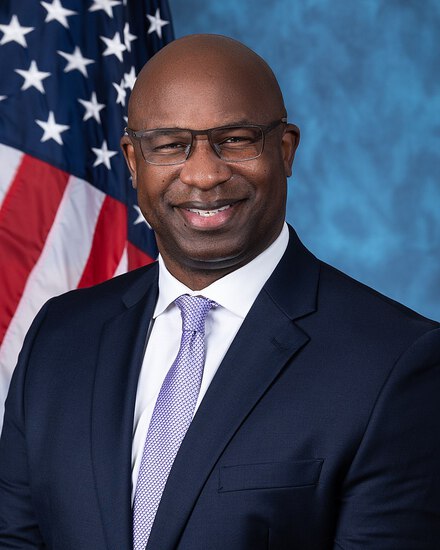
Rep. Jamaal Bowman
Sponsored bills
Maddy summaryHRES 1101 is a non-binding resolution expressing the House of Representatives' support for collaborating with the Congressional Black Caucus to develop a "Black Wealth Agenda." It commits the House to outlining legislative priorities focused on closing the racial wealth gap through key areas like expanding Black entrepreneurship, reforming housing policies, building workforce development programs, and updating the federal minimum wage. The resolution emphasizes addressing systemic barriers in homeownership, education access, employment discrimination, and tax policy to advance economic equity for Black communities. It does not create new laws but directs the House to coordinate with the CBC on policy solutions targeting wealth-building opportunities.
Maddy summaryThis bill would provide federal grants to public housing agencies to modernize public housing through energy efficiency upgrades, infrastructure improvements, and renewable energy systems. It requires all public housing to become "zero-carbon homes" that produce enough renewable energy to meet their own consumption within 10 years. The bill includes specific requirements for workforce development, hiring from low- and very low-income communities (40% in year 1, 50% in year 2, 90% after that), and contracting with resident-owned businesses (20% in year 1, 30% in year 2, 50% after that). It also mandates resident and community engagement in planning, and requires public housing agencies to meet specific energy efficiency and water quality standards. The bill directly affects all public housing agencies managing housing for low- and very low-income residents across the United States, including tribal housing entities.
Maddy summaryHRES 1096 is a non-binding resolution expressing support for the House of Representatives to collaborate with the Congressional Black Caucus in developing the "Black Wealth Agenda." It identifies key areas requiring policy action, including closing the racial wealth gap through improvements in homeownership access, education equity, fair employment practices, affordable housing, and tax reform. The resolution outlines priorities such as expanding support for Black entrepreneurship, addressing systemic housing discrimination, raising the federal minimum wage, and investing in historically Black colleges. It does not create new laws or mandate specific actions but commits the House to coordinating legislative efforts focused on these economic equity goals. The resolution was introduced by multiple representatives and referred to relevant committees for review.
Maddy summaryHR 7753, the "Protecting Communities from Helicopter Noise Act," requires the Federal Aviation Administration (FAA) to study helicopter noise impacts near the Statue of Liberty National Monument. The study will analyze noise volume, health and environmental effects, compliance with existing agreements, and potential solutions like flight path changes or altitude limits within a 15-mile radius of the monument. It directly affects communities living in residential and recreational areas near the monument and the FAA, which must complete the study and submit a report to Congress within 180 days of the bill's enactment. The bill does not impose new regulations but mandates a data-driven assessment to inform future decisions on helicopter operations.
Maddy summaryThe PTO Act establishes a standard for paid annual leave, requiring most employers to provide employees with 1 hour of paid leave for every 25 hours worked, up to a maximum of 80 hours per 12-month period. It directly affects private sector employees and certain government workers, including those at the Government Accountability Office, Library of Congress, and federal agencies covered under the Congressional Accountability Act. The bill prohibits employers from interfering with employees' use of leave for any reason, requires clear notice of leave policies, and protects employees from retaliation for taking leave. It includes enforcement mechanisms through the Department of Labor, allowing employees to file complaints or lawsuits for violations of their leave rights. The Act takes effect 180 days after enactment, with specific provisions for collective bargaining agreements.
Maddy summaryThe Stateless Protection Act of 2024 would create "stateless protected status" for noncitizens in the United States who are stateless (not recognized as citizens by any country). The bill would allow these individuals to apply for protection from deportation, employment authorization, travel documents, and adjustment to lawful permanent resident status (a green card). It establishes a process for determining statelessness, requiring the Department of Homeland Security to consider evidence from various sources including international organizations and foreign governments. The legislation directly affects approximately 218,000 stateless people living in the U.S., who currently face barriers to work, education, healthcare, and travel due to their legal status. The bill also includes provisions for preventing statelessness internationally and updating U.S. laws to prevent future cases of statelessness.
Maddy summaryHR 7763, the Living Wage for Musicians Act of 2024, establishes a new Artist Compensation Royalty Fund to provide payments to musicians based on streaming activity. Streaming platforms (service providers) must charge subscribers an additional $4-$10 fee per subscription (50% of the subscription fee, subject to min/max limits), with 10% of non-subscription revenue also contributed to the fund. Funds are distributed as follows: 90% to "featured artists" (e.g., lead singers) based on their share of qualifying streams, and 10% to "non-featured artists" (e.g., session musicians) via existing union funds. The bill directly affects streaming services (which collect the fee) and musicians (who receive payments based on verified streaming data).
Maddy summaryThis bill would create a new wealth tax on individuals with significant assets, targeting those with net assets exceeding $50 million. It would tax assets between $50 million and $1 billion at 2%, and assets above $1 billion at 3% (potentially increasing to 6% if certain health care legislation is enacted). The tax would apply to individuals, married couples treated as a single taxpayer, and certain trusts, with specific valuation and reporting requirements for assets. The bill also includes $70 billion in funding over 10 years for the IRS to enforce this new tax and related reporting requirements.
Maddy summaryThis bill establishes federal support for worker-owned cooperative businesses - entities owned and controlled by their employees. It creates the United States Council on Worker Cooperatives (under the Department of Labor) to coordinate agency efforts, identify regulatory barriers, and develop a national strategy. Covered agencies (like the SBA, Treasury, and Agriculture) must remove obstacles, provide capital access, offer education, and integrate cooperatives into federal programs. The bill also expands a small business lending pilot program for cooperatives with increased funding ($60 million annually through 2034) and requires multilingual outreach materials. The Council will operate for 10 years, reporting annually to Congress on progress and challenges.