

Maddy summaryHCONRES 99 is a symbolic congressional resolution honoring Wadee Alfayoumi, a 6-year-old Palestinian-American boy murdered in a hate crime on October 14, 2023, after being stabbed 26 times by a perpetrator who made anti-Muslim and anti-Palestinian remarks. The resolution recognizes Congress's condemnation of hate crimes, Islamophobia, and anti-Palestinian discrimination, while affirming the United States' "zero tolerance" for such violence. As a procedural resolution (not a law), it does not create new policies but formally honors Wadee and his family, emphasizing the need to reject dehumanizing rhetoric targeting religious or ethnic groups.
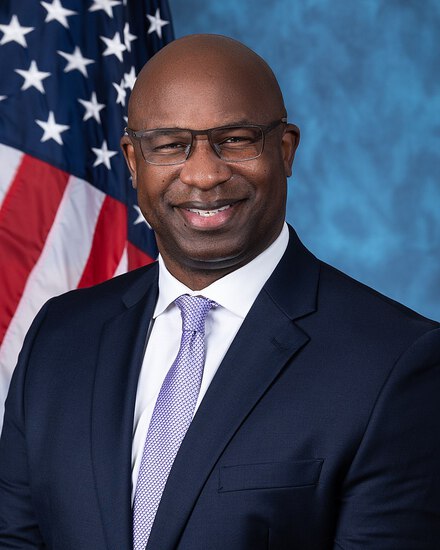
Rep. Jamaal Bowman
Sponsored bills
Maddy summaryHR 7651, the Methane Emissions Mitigation Research and Development Act, establishes a federal program to fund research and development for better methane leak detection and mitigation technologies in the natural gas infrastructure. The bill directs the Secretary of Energy to create a Methane Emissions Measurement and Mitigation Research Consortium (including oil/gas operators, researchers, and community groups) to share data, prioritize research, and develop best practices for pipelines, wells, and storage facilities. It authorizes $36 million to $44 million annually (2025-2029) for this program and $15 million to $23 million annually for National Institute of Standards and Technology facilities to test methane measurement technologies. The effort directly affects oil and gas operators through improved leak detection tools and aims to protect public health by addressing methane emissions from infrastructure. The bill focuses solely on research, not regulatory requirements, with annual congressional reporting on progress.
Maddy summaryThis concurrent resolution (HCONRES 97) recognizes the gender wage gap, noting that women working full-time earn 84 cents for every dollar earned by men. It highlights racial disparities (e.g., Latinas earn 57 cents, Black women 69 cents) and the economic impact of the gap, including $965 billion in annual lost wages for women. As a symbolic resolution, it does not create new laws or policies but formally acknowledges the issue and reaffirms Congress’s commitment to addressing wage inequality.
Maddy summaryHR 7639 establishes a 14-member National Advisory Council to address unpaid school meal fees in child nutrition programs. The Council, composed of diverse members including school nutrition directors, parents, FNS officials, and food service workers, will provide recommendations to the Food and Nutrition Service Administrator within three years. Its key focus is ensuring students aren’t shamed for unpaid fees while helping schools maintain financial stability for meal programs. The Council’s report will guide future policy guidance, but the bill itself creates no immediate changes to school meal eligibility or funding. This procedural bill sets up a process for studying the issue, not implementing new rules.
Maddy summaryThe American High-Speed Rail Act authorizes $35 billion annually for high-speed rail corridor development (with $3 billion for corridor planning), requiring at least 20% of project costs to come from non-Federal sources. It defines "high-speed rail" as services reaching 186+ mph and "higher-speed rail" as 110-186 mph, with no more than 20% of funds allocated to higher-speed rail projects. Key provisions include allowing advance acquisition of rail corridors before environmental reviews, creating tax exclusions for rail carriers selling property to high-speed rail projects, and requiring consideration of equity, sustainability, and economic development impacts in planning. The bill affects federal agencies, state and local governments, rail carriers, and communities along proposed rail corridors.
Maddy summaryHRES 1042 is a ceremonial resolution recognizing the historical significance of the Freedom House Ambulance Service, founded in Pittsburgh's Hill District in 1967. It acknowledges the service as the first U.S. ambulance program staffed by trained paramedics (beyond basic first aid), which pioneered national standards for prehospital emergency care - including life-saving techniques like field intubation and advanced trauma treatment. The resolution highlights how the service, established to provide job training and medical care in an underserved Black community, revolutionized emergency medical services nationwide before ending in 1975 due to political pressures. It does not create new laws or affect any policies - it solely commends the service's legacy and contributions to emergency medical care.
Maddy summaryThis bill requires states to immediately stop Medicaid recovery claims against beneficiaries' estates. Specifically, it mandates that states withdraw all existing liens within 90 days of enactment and notify affected individuals or their estates about the withdrawal. The law also prohibits states from initiating, maintaining, or collecting any future Medicaid recovery claims for benefits correctly paid. It directly affects Medicaid recipients and their heirs who were previously subject to state recovery efforts. The key mechanism is the 90-day deadline for states to remove existing liens and cease all new recovery actions.
Maddy summaryHRES 1048 is a non-binding House resolution calling on the Department of Homeland Security (DHS) to establish a humanitarian parole program for Cameroonians fleeing violence in their home country. It specifically targets Cameroonians who arrived in the U.S. after October 5, 2023 - after the expiration of temporary protected status (TPS) that covered earlier arrivals - and who face risks of deportation to Cameroon amid ongoing conflicts, human rights abuses, and discriminatory treatment in U.S. immigration enforcement. The resolution cites over 6,000 deaths from violence in Cameroon since 2016, 1.7 million needing humanitarian aid, and DHS’s existing authority under Section 212(d)(5)(A) of the Immigration and Nationality Act to create such a program. It emphasizes that no African nation has ever received a humanitarian parole program under this mechanism, highlighting systemic gaps in U.S. immigration policy.
This concurrent resolution honors the lives and work of Mary and John Meachum and recognizes the importance of the Mary Meachum Freedom Crossing, which is part of the National Underground Railroad Network to Freedom.
Maddy summaryHRES 1040 is a ceremonial House resolution recognizing February as Black History Month. It formally acknowledges the achievements of Black Americans throughout U.S. history and encourages continued celebration of this observance. The resolution highlights the cultural and artistic contributions of Black Americans, including historical figures and movements like the Harlem Renaissance and hip-hop. As a non-binding resolution, it does not create new programs or affect any specific group, but serves to affirm the importance of commemorating Black history.