

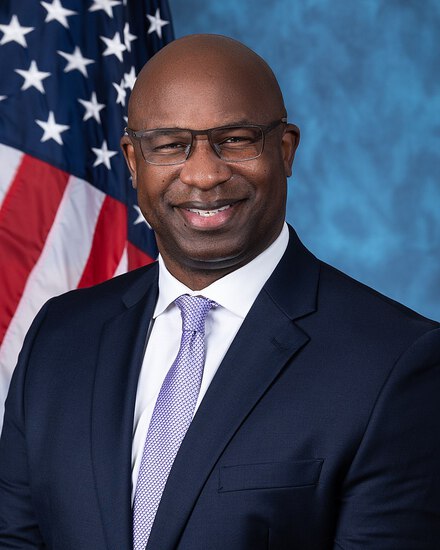
Photo of Jamaal Bowman
D United States House · District 16 · New York

Rep. Jamaal Bowman

Compare
Total votes
2,168
all sessions
Attendance
92%
182 missed
Lower than 96% of chamber peers
With party
94%
of cast votes
Near the chamber average
Bipartisan score
3%
crosses aisle rarely
Near the chamber average
Sponsored
1,140
bills & resolutions
Higher than 78% of chamber peers
Committees
0
assignments
1,140 bills and resolutions

Sponsored bills

Total
1,140
Primary
33
Co-sponsor
1,107
This page
1,140
matching current filters
Co-sponsor HR 1767
Passed · United States House · Co-sponsor
Student Veteran Benefit Restoration Act

Maddy summaryThis bill amends veterans' education benefit rules to expand when institutions must repay funds. It adds two new scenarios triggering repayment: (1) course/program suspension due to risk-based surveys under Section 3673A, and (2) Secretary of Education findings that an institution harmed borrowers through actionable misconduct. Educational institutions receiving VA benefits must repay all assistance funds if they close or terminate a program due to these fraud determinations. The policy directly affects veterans whose benefits could be restored if institutions repay funds, and institutions that must now repay if found liable for fraud harming students.

Passed May 1, 2024 1 co-sponsor
Co-sponsor HR 8191
In committee · United States House · Co-sponsor
CROWN Act of 2024

Maddy summaryThe CROWN Act of 2024 prohibits discrimination based on hair texture or style commonly associated with race or national origin, such as braids, locs, cornrows, twists, or afros. It directly affects individuals - particularly people of African descent - who face workplace, school, housing, or public accommodation discrimination due to natural or protective hairstyles. The bill expands existing federal civil rights laws (like Title VI, the Fair Housing Act, and Title VII) to explicitly include hair-based discrimination, requiring compliance in federally funded programs, housing, employment, and public spaces. It clarifies that grooming policies targeting these hairstyles violate anti-discrimination protections without creating new legal standards.

In committee Apr 30, 2024 1 co-sponsor
Co-sponsor HR 8192
In committee · United States House · Co-sponsor
High School Voter Empowerment Act of 2024

Maddy summaryHR 8192, the High School Voter Empowerment Act of 2024, requires all public high schools (as defined by federal education law) to serve as official voter registration agencies under the National Voter Registration Act. It mandates that each high school conduct at least one annual voter registration drive targeting students enrolled in American Government or Economics courses, aged 17+ by April 10, and eligible to vote for federal office. The bill also establishes a federal grant program to reimburse schools for reasonable costs incurred during these registration drives, including documentation of activities and student registrations. This law directly affects public high schools and state election officials, creating a new requirement for schools to facilitate voter registration for eligible students.

In committee Apr 30, 2024 1 co-sponsor
Co-sponsor HRES 1153
In committee · United States House · Co-sponsor
Recognizing the designation of the week of April 11 through April 17, 2024, as the seventh annual "Black Maternal Health Week".

Maddy summaryThis resolution symbolically recognizes April 11-17, 2024, as the seventh annual "Black Maternal Health Week." It highlights the disproportionately high maternal mortality and morbidity rates faced by Black women in the U.S., citing data showing Black women are 2-3 times more likely to die from pregnancy-related causes than White women. The resolution emphasizes systemic racism, healthcare inequities, and barriers like limited access to care as key factors contributing to these disparities. It calls for policy action - including support for the Black Maternal Health Momnibus Act - but does not create new laws or allocate funding.

In committee Apr 26, 2024 1 co-sponsor
Co-sponsor HR 8013
In committee · United States House · Co-sponsor
Gig Is Up Act

Maddy summaryHR 8013, the Gig Is Up Act, requires large employers (those with $100 million+ in annual gross receipts and 10,000+ independent contractors) to treat payments to certain gig workers as wages for payroll tax purposes. This means these employers must withhold Social Security and Medicare taxes at double the standard rate (instead of the usual 7.65%), similar to how they handle employee wages. The change applies to payments made after December 31, 2024, and directly affects major gig platforms and their workers who currently pay self-employment taxes. The bill does not reclassify workers as employees but alters how their payments are taxed under the Social Security system.

In committee Apr 15, 2024 1 co-sponsor
Co-sponsor HR 7972
In committee · United States House · Co-sponsor
Affordable Housing and Area Median Income Fairness Act of 2024

Maddy summaryThis bill authorizes $5 billion annually (2025-2034) for three key housing programs - Home Investment Partnerships, Community Development Block Grants, and the Housing Trust Fund - but restricts funding to areas already designated with a "high housing cost adjustment" by HUD. It mandates a two-year assessment by the Secretary of Housing and Urban Development to evaluate how area median income (AMI) calculations impact affordability, particularly in high-cost urban areas, including analyzing ZIP code-level metrics and alternatives to AMI. The study must examine rent burdens, income limits for tax-subsidized housing, and the specific effects of high-cost adjustments in places like New York City. The bill directly affects low-income and middle-class families in urban areas where housing costs significantly exceed local median income, aiming to inform potential reforms to housing affordability metrics.

In committee Apr 12, 2024 1 co-sponsor
Co-sponsor HR 7940
In committee · United States House · Co-sponsor
Coal Cleanup Taxpayer Protection Act of 2024

Maddy summaryHR 7940, the Coal Cleanup Taxpayer Protection Act of 2024, changes bonding rules for coal mining reclamation. It bans self-bonding (where mining companies guarantee their own cleanup costs) for both federal and state programs, requiring operators to replace existing self-bonds within 90 days or at permit renewal. The bill also mandates states to submit detailed reports on past bond forfeitures and financial forecasts, and establishes new rules for surety bonds and collateral - prohibiting coal mines, equipment, or coal itself as collateral. These changes directly affect coal mining operators, state regulators, and federal oversight under the Surface Mining Control and Reclamation Act.

In committee Apr 11, 2024 1 co-sponsor
Co-sponsor HR 7905
In committee · United States House · Co-sponsor
STAMP Act of 2024

Maddy summaryThe STAMP Act of 2024 bans state and local governments from taxing menstrual products. It prohibits taxes on items like pads, tampons, menstrual cups, discs, and period underwear that meet industry standards. The law directly affects consumers purchasing these products and state/local governments that previously imposed such taxes. It takes effect 120 days after enactment, removing tax burdens on menstrual products nationwide.

In committee Apr 9, 2024 1 co-sponsor
Co-sponsor HCONRES 101
In committee · United States House · Co-sponsor
Recognizing the need to improve physical access to many federally funded facilities for all people of the United States, particularly people with disabilities.

Maddy summaryHCONRES 101 is a symbolic resolution introduced in the U.S. House of Representatives on March 22, 2024, by multiple cosponsors. It recognizes that people with disabilities face daily barriers accessing federally funded facilities and reaffirms support for the existing Americans with Disabilities Act (ADA) and Architectural Barriers Act of 1968. The resolution pledges to prioritize "universal and inclusive design" in future federal infrastructure projects but does not create new legal requirements or alter current accessibility standards. As a concurrent resolution, it has no binding effect and serves only to express congressional support for accessibility goals.

In committee Mar 29, 2024 1 co-sponsor
Co-sponsor HR 7828
In committee · United States House · Co-sponsor
Pink Tax Repeal Act

Maddy summaryThe Pink Tax Repeal Act prohibits businesses from charging different prices for substantially similar consumer products or services based on the gender of the intended users. It defines "substantially similar" as having no meaningful differences in materials, use, or design - meaning color alone (e.g., pink vs. blue packaging) cannot justify price differences. The Federal Trade Commission would enforce this under existing laws, and state attorneys general could also sue companies for violations on behalf of residents. This directly affects consumers who pay higher prices for identical or nearly identical items marketed to a specific gender, such as women’s razors or clothing.

In committee Mar 29, 2024 1 co-sponsor
Showing 111 to 120 of 1,140 bills
Previous 1 … 11 12 13 … 114 Next