

Maddy summaryThe CERTS Tax Exemption Act (HR 3510) exempts certain grants received by transportation service providers from federal taxation under the Coronavirus Economic Relief for Transportation Services Act. It directly affects eligible transportation providers who receive these specific grants by excluding the grant amounts from their gross income and preventing related tax deductions or basis adjustments from being denied. Key provisions ensure that for partnerships and S corporations, excluded grant amounts are treated as tax-exempt income, and partner basis increases align with grant-funded costs. This creates a clear tax treatment for these grants without altering the underlying grant program.
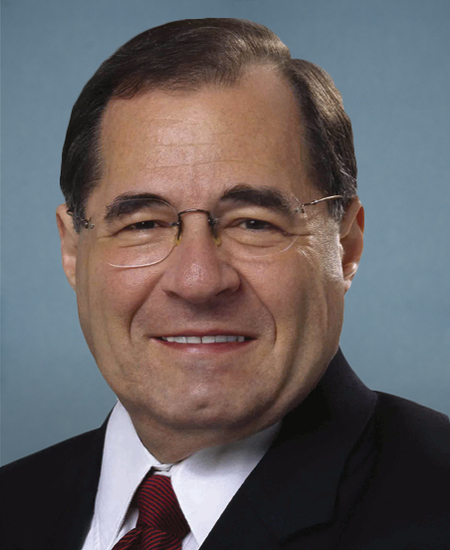
Rep. Jerrold Nadler
Sponsored bills
Maddy summaryHR 3537 authorizes the minting of commemorative coins to mark the 100th anniversary of the U.S. Foreign Service, established by the 1924 Rogers Act. The bill specifies three coin types ($5 gold, $1 silver, and half-dollar clad) with limited mintage (50,000 gold, 400,000 silver, 750,000 half-dollars) to be issued in 2025, featuring designs honoring diplomatic history. A surcharge on each coin sale ($35 for gold, $10 for silver, $5 for half-dollars) will fund the Association for Diplomatic Studies and Training (ADST) to support its oral history program and diplomatic preservation efforts. The coins will be legal tender, sold at cost-plus-surcharge, with all revenue directed to ADST per the bill's provisions.
Maddy summaryThis bill changes federal tax rules to allow employees to receive tax-free benefits for bike commuting expenses. It repeals a suspension of tax exclusions and expands coverage to include reimbursement for qualified bike/scooter purchases, repairs, or rentals (like bikeshare), as long as the vehicle meets safety specs (e.g., e-bikes under 20mph or 750W, scooters under 100lbs). The benefit is capped at 30% of the monthly amount allowed for commuting expenses. It directly affects employees who regularly bike to work and employers offering these tax-free commuting benefits, effective for 2023 tax years.
Maddy summaryThis bill directs the Department of Homeland Security to create a threat assessment on how terrorists and foreign actors use cyber harassment - including doxing - to threaten individuals. The assessment must detail tactics, notable incidents, and risk indicators for law enforcement, while coordinating with privacy offices. It requires DHS to share the report with Congress within 180 days and publish it online, with state/local law enforcement receiving it via fusion centers. The bill does not create new laws or penalties but focuses on information gathering about existing threats. (Procedural bill; summary limited to key action and scope.)
Maddy summaryThis resolution symbolically supports observing May 17 as the International Day Against Homophobia, Biphobia, Interphobia, and Transphobia (IDAHOBIT). It urges federal, state, and local governments, schools, healthcare providers, and community organizations to increase awareness of LGBTQ+ discrimination and create safer environments through educational activities. The resolution references global data on discrimination and health disparities but does not create new laws or funding. It aligns with international observances, such as the European Parliament’s recognition of IDAHOBIT.
This resolution condemns the great replacement theory, which it describes as a white supremacist conspiracy theory that has been used to falsely justify racially motivated, violent acts of terrorism domestically and internationally.
Maddy summaryThe Fund the TSA Act sets a new aviation security fee of $7.60 per one-way air trip (capping round trips at $15.20) and requires annual inflation adjustments starting in 2026. It creates three dedicated funds from these fees: $250 million yearly (2024-2028) for airport security technology development (including $12.5 million for small businesses), $1.14 billion in 2024 for TSA worker salaries and benefits, and $130 million in 2024 for airport security programs like law enforcement reimbursements and exit lane security grants. These funds replace diverted revenues and directly support TSA operations, technology upgrades, and workforce needs. The bill affects air travelers (via the fee), TSA employees (through funding), and small businesses (through technology development opportunities).
Maddy summaryHR 3409, the Healthy Families Act, requires most employers to provide employees with paid sick leave. Employees earn 1 hour of paid sick time for every 30 hours worked, up to a maximum of 56 hours per year, which can be used for their own illness, caring for family members, or addressing domestic violence, sexual assault, or stalking situations. Smaller employers with fewer than 15 employees can provide unpaid sick leave instead of paid leave. The bill includes protections against retaliation for using sick leave and requires employers to inform employees about their rights under this law.
Maddy summaryThis bill requires public schools (K-12) to integrate Asian American, Native Hawaiian, and Pacific Islander (AANHPI) history into their American history and civics curricula. It amends the Elementary and Secondary Education Act to mandate that all required history content "shall include" AANHPI history, updating existing standards for teachers, textbooks, and national assessments. The law directs the Smithsonian Institution’s Asian Pacific American Center to provide educational resources for schools implementing this change. It directly affects school districts, educators, and curriculum developers by requiring concrete revisions to history instruction. The bill does not fund new programs but modifies existing federal education law to ensure AANHPI contributions and experiences are included in required teaching.
Maddy summaryHR 3435, the Charitable Act, creates a temporary tax deduction for charitable contributions for individual taxpayers who do not itemize deductions. It allows these taxpayers to deduct up to one-third of their standard deduction amount for charitable gifts in 2023 and 2024. The bill directly affects millions of filers who typically take the standard deduction instead of itemizing, making charitable giving more tax-advantageous for them during these two years. The provision expires after 2024 and does not change the standard deduction amount itself.