

Maddy summaryHR 3416, the Youth Workforce Readiness Act of 2023, funds after-school and summer programs for youth aged 6-18 (including those in underserved communities) to build job skills and career pathways. It requires grants to community-based organizations partnering with employers, schools, and local agencies to provide career exploration, mentorship, work-based learning, and job training aligned with local industry needs. The program must track outcomes like school attendance, skill development, and job placement, with $100 million authorized annually for 2024-2028. It directly affects youth, community organizations, and local workforce boards through structured, measurable workforce readiness services.
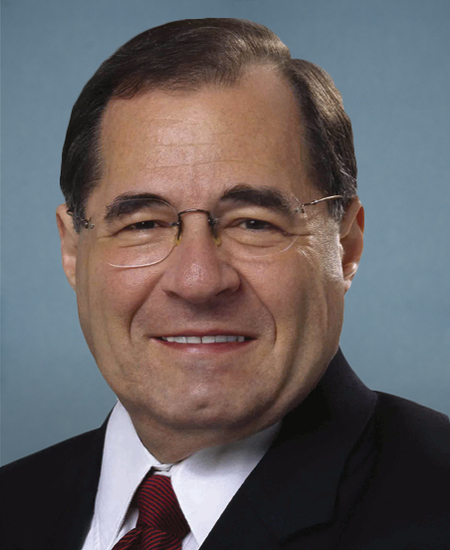
Rep. Jerrold Nadler
Sponsored bills
Maddy summaryHR 3422, the Judiciary Act of 2023, would amend the structure of the U.S. Supreme Court by increasing the number of associate justices from eight to twelve. It would also raise the required quorum for court proceedings from six to eight justices. This bill directly affects the Supreme Court's operational structure and composition. The change is purely procedural, altering the Court's size and voting requirements without impacting other legal processes or specific groups of people.
Maddy summaryHR 3445, the Equity and Inclusion Enforcement Act of 2023, strengthens civil rights enforcement in federally funded education programs. It allows individuals to sue for "disparate impact" discrimination (where policies unintentionally harm specific groups) under Title VI of the Civil Rights Act, similar to suing for intentional discrimination. The bill requires schools and programs receiving federal education funds to designate a compliance coordinator and notify students/employees of their contact information. It also creates a new Special Assistant for Equity and Inclusion within the Department of Education to coordinate enforcement efforts and inform the public about their rights under Title VI.
Maddy summaryThe Early STEAM Achievement Act (HR 3374) creates a federal grant program to support early childhood education programs serving children from birth through age eight. It authorizes the Secretary of Health and Human Services to award competitive grants for STEAM (science, technology, engineering, art, and mathematics) activities, prioritizing rural communities (at least one-third of funds) and nonprofit organizations (at least one-quarter of funds). Grants must fund specific activities like teacher training, educational materials, or partnerships with colleges and arts organizations. The program is authorized for fiscal years 2024 through 2028.
Maddy summaryThe NDO Fairness Act (HR 3089) amends federal law to strengthen court oversight when law enforcement seeks to delay or prevent service providers from notifying customers about warrants for their communications data. It requires courts to issue written findings showing specific risks (like evidence destruction or witness intimidation) before granting a 90-day delay, and mandates that delays must be narrowly tailored with no less restrictive alternatives. After a delay ends, law enforcement must provide customers with a copy of the warrant and detailed notice about the investigation within five business days, plus the option to request disclosed data within 180 days. The bill also adds annual reporting requirements for the Attorney General on how often these delayed notice orders are used, including data on cases involving media or First Amendment activities.
Maddy summaryHRES 319 is a symbolic resolution passed by the U.S. House of Representatives on April 24, 2023, recognizing the federal government's duty to develop a Green New Deal. It states the House believes the government should create a comprehensive plan to address climate change and economic inequality through a 10-year national mobilization. The resolution outlines goals like achieving net-zero emissions by 2050, creating high-wage union jobs, upgrading infrastructure, and prioritizing frontline communities, but it does not establish binding policy or funding mechanisms. As a non-binding resolution, it serves as a statement of legislative intent rather than a law.
Maddy summaryHRES 289 is a resolution recognizing the week of April 11-17, 2023, as the sixth annual "Black Maternal Health Week" to raise awareness about maternal health disparities. It highlights that Black women in the U.S. face disproportionately high rates of pregnancy-related deaths (2.6 times more likely than White women) and complications, driven by systemic inequities. The resolution urges national attention on these issues and supports policy solutions like the Black Maternal Health Momnibus Act to address racial gaps in maternal care. As a non-binding recognition, it does not enact new laws but aims to amplify community-driven efforts to improve outcomes.
Maddy summaryThis bill extends eligibility for the WIC nutrition program to new mothers for 24 months after childbirth (up from six months) and extends breastfeeding support periods to 24 months (up from one year). It directly affects new mothers and infants who rely on WIC for nutrition assistance, breastfeeding support, and health services. Key provisions include amending the Child Nutrition Act to lengthen these benefit periods and requiring a report within two years evaluating health outcomes, breastfeeding rates, and family experiences. The report must assess impacts on maternal/infant health, racial disparities, and program effectiveness. This is a substantive policy change focused on improving access to critical postpartum support.
Maddy summaryHR 3336, the Diwali Day Act, would add "Diwali Day" to the list of federal holidays recognized in Title 5 of the U.S. Code, specifically placing it after Columbus Day. This bill does not create new government programs or change existing laws; it solely recognizes Diwali as a day for federal employees to observe. The bill's "sense of Congress" section describes Diwali as a significant cultural celebration for millions of Americans across multiple religious communities. As a procedural measure, it directly affects federal government operations by adding a recognized holiday for federal employees.
This resolution supports the designation of ALS Awareness Month. Amyotrophic lateral sclerosis (ALS) is a progressive neurodegenerative disease, also known as Lou Gehrig's disease, that affects nerve cells in the brain and spinal cord.