

Maddy summaryThe 9/11 Responder and Survivor Health Funding Correction Act of 2024 makes several key changes to the World Trade Center Health Program that serves 9/11 responders and survivors. It allows licensed mental health providers (not just physicians) to conduct mental health evaluations for program participants and extends the time period for adding new health conditions from 90 to 180 days. The bill also adjusts enrollment calculations by removing deceased individuals from program counts and provides $2.97 billion in new funding for fiscal year 2024 with a minimum annual funding level of $20 million for 2025. These changes aim to improve access to care while ensuring stable, long-term funding for the program that provides medical services to those affected by the 9/11 attacks.
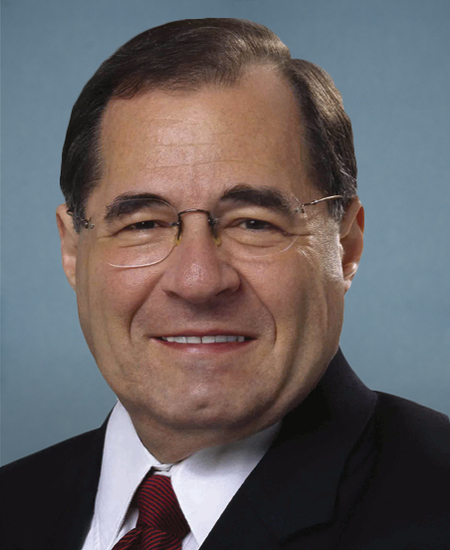
Rep. Jerrold Nadler
Sponsored bills
Maddy summaryHR 9110, the Ending Corporate Bankruptcy Abuse Act of 2024, tightens rules for Chapter 11 bankruptcy cases to prevent corporate abuse. It requires courts to dismiss cases within 24 months of filing (amending Section 1112(b)), and establishes new criteria for dismissing cases filed in "bad faith" (e.g., to delay creditors, gain litigation advantages, or cap liability to multiple creditors). The bill also defines "protected claims" (like product liability claims affecting 100+ people or claims tied to corporate restructuring) and bars lawsuits against non-debtors related to these claims during bankruptcy. This primarily affects corporations restructuring via mergers, spinoffs, or corporate reorganizations within 4 years of filing.
Maddy summaryThe Corner Post Reversal Act amends federal law to establish a six-year deadline for filing lawsuits challenging federal agency actions. It requires that any legal challenge to an agency decision must be initiated within six years of the agency's final action, unless another law specifies a different timeframe. This change directly affects individuals, organizations, or entities seeking to contest agency decisions in court by limiting the window for legal action. The bill does not alter substantive policies but modifies procedural rules governing judicial review of agency actions.
Maddy summaryThe Rohingya GAP Act establishes a U.S. Special Coordinator for Rohingya Atrocities Prevention and Response to coordinate U.S. government efforts on Rohingya issues. It authorizes $10 million annually for atrocity investigations and $8 million for a Burma-focused conflict observatory to document human rights violations. The bill directs U.S. agencies to support Rohingya refugees' protection, education, and livelihoods in Bangladesh while promoting durable solutions including safe return to Myanmar with full citizenship rights when conditions allow. It requires annual reporting on U.S. efforts to address atrocity risks, protect Rohingya, and advance accountability for crimes against them. The legislation aims to address root causes of violence against Rohingya through empowerment, inclusion in decision-making, and support for transitional justice mechanisms.
Maddy summaryHCONRES 118 is a symbolic congressional resolution recognizing the wage disparity faced by Black women in the U.S. It specifically highlights that Black women earn 69 cents for every dollar earned by White, non-Hispanic men, as noted in Census Bureau data. The resolution marks July 9, 2024, as Black Women’s Equal Pay Day to symbolize how long into 2024 Black women must work to earn what White men earned in 2023. It does not create new laws or policies but formally acknowledges this disparity and reaffirms congressional support for equal pay for equal work.
Maddy summaryThis bill (HR 2365, Public Law 118-66) directs the U.S. Department of Health and Human Services (HHS) to establish the National Parkinson’s Project. It requires HHS to create and update a coordinated national plan for preventing, diagnosing, treating, and researching Parkinson’s disease and related disorders (including multiple system atrophy and progressive supranuclear palsy), while coordinating federal research and care efforts across agencies like the NIH, CDC, and VA. The law mandates annual progress assessments, an advisory council with patient advocates and diverse experts, and annual reports to Congress on federal Parkinson’s programs and recommendations for improvement. It affects federal agencies managing Parkinson’s-related programs and aims to improve care coordination and research efficiency for patients and caregivers, with the law sunsetting in 2035.
Maddy summaryHRES 1332 is a symbolic resolution recognizing June as LGBTQIA+ Pride Month. It encourages the celebration of Pride Month to honor the historical struggles and achievements of LGBTQIA+ people in the United States, while acknowledging the ongoing challenges they face. This resolution does not create new laws or policies, but serves as a formal recognition of LGBTQIA+ rights as human rights and highlights their integral role in American history. The resolution was introduced by multiple members of Congress and passed by the House of Representatives.
Maddy summaryHR 8904, the Tenant Empowerment Act of 2024, directly affects tenants in multifamily housing projects receiving federal assistance through HUD or USDA programs. It establishes key mechanisms including: (1) allowing tenants to withhold rent into an escrow fund when housing violations occur (Section 2A), (2) permitting tenants to pay for repairs themselves and deduct costs from rent (Section 2B), and (3) requiring tenant participation in inspections and management reviews (Section 6). The bill prohibits evictions for using these rights and mandates that housing owners address violations, with HUD or local authorities enforcing standards. These provisions apply specifically to projects under Section 8 housing assistance contracts and similar federal agreements.
Maddy summaryThis resolution condemns Uganda's Anti-Homosexuality Act, which criminalizes consensual same-sex relationships with penalties including life imprisonment and the death penalty for certain acts. It directly affects LGBTQI+ Ugandans, who face increased violence, evictions, job loss, and barriers to healthcare due to the law's enforcement. The resolution calls on Uganda to repeal the law and supports maintaining U.S. sanctions like visa restrictions for officials involved in human rights abuses and reduced aid. It reflects U.S. government opposition to the law, which has been linked to severe human rights violations against marginalized communities.
Maddy summaryThis bill requires the federal government to issue guidance to state Medicaid programs within 12 months to improve syphilis screening for pregnant women and newborns. It specifically encourages states to expand third-trimester and delivery screenings, integrate telehealth services, provide multilingual education for providers and patients, and enhance treatment protocols. The guidance aims to prevent congenital syphilis - where syphilis is passed from mother to baby during pregnancy - which caused over 3,700 newborn cases in 2022. States must report on implementing these practices to Congress within two years. The bill directly affects pregnant women, newborns, and Medicaid providers by standardizing and improving access to critical syphilis prevention services.