

Maddy summaryThis bill amends the Justice for United States Victims of State Sponsored Terrorism Act to establish a fifth round of payments for eligible victims of state-sponsored terrorism, requiring all authorized payments to be distributed by December 31, 2024. It directs specific funds into the Victims of State Sponsored Terrorism Fund, including $898 million from the Binance case settlement and 50% of annual unobligated balances from DOJ and Treasury forfeiture funds starting December 1, 2024. The bill mandates annual payments beginning January 1, 2025, for eligible claimants and requires the Special Master to submit annual reports on fund activity to Congress, including detailed deposit and disbursement records. It directly affects victims of state-sponsored terrorism, the Special Master administering the fund, and federal agencies managing forfeiture funds.
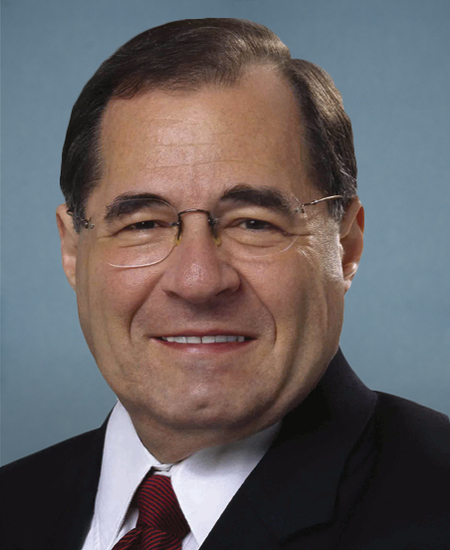
Rep. Jerrold Nadler
Sponsored bills
Maddy summaryHR 6319 (the 911 SAVES Act of 2023) requires the Office of Management and Budget to reclassify public safety telecommunicators as "Protective Service Occupations" within 30 days of enactment. This change corrects their current misclassification in the federal Standard Occupational Classification (SOC) system, which is used for statistical data on jobs. The bill directly affects how these professionals - critical in emergency calls involving missing children, active threats, and officer safety - are officially categorized in government workforce data. It does not create new benefits or funding but aims to better recognize their lifesaving role through accurate federal job classification.
Maddy summaryThis bill modifies Medicaid and CHIP rules to let eligible out-of-state healthcare providers enroll without extra state screening. It applies to providers already in Medicare or their home state program, with low fraud risk, serving children under 21 with complex medical conditions. Providers would receive 5 years of enrollment under this streamlined process, eliminating state-level barriers. The change directly affects children seeking specialized care across state lines and the providers who serve them.
Maddy summaryThe JUDGES Act of 2024 authorizes new federal district court judgeships across multiple states to address rising case backlogs in the federal judiciary. It specifies new permanent judgeships for districts including California (multiple districts), Florida, Texas, Delaware, Indiana, Iowa, New Jersey, and New York, with implementation phased through 2035, and creates temporary judgeships for Oklahoma districts with specific vacancy rules. The bill authorizes funding for these positions and requires reports on judicial caseloads and detention space needs, while mandating public access to the Judicial Conference's judgeship recommendations. The bill directly affects federal district courts in the specified locations by increasing judicial staffing to handle growing case volumes.
Maddy summaryHRES 1448 is a non-binding House resolution stating that the House believes every person has the right to emergency health care, including abortion care, during medical emergencies. It specifically addresses concerns that abortion restrictions force medical providers to choose between treating patients in life-threatening situations or risking criminal charges. The resolution highlights that such restrictions disproportionately harm Black, Indigenous, people of color, immigrants, low-income individuals, and LGBTQI+ patients. It does not change existing laws but expresses congressional support for ensuring access to emergency care without legal barriers. The resolution was introduced by multiple House members and referred to the Energy and Commerce Committee.
Maddy summaryThe Polluters Pay Climate Fund Act of 2024 would require major fossil fuel companies that emitted more than 1 billion metric tons of carbon dioxide between 2000 and 2022 to pay a tax based on their historical emissions. The tax revenue would fund a new Climate Fund that would provide $15 billion annually for disaster response and resilience programs through FEMA, $6 billion for clean air initiatives, and mandate 40% of funds support environmental justice communities. The fund would finance climate resilience projects including climate-resilient infrastructure, ecosystem restoration, and support for vulnerable communities affected by climate change. Companies could pay the tax over nine years, and the bill explicitly states it does not affect existing legal claims against polluters for climate-related damages.
Maddy summaryThis bill creates a federal grant program to fund supportive services for residents in affordable housing properties. It provides 5-year competitive grants to non-profit organizations or tribes managing properties assisted by programs like the low-income housing tax credit or Section 8 housing. Grantees must use at least 25% of funds for staff salaries/benefits and can cover services including health access, education, financial literacy, aging-in-place support, and disability services - though residents cannot be required to accept these services. The program targets residents of qualifying affordable housing properties, focusing on improving health, economic stability, and community integration.
Maddy summaryThis bill requires the FEMA Administrator to reimburse public employee retirement systems for costs related to accidental disability retirements and deaths of workers who participated in 9/11 rescue, recovery, or cleanup efforts. It specifically authorizes $3.4 billion in FY2024 funding for these reimbursements, which must be used solely by eligible retirement systems (those with members who worked at the World Trade Center site). The funds cannot be diverted to other purposes or entities. This policy change directly affects retirement systems managing benefits for first responders and workers injured or killed during the 9/11 operations.
Maddy summaryThe Pigs and Public Health Act prohibits growth-promoting drugs like ractopamine that cause pigs to become nonambulatory (unable to stand or walk), sets new transportation standards for pig welfare including proper bedding, water, and temperature controls, and requires humane euthanasia of nonambulatory pigs rather than processing them for food. It creates an online portal for workers to confidentially report violations of these standards and provides whistleblower protections against retaliation for reporting safety or health concerns. The bill also mandates a study on public health risks from nonambulatory pigs entering the food supply, including pathogens like swine influenza, Salmonella, and antibiotic-resistant bacteria. These requirements apply to slaughter facilities, meat processing plants, and transportation providers that handle pigs. The act aims to improve animal welfare, worker safety, and reduce public health risks associated with diseased pigs entering the food system.
Maddy summaryHR 8492 prohibits wildlife killing contests - events where participants kill animals for cash, prizes, or entertainment - on all federal public lands managed by agencies like the National Park Service or U.S. Forest Service. It specifically bans contests targeting species such as coyotes, foxes, and bobcats, except for field trials with hunting dogs, contests for deer/birds (Galliformes/Anatidae), or agency-led invasive species control. The law requires federal agencies to issue implementing regulations within a year of enactment. It directly affects organizers, sponsors, and participants of such contests on federally managed lands, while allowing states to maintain stricter rules.