

Maddy summaryHCONRES 129 designates the week of September 22-28, 2024, as "National Fall Prevention Awareness Week" to raise public awareness about falls among older adults. The resolution cites CDC data showing falls cause approximately 14 million incidents, 3 million emergency visits, and $80 billion in annual medical costs for adults aged 65+. It supports existing evidence-based prevention strategies - such as balance exercises, home safety modifications, and medication management - without creating new legal requirements or funding. The bill focuses on awareness and collaboration among government agencies, healthcare providers, and community organizations to reduce fall risks.
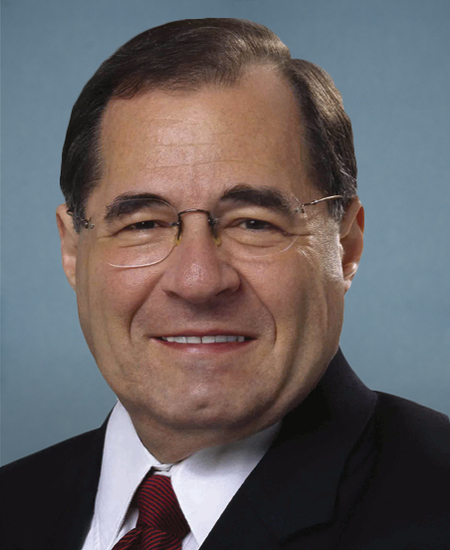
Rep. Jerrold Nadler
Sponsored bills
Maddy summaryHRES 1489 is a symbolic House resolution designating the week of September 23-27, 2024, as "National Clean Energy Week." It expresses congressional support for recognizing clean energy's role in economic growth (citing 8.35 million jobs in the sector) and encourages voluntary actions like public awareness, investment in clean energy technologies, and supporting local clean energy jobs. The resolution does not create new laws, funding, or obligations - it only formally endorses the week-long observance to highlight clean energy’s economic and environmental benefits. It directly affects no specific group but aims to raise national awareness of the clean energy sector.
Maddy summaryHRES 1487 is a symbolic resolution designating September 23-29, 2024, as "Asian American and Native American Pacific Islander-Serving Institutions Week." It recognizes the work of institutions serving Asian American, Native Hawaiian, and Pacific Islander students - such as those enrolling 10%+ of these students and awarding over 45% of bachelor’s degrees for these groups - without creating new policies or funding. The resolution encourages higher education institutions to seek funding for culturally relevant programs and asks the public to observe the week through activities supporting these institutions. It has no direct legal effect or impact on beneficiaries beyond raising awareness.
Maddy summaryHRES 1491 is a ceremonial resolution designating October 23, 2024, as "Public Radio Music Day" to honor public radio music stations. It expresses the House's appreciation for these stations' role in serving listeners, musicians, and communities across all 50 states, the District of Columbia, and Puerto Rico. The resolution highlights how these noncommercial stations provide unique access to diverse music genres, support local artists, and foster community cultural engagement. As a symbolic gesture with no legal or financial impact, it does not change any policies or directly affect specific groups beyond recognizing the stations' contributions.
Maddy summaryHRES 1479 is a symbolic resolution expressing the U.S. House of Representatives' support for "National Hydrocephalus Awareness Month" (September) and "World Hydrocephalus Day" (September 20). It does not create new laws or alter funding but formally endorses awareness efforts for hydrocephalus, a condition affecting approximately 1 million people in the U.S. The resolution highlights the condition's impact - including high medical costs, shunt-related complications, and challenges in pediatric-to-adult care - while calling for continued research support. It directly affects awareness campaigns led by organizations like the Hydrocephalus Association and Pediatric Hydrocephalus Foundation.
Maddy summaryThis bill requires the Department of Defense to provide clear, annual information to TRICARE beneficiaries (military members, families, and retirees) about reproductive healthcare access under the military health system. It mandates details on covered care (including abortion), when care is available at military facilities, how to request leave/travel for out-of-state care, and how to find non-DoD providers. Military healthcare providers must also receive annual training on their obligation to offer covered reproductive care (abortion, contraception, fertility) regardless of state laws, and their legal protections. The information must be shared in person, in writing (including electronically), and posted in accessible areas at military medical facilities. This focuses on improving transparency and provider knowledge, not expanding coverage.
Maddy summaryThis bill expands TRICARE coverage to allow military service members and their dependents to obtain up to a full year's supply of contraception in a single fill (365 days) at military pharmacies, retail pharmacies, or through TRICARE's mail-order program. It requires TRICARE to implement this coverage within 180 days of enactment and mandates outreach to inform beneficiaries and providers within 90 days of implementation. The policy directly affects active-duty military members and their eligible dependents enrolled in TRICARE, removing prior restrictions on supply limits for contraceptive prescriptions. This change simplifies access by eliminating the need for frequent refills while maintaining existing coverage requirements under TRICARE.
Maddy summaryThe Counter-UAS Authority Security, Safety, and Reauthorization Act establishes a framework for federal agencies to detect, identify, and mitigate unauthorized drones that threaten aviation safety. It creates a process for approving counter-UAS systems that meet safety requirements, requires coordination between the FAA, Department of Homeland Security, and Department of Justice, and mandates annual reporting on all counter-UAS activities. The bill directly affects covered entities like airports and large public gatherings, requiring them to work with law enforcement to deploy approved counter-UAS systems. It includes privacy protections for communications intercepted during counter-UAS operations and expires on October 1, 2028.
Maddy summaryThis resolution (HRES 1472) symbolically recognizes the heritage, culture, and contributions of Latinas in the United States. It highlights their economic impact (over 2 million Latina-owned businesses), societal roles (48,000+ active-duty Latinas in the military, 18% of women-owned businesses), and ongoing challenges like the pay gap (Latinas earn 57 cents for every dollar earned by White, non-Hispanic men). The resolution notes that Latinas represent 1 in 5 U.S. women and will comprise 25% of the female population by 2060. As a non-binding resolution, it does not create new policies or allocate funds, but formally honors their contributions and acknowledges the need for continued progress.
Maddy summaryThe Judiciary Accountability Act of 2024 establishes new protections for employees in the federal judiciary by extending workplace rights under existing civil rights laws (Title VII, ADA, ADEA, Rehabilitation Act, GINA) to all judicial branch employees. It creates an Office of Judicial Integrity with a Board of Directors to handle complaints about discrimination, harassment, and workplace misconduct through a process of preliminary review, mediation, and hearings. The bill also establishes an Office of Employee Advocacy to provide confidential legal assistance to employees, and requires judges who commit misconduct to reimburse the Office for certain settlements or awards. The law applies to all employees of federal courts, judges' offices, and judicial branch agencies, with annual reporting requirements to Congress.