

Maddy summaryThis bill modifies how disability benefits are treated for homeless disabled veterans seeking housing assistance. It excludes certain disability payments (under Chapter 11 or 15 of Title 38, U.S. Code) from income calculations when determining eligibility for HUD-assisted housing programs, including the supported housing program under Section 8(o)(19) and housing on Department property. Specifically, it ensures these benefits are not counted toward income for housing eligibility, though they still count for "adjusted income" definitions. The bill directly affects disabled veterans applying for HUD housing assistance who receive these specific disability benefits. It makes a concrete change to income calculation rules without altering benefit amounts or creating new funding.
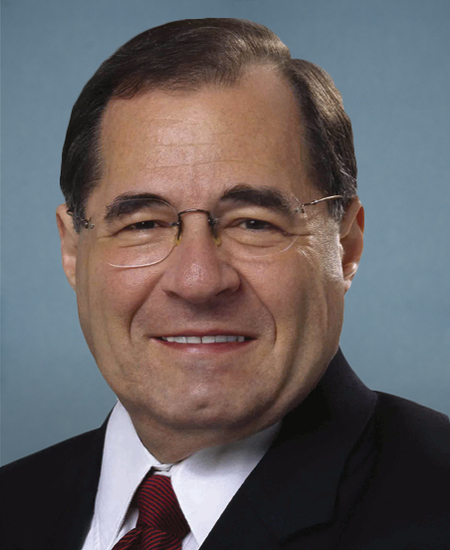
Rep. Jerrold Nadler
Sponsored bills
Maddy summaryHR 10063, the FACES Act of 2024, requires the Attorney General to study how the existing Freedom of Access to Clinic Entrances Act (FACE Act) is enforced nationwide. The bill mandates a report within one year detailing current enforcement practices, barriers to prosecution, variations across judicial districts, and recommendations for improving enforcement. This procedural bill focuses solely on gathering data and analysis - no new policies or funding are created. It directly affects federal and local law enforcement agencies by requiring them to participate in the study of clinic access enforcement.
Maddy summaryThe VA Employee Fairness Act of 2024 modifies collective bargaining rules for employees of the Veterans Health Administration (VHA). It removes existing subsections (b), (c), and (d) from the law governing VHA employee bargaining and renumbers the remaining provision. This change streamlines the collective bargaining framework but does not alter the Secretary of Veterans Affairs' existing authorities over incentive pay and expedited hiring. The bill directly affects VHA employees by changing how their collective bargaining rights are structured under federal law. The law remains neutral, focusing solely on procedural adjustments to the existing bargaining framework.
Maddy summaryHR 9982 creates a dedicated Office of Children’s Health Protection within the EPA to address environmental risks affecting children. The office, led by an EPA-appointed director, will assess health threats like pollution or chemicals that disproportionately impact infants, children, and adolescents, and coordinate federal efforts to reduce these risks through policy, research, and school health programs. It establishes a permanent advisory committee to guide the EPA and requires $7.8 million annually for the office plus $13.2 million for the committee through 2029. The bill directly affects children’s health by mandating EPA action on environmental hazards through specific programs, not by changing existing regulations or creating new taxes.
Maddy summaryThis bill removes a key barrier preventing student loan debt from being discharged in bankruptcy. It amends the U.S. Bankruptcy Code by eliminating the exception that previously made most federal student loans non-dischargeable, meaning borrowers could not erase this debt through bankruptcy proceedings. The change applies only to bankruptcy cases filed on or after the bill's enactment date, affecting new cases where student loan borrowers may now seek relief. This is a procedural change to bankruptcy law, not a direct loan forgiveness or repayment program.
Maddy summaryHR 9864, the Keep Food Containers Safe from PFAS Act of 2024, prohibits the sale of food packaging containing intentionally added PFAS chemicals (like those used in non-stick coatings) in interstate commerce. It directly affects food manufacturers and packaging producers who currently use these chemicals. The bill amends federal food safety law to ban such packaging starting January 1, 2025, defining PFAS as man-made chemicals with at least one fully fluorinated carbon atom. This is a concrete policy change to remove specific chemicals from food contact materials.
Maddy summaryThis resolution formally censures Representative Glen Clay Higgins (LA-03) for a September 25, 2024, social media post containing racist remarks and false claims about Haitians. The bill requires Higgins to appear in the House chamber to receive the censure, with the resolution publicly read by the Speaker. It specifically references his post describing Haiti as "the nastiest country," falsely accusing Haitians of eating pets, and labeling them "slapstick gangsters and thugs." The censure is a formal disciplinary action by the House, not a policy change.
Maddy summaryHR 9807, the Strengthening Access to Contraceptive Care Act, provides $100 million annually (2025-2029) in federal grants to health centers in areas with limited contraceptive access, known as "contraceptive deserts." The bill directly supports clinics, hospitals, and community organizations in underserved communities - particularly impacting Black, Hispanic, and low-income individuals who face barriers to contraception - by funding expanded services. Grants cover essential activities like patient education on all contraceptive methods, purchasing supplies (including emergency contraception), telehealth services, hiring staff, and creating culturally appropriate materials. This aims to increase provider capacity to offer comprehensive, person-centered contraceptive care without coercion, addressing documented gaps where over 19 million people lack access to full contraceptive options.
Maddy summaryThis bill requires the Transportation Security Administration (TSA) to develop and update guidance within 90 days (and every five years) to prevent contamination of breast milk, baby formula, and related cooling items during airport security screening. The guidance must be created with input from maternal health organizations and ensure hygienic handling during re-screening or additional testing. It also mandates a DHS Inspector General audit within one year to review compliance and assess how screening technologies affect these items' processing. The bill directly affects breastfeeding parents traveling with infants by standardizing secure handling of essential items.
Maddy summaryHR 3433, the "Give Kids a Chance Act of 2024," requires pharmaceutical companies developing certain cancer drugs to conduct pediatric studies if the drugs target molecular pathways relevant to childhood cancers. It directly affects drug manufacturers submitting new applications for cancer treatments, particularly those combining previously approved adult cancer drugs or containing a single new active ingredient. The bill amends FDA regulations to mandate these pediatric investigations only when specific conditions are met, such as when a drug's molecular target is relevant to pediatric cancer growth. The FDA must issue implementing guidance within 12 months, and reports to Congress will track implementation and effectiveness starting 2 years after enactment.