

Maddy summaryHR 6751 authorizes the U.S. Mint to produce commemorative coins honoring Roberto Clemente, a Hall of Fame baseball player and humanitarian, including 50,000 $5 gold coins, 400,000 $1 silver coins, and 750,000 half-dollar coins. The coins must feature Clemente's image and inscriptions like "Roberto Clemente" and "2027," with all sales including a surcharge ($5-$35 per coin) paid to the Roberto Clemente Foundation. The foundation, which supports youth sports, education, and disaster relief programs, will use these funds for its mission, while the U.S. Treasury must recover all production costs. The coins will be sold exclusively in 2027, with no net cost to the government.
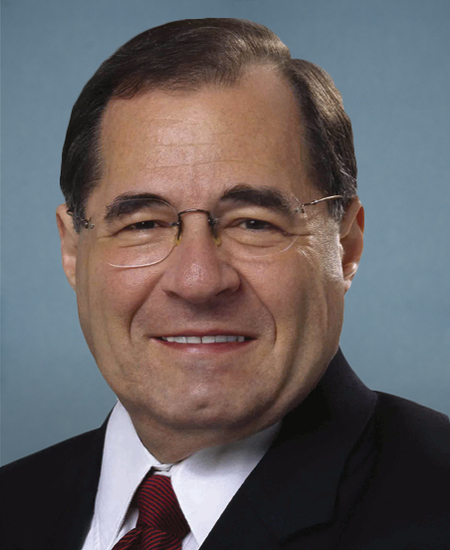
Rep. Jerrold Nadler
Sponsored bills
Maddy summaryThis bill prevents U.S. individuals and companies from facing lawsuits for failing to fulfill contracts due to U.S. sanctions imposed after the contract was signed. It blocks civil lawsuits in federal court where the claim arises from sanctions that restricted a contract's performance, protecting entities acting in good faith to comply with U.S. sanctions. The law specifically covers sanctions related to national security, foreign policy, or economic threats, including export controls. It does not apply to cases involving terrorism victims or specific laws like the Iran Threat Reduction Act.
Maddy summaryThe Working Dog Commemorative Coin Act (HR 807) directs the U.S. Treasury to mint three types of commemorative coins honoring working dogs' service: $5 gold coins, $1 silver coins, and half-dollar coins with specific weight and composition requirements. Each coin will carry a surcharge ($35 for $5 coins, $10 for $1 coins, $5 for half-dollars) that will be paid directly to America's VetDogs to support their programs providing service dogs for veterans, the disabled, and others. The coins will be issued in 2027 with designs reflecting working dogs' roles in military, detection, therapy, and assistance work. The legislation specifies that all surcharge revenue must fund America's VetDogs' operations without creating new government programs. This is a commemorative measure focused on honoring working dogs' contributions through coin sales, with all surcharge funds going to a specific nonprofit organization.
Maddy summaryThis bill establishes a Truth and Healing Commission to investigate the history and impacts of U.S. Indian Boarding School policies on Native American communities, including cultural, emotional, and physical effects on survivors, descendants, and tribal communities. The Commission will document these impacts through research, public meetings, and testimony, working with two advisory committees focused on Native American perspectives and Federal agency coordination. The Commission will operate for six years, with annual reports to Congress and a final report containing recommendations for Federal action. The bill also includes provisions for managing burial sites related to boarding schools and ensures the Native American Graves Protection and Repatriation Act applies to remains found on Federal lands related to these schools.
Maddy summaryThis bill requires the Secretary of Energy to determine if proposed natural gas exports to foreign countries are "consistent with the public interest" before approving them. To make this determination, the Secretary must evaluate three specific assessments: (1) climate impacts using full lifecycle emissions data and methane's 20-year warming potential, (2) economic effects on specific consumer groups like low-income households and manufacturers, and (3) environmental justice concerns affecting vulnerable communities. The Secretary must complete this review within one year of receiving the Federal Energy Regulatory Commission's environmental impact statement. The law also mandates public participation opportunities and treats export approvals as "major Federal actions" under environmental law.
Maddy summaryThis bill increases penalties for certain crimes involving minors near schools. It adds a mandatory 5-year prison term (to run consecutively with other sentences) when offenders knowingly commit human trafficking, coercion, sexual abuse, child exploitation, or related offenses against minors who are: - Enrolled in school and present within a school zone or within 1,000 feet of school activities, or - Enrolled in a college/university and on or within 1,000 feet of campus. The bill amends multiple sections of the U.S. Code (including trafficking, sexual abuse, and exploitation laws) to apply these enhanced penalties specifically in school-related settings, as defined by existing education laws. It directly affects offenders of these crimes who target minors in or near educational environments.
Maddy summaryHRES 1588 is a House resolution supporting Transgender Day of Remembrance (TDoR) by recognizing the epidemic of violence against transgender people and memorializing those killed between October 1, 2023, and September 30, 2024. It specifically honors 38 transgender or gender-nonconforming individuals whose lives were lost to violence during that period, highlighting that transgender women of color face disproportionate risks. The resolution acknowledges systemic issues like underreporting, barriers to healthcare, and higher rates of homelessness and suicide within the community. It calls for the U.S. government to prioritize solutions to this violence while affirming transgender people's right to dignity and safety. As a symbolic resolution, it does not create new laws or policies but formally recognizes these issues for congressional record.
Maddy summaryHR 5658, the Vote by Mail Tracking Act, requires that all mail-in ballots for federal elections be sent in envelopes containing a Postal Service barcode for tracking. This applies to every ballot mailed for federal office elections after the bill becomes law. The envelope must also meet Postal Service design standards for ballot envelopes, be machineable, and display the Official Election Mail Logo. The bill directly affects voters using mail-in ballots for federal races and mandates this tracking system to be implemented by the Postal Service.
Maddy summaryThe Veteran Benefits Enhancement Act amends the Railroad Unemployment Insurance Act to clarify that military retirement pay is not counted as a social insurance payment. This ensures veterans receiving military retirement pay while eligible for railroad unemployment benefits will not have their benefits reduced due to their military pay. The bill specifically excludes "qualified military benefits" (as defined under IRS rules) from being considered when calculating railroad unemployment benefits. This directly affects veterans working in the railroad industry who receive both military retirement pay and railroad unemployment benefits.
Maddy summaryHR 9981, the "Ban Atrazine Toxicants Act," would immediately cancel all U.S. registrations for atrazine, the second-most widely used herbicide (80 million pounds annually), banning its use on crops and prohibiting sales of existing stock. The bill requires the EPA to revoke all food safety limits for atrazine within six months and prohibits future registrations or emergency uses of the chemical. It directly affects farmers, agricultural producers, and food suppliers who currently use or handle atrazine, while aiming to address documented environmental persistence and health risks linked to atrazine, including reproductive harm and impacts on endangered species. The bill cites USDA data indicating a minimal 1.19% potential decrease in corn yields from the ban, referencing Germany and Italy’s experience with no significant yield drops after similar bans.