

Maddy summaryThis bill requires federal agencies to include specific equity goals in their planning documents. Agencies must set at least one goal (or 20% of total goals, whichever is greater) focused on improving services for underserved communities and individuals, defined as groups systematically denied full participation in economic, social, and civic life. Agencies must also consult with community groups, local governments, and research partners when developing these plans. The law amends existing planning requirements under Titles 5 and 31 of the U.S. Code to implement these changes.
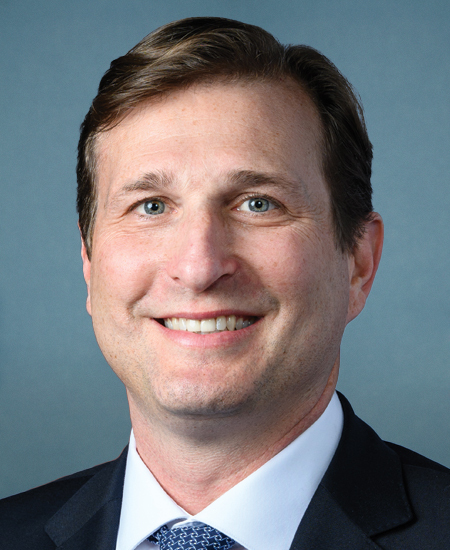
Rep. Daniel S. Goldman
Sponsored bills
Maddy summaryHR 7866, the United States-Israel Anti-Tunnel Cooperation Enhancement Act, increases funding for U.S.-Israel collaboration on anti-tunnel technology from $50 million to $80 million. The bill directly affects U.S. defense and homeland security agencies working with Israel to detect, map, and disrupt underground terror tunnels used by groups like Hamas. Key provisions include authorizing the higher funding level under existing law to enhance joint efforts against subterranean threats, such as tunnels used for attacks, weapon storage, and hostage holding beneath civilian areas in Gaza. This focuses on concrete policy changes to scale up bilateral cooperation on a specific security technology.
Maddy summaryHCONRES 102 is a non-binding symbolic resolution supporting International Transgender Day of Visibility, introduced by multiple House members. It formally encourages the U.S. to observe the day with ceremonies and programs, celebrates transgender community achievements, and recognizes their ongoing fight for equality amid documented discrimination in employment, healthcare, housing, and public spaces. The resolution highlights transgender representation in politics (including 21 state legislators) and historical context, while acknowledging rising anti-transgender legislation. It directly affirms the transgender community's visibility and rights without creating new policies or funding.
Maddy summaryHR 7849, the Disaster Resiliency and Coverage Act of 2024, establishes a federal grant program to help homeowners in high-risk disaster areas make their homes more resilient. The program provides up to $10,000 per household (adjusted annually for inflation) for specific qualifying mitigation activities, such as reinforcing roofs, installing flood barriers, or creating fire-resistant landscaping. Homeowners must have an adjusted gross income under $250,000 ($500,000 for joint filers) and the work must meet FEMA-established standards. States and tribal governments administer the program, with funds intended to incentivize insurance companies to offer or increase coverage in vulnerable areas.
Maddy summaryThis bill directs the federal government to launch a national public health education campaign about abortion access. It requires the Secretary of Health to provide medically accurate, culturally competent information on where to access abortion services (including medication abortion and telehealth), legality, identifying misleading crisis pregnancy centers, and spotting misinformation. The campaign specifically targets underserved groups like communities of color, immigrants, LGBTQ+ individuals, and people in rural areas. It prohibits promoting misinformation about abortion safety, abortion reversal, or abstinence-only programs, and bans collecting personal data from users. The effort aims to improve access to reliable information, not to change abortion laws.
Maddy summaryHRES 1109 is a symbolic resolution commemorating the 1913 Woman Suffrage Procession in Washington, DC, where suffragists led by Alice Paul and Inez Milholland marched to demand voting rights for women. It honors the participants' courage during a protest that drew 500,000 spectators despite violent opposition, highlighting how this event advanced the national push for the 19th Amendment. The resolution does not create new laws but reaffirms support for voting rights equality, connecting the 1913 march to ongoing efforts to protect democratic access. It specifically acknowledges the intersectional struggles of women of color in the suffrage movement. As a commemorative resolution, it has no binding policy effect.
Maddy summaryHR 7799, the CATCH Act, requires the U.S. Department of Justice to submit annual reports to Congress on prosecutions related to firearms trafficking to the Caribbean. The bill mandates detailed reporting on investigations, prosecutions, firearm types, transportation methods, and coordination with Caribbean law enforcement partners like CARICOM's Crime Gun Intelligence Unit. It directly affects Caribbean nations (such as Haiti, Jamaica, and the Bahamas) where U.S.-sourced firearms fuel violence and migration, and U.S. agencies prosecuting these cases. The law aims to strengthen oversight of the existing Coordinator for Caribbean Firearms Prosecutions without altering current prosecution authorities.
Maddy summaryHR 7812, the National Parent and Youth Helpline Act, creates a federal grant program to establish a 24/7 national toll-free helpline for parents, caregivers, and youth facing personal challenges like emotional distress, substance abuse, or educational concerns. The grant, worth $20 million annually from 2025-2030, will fund one nonprofit to operate the helpline (via phone, text, and chat), host weekly evidence-based support groups, and maintain a resource website. It specifically prioritizes serving diverse groups, including LGBTQ+ individuals, and requires annual performance reports to the Secretary and a congressional report after three years. The bill directly affects millions of parents and youth by providing accessible, trauma-informed support to strengthen families and prevent issues like child maltreatment.
Maddy summaryHR 7795, the ProTECT Act of 2024, bans trophy hunting and importing trophies of threatened wildlife species in the U.S. and prohibits issuing permits for such activities. It amends the Endangered Species Act to extend existing protections - previously only covering endangered species - to threatened species, making it unlawful to take or import trophies (including parts or derivatives) of these species. The bill defines "trophy" broadly to cover whole animals, parts, or processed items obtained under hunting authorization, aiming to prevent legal trade from masking illegal wildlife trafficking.
Maddy summaryThis bill would provide federal grants to public housing agencies to modernize public housing through energy efficiency upgrades, infrastructure improvements, and renewable energy systems. It requires all public housing to become "zero-carbon homes" that produce enough renewable energy to meet their own consumption within 10 years. The bill includes specific requirements for workforce development, hiring from low- and very low-income communities (40% in year 1, 50% in year 2, 90% after that), and contracting with resident-owned businesses (20% in year 1, 30% in year 2, 50% after that). It also mandates resident and community engagement in planning, and requires public housing agencies to meet specific energy efficiency and water quality standards. The bill directly affects all public housing agencies managing housing for low- and very low-income residents across the United States, including tribal housing entities.