

Maddy summaryHR 8023, the Protecting Seniors from Emergency Scams Act, requires the Federal Trade Commission (FTC) to include specific data on scams targeting seniors during emergencies in its annual reports. The bill mandates the FTC to describe the number and types of these scams, its policy recommendations to prevent them, and enforcement actions taken. It also requires the FTC to update its online portal with searchable scam information by region and type, and to partner with media and law enforcement to share this information directly with seniors and their caregivers. This law directly affects the FTC's reporting duties and aims to improve awareness and response to scams that disproportionately impact seniors during crises.
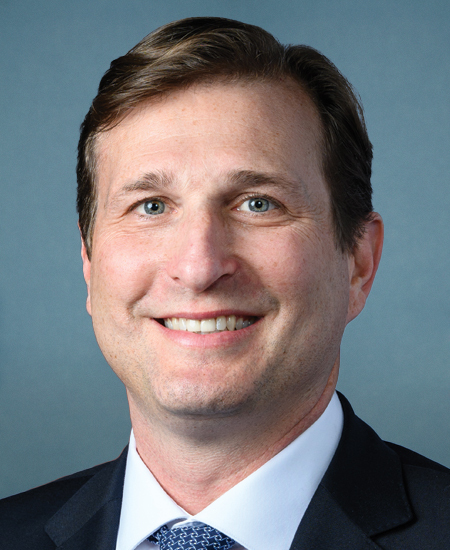
Rep. Daniel S. Goldman
Sponsored bills
Maddy summaryHR 8045, the POSTAL Act, prohibits the U.S. Postal Service from closing, consolidating, or downgrading any processing and distribution center in a state if the action would eliminate all such facilities in that state or harm mail delivery. The bill specifically protects states (including DC) by preventing the loss of local mail processing infrastructure. It defines "processing and distribution centers" as facilities handling mail sorting, dispatch, and instructions for mailers, including sectional center facilities. The law directly affects USPS operations by restricting facility changes that would leave any state without a central mail processing location. This ensures continued local mail service access for all states.
Maddy summaryHR 8013, the Gig Is Up Act, requires large employers (those with $100 million+ in annual gross receipts and 10,000+ independent contractors) to treat payments to certain gig workers as wages for payroll tax purposes. This means these employers must withhold Social Security and Medicare taxes at double the standard rate (instead of the usual 7.65%), similar to how they handle employee wages. The change applies to payments made after December 31, 2024, and directly affects major gig platforms and their workers who currently pay self-employment taxes. The bill does not reclassify workers as employees but alters how their payments are taxed under the Social Security system.
Maddy summaryHRES 1139 is a non-binding House resolution that formally acknowledges April 17, 2024, as the 500th anniversary of Giovanni da Verrazzano’s 1524 discovery of New York Bay. It recognizes Verrazzano’s role as the first European to map the East Coast of North America, which contributed to the later establishment of New York City and its development as a major economic hub. The resolution highlights historical connections, including Verrazzano’s influence on New York Bay’s exploration and existing commemorations like the Verrazzano-Narrows Bridge. It does not create new laws, allocate funds, or affect any specific group or policy. This is purely a ceremonial acknowledgment by the U.S. House of Representatives.
Maddy summaryThis bill authorizes $5 billion annually (2025-2034) for three key housing programs - Home Investment Partnerships, Community Development Block Grants, and the Housing Trust Fund - but restricts funding to areas already designated with a "high housing cost adjustment" by HUD. It mandates a two-year assessment by the Secretary of Housing and Urban Development to evaluate how area median income (AMI) calculations impact affordability, particularly in high-cost urban areas, including analyzing ZIP code-level metrics and alternatives to AMI. The study must examine rent burdens, income limits for tax-subsidized housing, and the specific effects of high-cost adjustments in places like New York City. The bill directly affects low-income and middle-class families in urban areas where housing costs significantly exceed local median income, aiming to inform potential reforms to housing affordability metrics.
Maddy summaryHR 7921, the Countering Antisemitism Act, establishes a National Coordinator to Counter Antisemitism within the Executive Office of the President and creates an Interagency Task Force to coordinate federal efforts against antisemitism across multiple agencies. The bill requires federal agencies to report on implementing the U.S. National Strategy to Counter Antisemitism, mandates annual threat assessments of antisemitic violent extremism from the FBI, DHS, and National Counterterrorism Center, and addresses antisemitic discrimination in higher education through a designated Office for Civil Rights Designee. It also includes provisions for a study on Holocaust education by the U.S. Holocaust Memorial Museum, a study on online antisemitism with recommendations for Congress, and amendments to the Nonprofit Security Grant Program to require public reporting on grant applications and awards.
Maddy summaryThis bill corrects retirement benefits for certain U.S. Customs and Border Protection (CBP) officers hired between July 2008. It specifically affects individuals who received a tentative job offer before July 6, 2008, but began duty as officers on or after that date. The bill ensures these officers receive retroactive retirement pay adjustments and exemption from mandatory retirement age rules, as if they had been classified as officers on July 6, 2008. The Department of Homeland Security must identify eligible officers within 120 days and coordinate with the Office of Personnel Management to implement these changes, while the Government Accountability Office will review CBP’s hiring practices related to these benefits.
Maddy summaryThis bill creates a new training program for state, local, Tribal, and territorial law enforcement to identify and respond to transnational repression - where foreign governments cross borders to intimidate or harm people for exercising free speech, religion, or assembly. The training covers identifying repression tactics, collecting relevant data, and teaching personal safety practices for targeted individuals and communities. It also requires community awareness briefings to help people recognize and protect against such threats, connecting them to victim support resources. The program is developed through the Department of Homeland Security's Federal Law Enforcement Training Centers and must prioritize privacy and civil liberties.
This resolution recognizes the anniversary of the Civil Rights Act of 1866 and its impact on establishing that all Americans are protected equally under the law.
Maddy summaryThis bill prohibits the U.S. Census Bureau from asking questions about citizenship, nationality, or immigration status on the main decennial census questionnaire (used every 10 years to count the population). It directly affects all households participating in the decennial census by removing these questions from the standard form. The bill specifically exempts the American Community Survey (ACS), which continues to collect such data for statistical purposes. The key mechanism is amending Title 13 of the U.S. Code to add this prohibition, ensuring the main census remains focused solely on population count.