

Maddy summaryThis concurrent resolution (HCONRES 97) recognizes the gender wage gap, noting that women working full-time earn 84 cents for every dollar earned by men. It highlights racial disparities (e.g., Latinas earn 57 cents, Black women 69 cents) and the economic impact of the gap, including $965 billion in annual lost wages for women. As a symbolic resolution, it does not create new laws or policies but formally acknowledges the issue and reaffirms Congress’s commitment to addressing wage inequality.
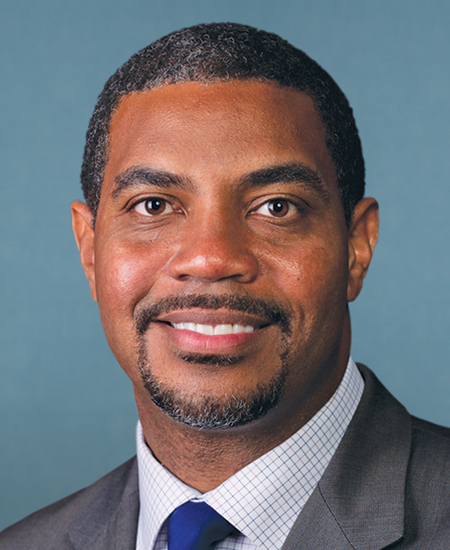
Rep. Steven Horsford
Sponsored bills
Maddy summaryHR 7629, the Protect Our Letter Carriers Act of 2024, allocates $1.4 billion annually (2025-2029) to the U.S. Postal Service for high-security collection boxes and replacing physical universal mailbox keys with electronic versions, directly affecting USPS operations and letter carriers. It requires the Attorney General to appoint specialized prosecutors in each district to coordinate investigations and prosecutions of postal-related crimes, such as assaults on carriers or mail theft. The bill also mandates the U.S. Sentencing Commission to adjust guidelines so that assaults or robberies against postal employees are treated with the same severity as assaults against law enforcement officers. These provisions aim to enhance safety through infrastructure upgrades, improved prosecution, and stricter sentencing for crimes targeting postal workers.
Maddy summaryThis bill prohibits federal law enforcement officers and state/local agencies receiving Department of Justice funding from executing no-knock warrants. Specifically, it requires officers to announce their authority and purpose before forcibly entering a residence. The law applies to all warrant executions by federal officers (as defined in 18 U.S.C. §115) and to state/local agencies receiving DOJ funds starting in the first fiscal year after enactment. It directly affects law enforcement agencies at all levels that use federal funding, changing how they execute search warrants. The core policy change is mandating audible notice before entry, replacing the previous no-knock practice.
Maddy summaryHR 7481 establishes a new CDC program to address social determinants of health - such as housing, food access, and transportation - that impact community health outcomes. It authorizes $100 million annually (2025-2029) to fund grants for state/local health agencies, nonprofits, and universities to design and implement community-based strategies tackling unmet health needs. Grantees must collaborate with health systems, housing organizations, and local stakeholders to collect data, develop evidence-based solutions, and monitor impacts on health equity and healthcare costs. The bill requires annual reporting and a national evaluation after five years to assess program effectiveness.
Maddy summaryHR 7577, the CHEERS Act, creates a new tax deduction for restaurants, bars, and entertainment venues by expanding eligibility under the energy efficiency tax code (Section 179D). It defines "qualified energy-efficient draft property" as stainless steel or aluminum containers and tap equipment used for alcohol distribution in these businesses, treating them as eligible for the existing energy efficiency tax deduction. This change applies to equipment placed in service after the bill's enactment date, directly benefiting hospitality businesses that own or lease such equipment. The provision modifies existing tax code language without creating new tax rates or altering other regulations.
Maddy summaryHRES 1053 is a non-binding House resolution reaffirming the U.S.-Canada partnership, not a legislative bill with new policy provisions. It states that the U.S. House of Representatives recognizes the strategic importance of the relationship, citing existing economic ties (e.g., $1.3 trillion in bilateral trade in 2022 supporting 7.5 million U.S. jobs) and security cooperation (including NORAD, border security programs, and shared climate efforts). The resolution emphasizes mutual dependence in areas like energy security, supply chains, and defense, but does not create new obligations or funding. It serves as a symbolic statement of support for the existing partnership, referencing established frameworks like USMCA and joint climate initiatives. As a resolution, it has no legal effect on policy or operations.
Maddy summaryThis symbolic resolution (HRES 1026) recognizes Black History Month and honors the 94 African-American recipients of the Congressional Medal of Honor for their military bravery, heroism, and valor. It does not create new laws or policies but formally acknowledges their contributions, referencing historical context like Sergeant William Harvey Carney’s 1863 actions and the 1993 study revealing racial discrimination in Medal of Honor awards during WWII. The resolution specifically calls for the House to recognize Black History Month and honor these 94 service members. It is a non-binding expression of support with no concrete policy changes.
Maddy summaryHR 7378, the Frederick Douglass Congressional Gold Medal Act, authorizes Congress to posthumously award a gold medal to honor Frederick Douglass's legacy as a pivotal abolitionist, writer, and advocate for civil rights. The medal, designed by the Treasury Secretary, will be presented to the National Museum of African American History and Culture for display, with bronze duplicates available for sale to cover costs. This ceremonial bill does not create new laws or affect current policies - it solely commemorates Douglass's historical contributions to ending slavery and advancing equality.
Maddy summaryHR 7355, the Early Childhood Workforce Advancement Act of 2024, establishes a federal grant program to fund career and technical education programs in early childhood education. It directly supports partnerships between institutions of higher education, child care providers, and community stakeholders to expand training and career pathways for early childhood educators. Key provisions include funding for curriculum development, educator recruitment/retention, professional development, and support services like childcare assistance for students pursuing credentials (such as Child Development Associate) or degrees. The grants aim to improve workforce readiness, address regional shortages, and enhance outcomes for students - particularly in underserved communities - by aligning training with industry needs and State strategic plans.
Maddy summaryThis bill prevents states from banning or discouraging the use of specific financial industry codes (merchant category codes) that identify firearm and ammunition merchants. It directly affects financial institutions and payment processors that use these standardized codes for transaction tracking. The law requires states to allow the use of these codes, and the Attorney General can enforce this through civil lawsuits. The bill does not change gun laws or affect gun owners; it only addresses financial coding standards.