

Maddy summaryThe Love Lives On Act of 2023 modifies benefits for surviving spouses of military veterans and service members. It removes an expiration date on the Marine Gunnery Sergeant John David Fry Scholarship for surviving spouses, ensures remarriage doesn't automatically end eligibility for veterans' dependency and indemnity compensation, and expands access to commissary and exchange privileges for remarried surviving spouses. The bill also clarifies that remarried widows or widowers whose subsequent marriage ended (due to death, divorce, or annulment) can still be considered dependents under TRICARE. These changes directly affect surviving spouses of veterans and military members who have remarried or are considering remarriage, providing more consistent benefits regardless of marital status.
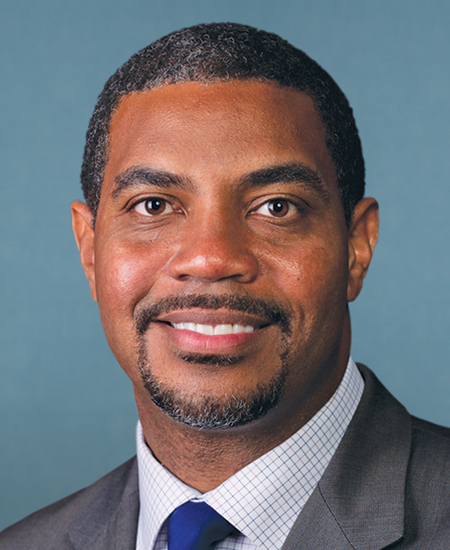
Rep. Steven Horsford
Sponsored bills
Maddy summaryHR 3303, the Maternal Health for Veterans Act, requires the Department of Veterans Affairs (VA) to annually report on maternity care coordination programs and maternal health outcomes for veterans receiving care through VA facilities or VA-contracted providers. The bill mandates the VA to collect data on maternal outcomes - including disparities affecting high-risk demographic groups - and submit recommendations to Congress by September 2028. It authorizes $15 million annually (2024-2028) for VA maternity care coordination programs, supplementing existing funding without reducing current resources. The law directly affects veterans using VA maternity services, aiming to improve care through data-driven strategies.
Maddy summaryHR 1083, the Caring for Survivors Act of 2023, increases financial support for surviving spouses of veterans. It amends Title 38 to raise dependency and indemnity compensation from a fixed $1,154 to 55% of the monthly compensation rate under section 1114(j), effective six months after enactment. The bill also modifies eligibility for survivors of veterans who died before 1993, ensuring they receive the greater of their current benefit or the new calculation. Additionally, it reduces the required continuous service rating period for survivors from 10 years to five years when a veteran was totally disabled at death. These changes directly affect surviving spouses, particularly those with veterans who died prior to 1993.
Maddy summaryHRES 1132 is a symbolic House resolution condemning Republican opposition to past immigration reform efforts. It does not create new laws or allocate funds but formally expresses disapproval of Republican inaction on immigration policy since 2007, citing specific failed bills like the 2013 Border Security Act and the American Dream and Promise Act. The resolution urges cooperation among federal, state, and local entities and calls for full funding of border resources like asylum officers and border security personnel. As a non-binding statement, it has no legal effect on policy or funding.
Maddy summaryHRES 1101 is a non-binding resolution expressing the House of Representatives' support for collaborating with the Congressional Black Caucus to develop a "Black Wealth Agenda." It commits the House to outlining legislative priorities focused on closing the racial wealth gap through key areas like expanding Black entrepreneurship, reforming housing policies, building workforce development programs, and updating the federal minimum wage. The resolution emphasizes addressing systemic barriers in homeownership, education access, employment discrimination, and tax policy to advance economic equity for Black communities. It does not create new laws but directs the House to coordinate with the CBC on policy solutions targeting wealth-building opportunities.
Maddy summaryHR 7770, the Rosie the Riveter Commemorative Coin Act, authorizes the U.S. Mint to produce and sell three commemorative coins honoring women who worked on the U.S. home front during World War II. It specifies $5 gold coins (max 50,000), $1 silver coins (max 400,000), and half-dollar coins (max 750,000), all to be issued between January 1, 2025, and December 31, 2025. Each coin sale includes a surcharge ($35 for gold, $10 for silver, $5 for half-dollar), with all surcharge funds directed to the Rosie the Riveter Trust for maintaining the Rosie the Riveter WWII Home Front National Historical Park and educational programs. The coins will feature designs reflecting the legacy of diverse women workers and must meet specific weight, diameter, and composition standards.
Maddy summaryHR 6727 establishes the United States Foundation for International Conservation, a nonprofit organization that will provide grants to support long-term management of protected and conserved areas in eligible countries. The Foundation requires a 2:1 cost match from other sources, demands host country and community consent through binding agreements, and prioritizes areas with high biodiversity or species of significant importance. It will be governed by a Board of Directors including government officials and private sector experts, operate for 10 years with $1 million authorized for 2024 and $100 million annually from 2025-2035, and must follow international conservation standards while prohibiting funding for countries supporting terrorism or violating human rights.
Maddy summaryHRES 1096 is a non-binding resolution expressing support for the House of Representatives to collaborate with the Congressional Black Caucus in developing the "Black Wealth Agenda." It identifies key areas requiring policy action, including closing the racial wealth gap through improvements in homeownership access, education equity, fair employment practices, affordable housing, and tax reform. The resolution outlines priorities such as expanding support for Black entrepreneurship, addressing systemic housing discrimination, raising the federal minimum wage, and investing in historically Black colleges. It does not create new laws or mandate specific actions but commits the House to coordinating legislative efforts focused on these economic equity goals. The resolution was introduced by multiple representatives and referred to relevant committees for review.
Maddy summaryThe Housing ACCESS Act requires the federal government to issue guidance within one year to help states connect Medicaid beneficiaries with housing services. It directs states to align eligibility processes, streamline service coordination between health and housing agencies, and track outcomes like housing stability - disaggregated by race. The bill also mandates a national study to set fair reimbursement rates for housing services, aiming to ensure living wages for providers and a 1:15 case manager-to-client ratio. States must report on progress within two years, with the guidance intended to simplify how health and housing providers access each other's systems.
Maddy summaryHR 7634, the Plastic Pellet Free Waters Act, prohibits plastic pellets and pre-production plastic materials from being discharged into water through wastewater, spills, or runoff from specific facilities. It directly affects plastic polymer production facilities, plastic molding and forming facilities, and any point source (like packaging or transport operations) handling plastic pellets. The bill requires the EPA to issue a final rule within 60 days of enactment banning these discharges and updating all relevant wastewater, stormwater, and performance standards in permits and regulations. This creates a legal requirement for facilities to prevent plastic pellet pollution in waterways, targeting a major source of ocean plastic pollution.