

Maddy summaryThis bill restricts how credit reporting companies share homebuyers' credit reports during mortgage applications. It prevents companies from sending these reports to third parties (like marketers) just because a lender requested them for a mortgage. Only specific entities can receive the reports: the mortgage lender who originated the loan, the company servicing the loan, or the bank holding the homebuyer's account. This directly protects homebuyers' privacy by limiting unauthorized sharing of their financial data.
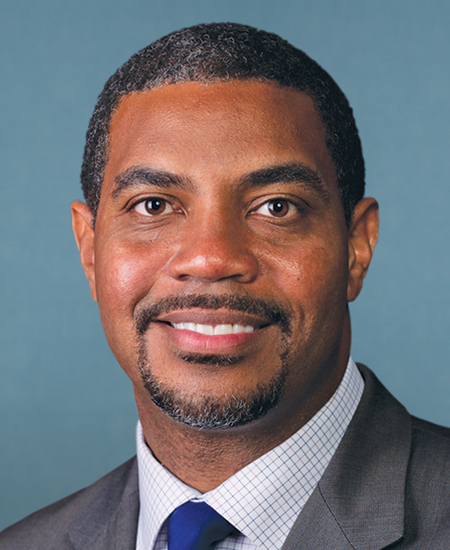
Rep. Steven Horsford
Sponsored bills
Maddy summaryThe Credit for Caring Act of 2024 creates a new federal tax credit for family caregivers. It allows eligible caregivers to claim a credit equal to 30% of qualified caregiving expenses (like home modifications, medical supplies, or respite care) exceeding $2,000 per year, capped at $5,000 annually. To qualify, caregivers must earn over $7,500 in income and provide care for a relative (like a spouse or parent) certified by a healthcare provider as needing long-term care for at least 180 days. The credit phases out for higher earners, with a $75,000 income threshold for single filers and $150,000 for joint returns.
Maddy summaryHR 7108, the Expanding Access to Mental Health Services in Schools Act of 2024, authorizes federal grants to help high-need public schools hire and retain mental health staff. It targets schools that meet specific criteria: being in the top 15% of need (based on student poverty or other metrics) and failing to meet minimum staffing ratios for counselors, psychologists, or social workers. Grants fund recruitment (through salary stipends or loan repayment), retention (via professional development or incentives), and evidence-based mental health services, with grantees required to contribute 25% matching funds and report annually on provider numbers, demographics, and student-to-provider ratios. The program runs through 2029 and requires all services to comply with privacy laws like FERPA.
Maddy summaryHR 7087, the MOMS Act, establishes a pilot program to provide evidence-based mental health support for pregnant and postpartum members of the U.S. Armed Forces and their beneficiaries (including family members). It requires the Defense Health Agency to integrate these prevention programs into existing maternal or pediatric care at military medical facilities, prioritizing diverse locations and removing barriers like childcare access. The bill mandates an advisory committee with military members, experts, and service organizations to guide implementation, along with annual reports tracking participation by demographics and a study on the program’s effectiveness. Funded at $5 million annually from 2025-2029, the pilot aims to reduce perinatal mental health conditions and improve military readiness.
Maddy summary# Summary of the Clean Electricity and Transmission Acceleration Act of 2023 This comprehensive legislation establishes significant reforms across environmental policy, energy infrastructure, and community engagement frameworks. Key provisions include: 1. **Environmental Justice Framework**: - Creates an Office of Environmental Justice and External Civil Rights at EPA - Establishes a White House Environmental Justice Interagency Council - Prohibits disparate impact discrimination under Title VI of the Civil Rights Act - Requires community impact reports for Federal actions affecting environmental justice communities 2. **NEPA Reforms**: - Mandates 90-day public comment periods for environmental justice communities - Requires translation of documents into languages spoken by 5%+ of affected communities - Requires assessment of cumulative impacts, including historical pollution - Requires climate change impact assessments using social cost of carbon - Establishes searchable digital archives of NEPA documents 3. **Community Engagement Requirements**: - Creates "Senior Community Engagement Officers" and "Tribal Community Engagement Officers" at all federal agencies - Requires community benefits agreements for major projects - Establishes grants for capacity building in environmental justice communities - Creates an E-NEPA permitting portal for public access to documents 4. **Energy Policy Provisions**: - Includes reforms for FERC (Federal Energy Regulatory Commission) environmental justice liaison - Establishes requirements for intervenor funding at FERC - Contains provisions for transmission planning and infrastructure 5. **Tribal Consultation**: - Strengthens tribal consultation requirements for projects affecting tribal lands - Requires government-to-government relationships with tribal nations The legislation represents a significant shift toward integrating environmental justice considerations throughout the federal permitting and review process, with specific requirements for meaningful community engagement, transparency, and consideration of cumulative impacts on vulnerable populations. It also establishes new funding mechanisms and administrative structures to support these environmental justice goals.
Maddy summaryHR 7056, the Access to Family Building Act, establishes federal rights for individuals to access assisted reproductive technology (ART) like IVF without unreasonable restrictions, directly affecting patients seeking fertility treatments and health care providers offering ART services. The bill prohibits states from imposing limitations on ART that are more burdensome than those for comparable medical procedures, fail to advance safety, or unduly restrict access, while allowing health and safety regulations that are necessary and least restrictive. It creates federal enforcement mechanisms, including lawsuits by the Attorney General or affected individuals to challenge violating state laws, and preempts conflicting state regulations. The bill explicitly preserves state authority over health/safety regulations and does not alter existing state insurance coverage laws for ART.
Maddy summaryThe Stronger Communities through Better Transit Act establishes a new federal grant program to improve public transportation service. It provides funding to urban areas, states, and Indian tribes to cover up to 50% of public transit operating costs (up to 80% in persistent poverty areas and 100% for Indian tribes), with requirements to report on service frequency, access to jobs, and conduct community surveys. The program mandates that a majority of funds must benefit underserved communities and areas of persistent poverty, defined as census tracts with high poverty rates or minority populations. Recipients must maintain their transit funding levels and report on improvements in access to essential services. The bill authorizes $20 billion annually for fiscal years 2024-2027.
Maddy summaryHR 6081 amends the short title of the Lake Tahoe Restoration Act (Public Law 106-506) to honor Senator Dianne Feinstein, renaming it the "Dianne Feinstein Lake Tahoe Restoration Act." This change applies to all federal references in laws, maps, regulations, documents, or records that previously cited the original title. The bill does not alter the Act's policies or funding but updates its official name and all related references. It directly affects federal agencies and documents that reference the legislation. This is a purely procedural renaming with no substantive policy changes.
Maddy summaryHRES 962 is a ceremonial resolution honoring Reverend Dr. Martin Luther King, Jr.'s legacy, specifically celebrating his 95th birthday on January 15, 2024. It symbolically affirms his teachings by condemning hate, discrimination, and prejudice against Black Americans, Indigenous people, Jewish, Asian-American/Pacific Islander, Muslim, Hispanic/Latino communities, and LGBTQ+ individuals. The resolution does not create new laws or affect any policies - it solely expresses the House's support for Dr. King's values of diversity, tolerance, and equality through non-binding statements. As a symbolic gesture, it has no legal effect or direct impact on any group or individual.
Maddy summaryThe Affordable Connectivity Program Extension Act of 2024 allocates $7 billion in funding for the Affordable Connectivity Program (ACP) during fiscal year 2024. The ACP provides subsidies to low-income households to help cover the cost of internet service and connected devices like laptops or tablets. This funding ensures the program can continue supporting eligible households throughout the year, with the money remaining available until fully spent. The bill extends existing program funding without changing eligibility criteria or service requirements.