

Pregnant Women in Custody Act This bill establishes requirements to address the health needs of incarcerated women related to pregnancy and childbirth. The bill requires the Bureau of Justice Statistics to collect data on the health needs of incarcerated pregnant women at the federal, state, tribal, and local levels. With respect to incarcerated women at the federal level, the bill requires the Bureau of Prisons (BOP) to provide appropriate services and programs to address the health and safety needs related to pregnancy and childbirth, as well as appropriate health care to a woman with a high-risk pregnancy; limits the use of restrictive housing for prisoners who are pregnant or in postpartum recovery; and requires the BOP to report annually on the number of administrative claims and appeals filed by pregnant inmates. With respect to incarcerated women at the state and local levels, the bill requires the Government Accountability Office to study the services and protections for pregnant incarcerated women in state and local correctional settings.
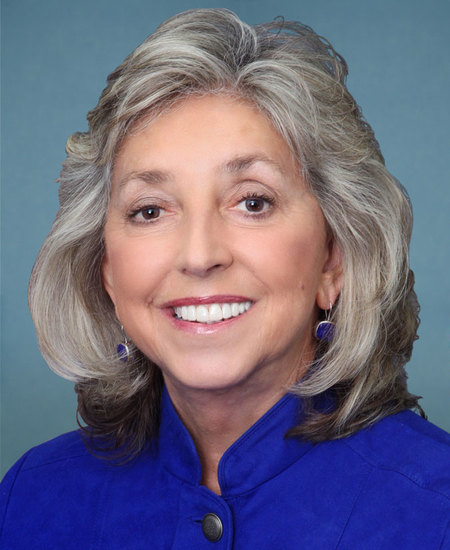
Rep. Dina Titus
Sponsored bills
Uyghur Policy Act of 2021 This bill addresses human rights issues concerning the Uyghurs and other minority groups in the Xinjiang Uyghur Autonomous Region in China. The bill authorizes the establishment of a Special Coordinator for Uyghur Issues position within the Department of State. The State Department's Bureau of Educational and Cultural Affairs may, subject to appropriations, make certain funds available to human rights advocates working on behalf of Uyghurs and members of other ethnic and religious minority groups persecuted in China. The funds, if made available, shall be used to facilitate the presence of such human rights advocates at public diplomacy forums to speak on issues related to the human rights and religious freedoms of minority groups persecuted in China. The State Department must ensure that Uyghur language training is available to Foreign Service officers. It must also ensure that a Uyghur-speaking member of the Foreign Service is assigned to U.S. diplomatic and consular missions in China.
This resolution encourages people around the world to work to achieve the goal of zero new HIV transmissions, zero discrimination, and zero AIDS-related deaths, in order to end the HIV epidemic in the United States and around the world by 2030. The resolution supports continued funding for prevention, care and treatment services, and research programs for communities impacted by HIV and people living with HIV in the United States and globally. The resolution supports continued leadership by the United States in domestic, bilateral, multilateral, and private sector efforts to fight HIV. Finally, the resolution urges other members of the international community to sustain and scale up their support for and financial contributions to efforts around the world to combat HIV.
This resolution condemns the use of starvation of civilians as a weapon of warfare. It also calls on the U.S. government to prioritize diplomatic efforts to call out and address instances where hunger and intentional deprivation of food is being utilized as a weapon of war, including efforts to ensure that security operations do not undermine livelihoods of local populations to minimize civilian harm.
This resolution condemns Iran's state-sponsored persecution of its Baha'i minority and its continued violation of the international covenants on human rights. Further, it calls on Iran to immediately release all imprisoned or detained Baha'is, and it urges the President and the Department of State to impose sanctions on Iranian officials and others who are responsible for serious human rights abuses, including abuses against Iran's Baha'i community.
VA Work-Study Improvement Act This bill updates the Department of Veterans Affairs work-study program, including by increasing the number of hours an individual may work, modifying the minimum wage requirements, and implementing an electronic timesheet.
Build Housing with Care Act of 2022 This bill establishes a competitive grant program to support co-located childcare and housing facilities. It also requires the Government Accountability Office to study the availability and affordability of childcare for residents of public housing. Specifically, the Department of Housing and Urban Development must award the grants to eligible entities, which include community development financial institutions, public housing authorities, licensed childcare providers, government entities, housing developers, and consortia of such entities. Entities must use the grants for designing, planning, constructing, acquiring, renovating, or otherwise supporting new or existing facilities where childcare and housing providers are on the same premises.
This bill establishes a program within U.S. Immigration and Customs Enforcement, Homeland Security Investigations (HSI) to provide outreach and training to HSI employees and partners who have been exposed to various forms of trauma in working with victims of human trafficking. The bill also provides statutory authority for the HSI Victim Assistance Program.
Disaster Survivors Fairness Act of 2022 This bill makes changes in the process for seeking assistance following a major disaster. Specifically, the bill directs the Federal Emergency Management Agency (FEMA) to establish and maintain a web-based interagency electronic information sharing system, to be known as DisasterAssistance.gov, to facilitate the administration of a universal application for direct federal disaster assistance and for other specified purposes. The President may provide (1) assistance to respond to the disaster-related housing needs of individuals and households who are displaced from their predisaster primary residence that is damaged by a major disaster (currently, such residences must be rendered uninhabitable); and (2) direct assistance for repairs and for cost-effective hazard mitigation measures that reduce threats to life and property or future damage. FEMA may (1) enter into a cooperative agreement to provide funding to a state agency to establish and operate a website to provide information relating to postdisaster recovery funding and resources; and (2) reimburse a state, tribal, or local government for certain costs relating to sheltering emergency response personnel. The bill extends FEMA's authority to implement state-managed housing assistance as a pilot program until the issuance of final regulations. FEMA must conduct a study and develop a plan to address the challenges associated with providing housing assistance to survivors of major disasters or emergencies. The Government Accountability Office must report on assistance issues, including improper and potentially fraudulent federal disaster assistance.
Small Project Efficient and Effective Disaster Recovery Act or the SPEED Recovery Act This act increases to $1 million the threshold for eligibility for assistance for what qualifies as a small project under the Robert T. Stafford Disaster Relief and Emergency Assistance Act, thereby allowing more recovery projects to proceed under simplified procedures. The threshold must be reviewed every three years. The Inspector General of the Department of Homeland Security must conduct an audit, and report to Congress, on whether there has been waste and abuse as a result of the change in the threshold.