

Maddy summaryThe Drone Act of 2023 strengthens federal criminal penalties for dangerous drone misuse by expanding existing laws. It specifically targets: weaponizing drones with firearms or explosives (penalties up to 20 years), using drones to transport contraband into prisons or across borders, operating drones near aircraft in restricted airspace (addressing safety risks like 875 airport sightings in 2020), and interfering with law enforcement or emergency operations. The law applies to anyone knowingly violating these rules, including those using drones for criminal activities like border smuggling or prison contraband delivery. Penalties range from fines and up to 5 years imprisonment for lesser offenses to 20 years for causing serious harm or death.
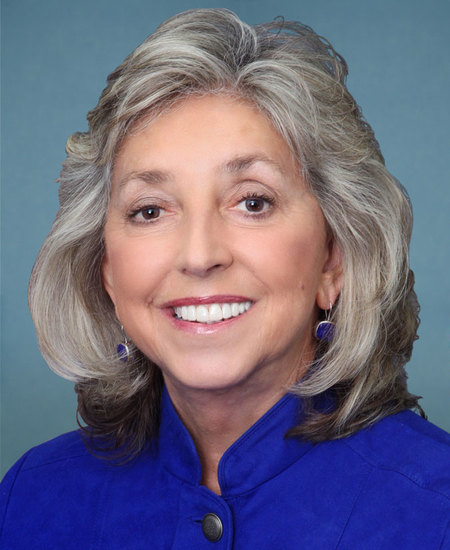
Rep. Dina Titus
Sponsored bills
Maddy summaryThe Combating Child Labor Act strengthens penalties for employers violating child labor laws under the Fair Labor Standards Act. It increases criminal fines to $500,000 or up to 10 years in prison for willful violations causing death or serious injury to children under 18, and raises civil penalties for such violations up to $700,000 per incident. The bill also requires the Department of Labor to publish an annual report detailing child labor violations, including employer names, types of violations, and trends by industry or region. This report will help track enforcement efforts and identify high-risk areas, directly affecting employers who violate child labor rules and the Department of Labor’s oversight role.
Maddy summaryHR 2912, the Airport Infrastructure Vehicle Security Act, restricts the use of federal funds for purchasing rolling stock (like baggage carts or shuttles) at airports if the manufacturer is tied to certain countries identified for trade concerns. It prohibits federal funding for contracts awarded after the bill's enactment if the manufacturer is owned by, related to, or a subsidiary of a corporation based in a country designated as a nonmarket economy, on a U.S. trade priority watch list, or under trade monitoring. The law specifically excludes minority investments as "related" but includes any ties involving Chinese-based corporations. This directly affects airport projects receiving federal infrastructure funding that would otherwise use such vehicles.
Maddy summaryThis bill creates a federally chartered National Center for the Advancement of Aviation to develop the U.S. aviation and aerospace workforce. The Center will provide grants for education and training programs, including scholarships, internships, and curriculum development for middle schools, high schools, and colleges focused on aviation careers. It will specifically support underrepresented groups and veterans transitioning to aviation careers while coordinating with government agencies to avoid duplicating existing programs. The Center must operate as a non-profit entity, maintain tax-exempt status, and submit annual reports to Congress on its activities.
Maddy summaryHRES 332 is a symbolic House resolution expressing congressional support for Ukraine's victory in its war against Russia. It affirms that U.S. policy should aim for Ukraine to prevail and return to its internationally recognized 1991 borders, with the House declaring that Ukraine's victory must be secured through NATO integration. The resolution also calls for the Russian Federation to pay reparations, global support for Ukraine's rebuilding, accountability for Russian leaders, and justice for victims of wartime crimes. As a non-binding "sense of Congress" resolution (not a law), it does not change U.S. policy but reflects the House's stance on supporting Ukraine.
Maddy summaryThe Apprenticeship Hubs Across America Act of 2023 creates a federal grant program to fund organizations (called "workforce intermediaries") that help employers establish registered apprenticeship programs in high-growth industries like health care, technology, and advanced manufacturing. These intermediaries receive competitive grants of up to $6 million each (with a 20% non-federal matching requirement) to provide employer outreach, program design support, and apprentice services, prioritizing sectors with low current apprenticeship participation. The program requires grantees to focus on expanding opportunities for underrepresented groups (such as women, minorities, and veterans) and tracks outcomes like program completion rates and post-apprenticeship earnings. Authorized at $25 million annually from 2024-2028, the bill mandates performance evaluations to determine future funding based on results in creating accessible, high-quality apprenticeships.
Performing Artist Tax Parity Act of 2023 This bill modifies the above-the-line tax deduction for the expenses of performing artists (including commissions paid to managers or agents) to provide for a phaseout of such deduction for taxpayers whose adjusted gross income exceeds $100,000 ($200,000 for joint return filers). The $100,000 phaseout threshold is adjusted for inflation annually for taxable years beginning after 2023.
Maddy summaryThe Flight Education Access Act increases federal student loan limits for students enrolled in eligible flight education programs, which prepare students for commercial pilot certification. It sets specific annual and aggregate loan limits based on a student's year of study (e.g., dependent students can borrow up to $111,000 total), and requires programs to meet a 70% completion rate after three years to maintain eligibility. The bill also creates a new $40 million annual grant program to support partnerships between educational institutions and aviation industry partners to diversify the pilot workforce and increase interest in aviation careers. It requires data collection on program completion rates and demographic information, with reports to Congress on the program's effectiveness.
Maddy summaryHR 2918, the Fair Housing for Survivors Act of 2023, amends the Fair Housing Act to explicitly protect survivors of domestic violence, sexual assault, and sex trafficking from housing discrimination. It adds "survivor of domestic violence, sexual assault, or severe forms of trafficking" as a protected class under the law, prohibiting landlords and housing providers from refusing to rent, evicting, or charging more based on this status. The bill also clarifies that discrimination based on survivor status - including denial of housing due to protective orders, shelter stays, or prior incidents - is illegal. This directly affects survivors who face barriers like denied rentals, evictions, or higher costs when seeking safe housing, addressing documented discrimination reported by 67% of survivors in New York studies. The law preserves survivors' ability to pursue other discrimination claims under the Fair Housing Act.
Raise the Age Act of 2023 This bill establishes new restrictions on the sale or transfer of certain semiautomatic firearms to individuals under 21 years of age. Specifically, this bill makes it unlawful for a licensed gun dealer, importer, manufacturer, or collector to sell or deliver a semiautomatic center-fire rifle or semiautomatic center-fire shotgun that has (or has the capacity to accept) an ammunition feeding device with a capacity of more than five rounds to an individual who the licensee knows or has reasonable cause to believe is under age 21. The prohibition does not apply if the individual under age 21 is a full-time law enforcement officer or active-duty member of the Armed Forces. The bill also requires the Federal Bureau of Investigation to report on the operation of its public access line, including a description of information sharing protocols and recommendations for improving such protocols.