

This resolution affirms the importance of free expression and freedom of the press around the world and condemns threats to these freedoms. The resolution calls on the President and the Department of State to (1) urge foreign governments to bring to justice those who threaten or attack journalists, and (2) leverage foreign assistance to help expand access to independent media in countries where authoritarian regimes control the internet.
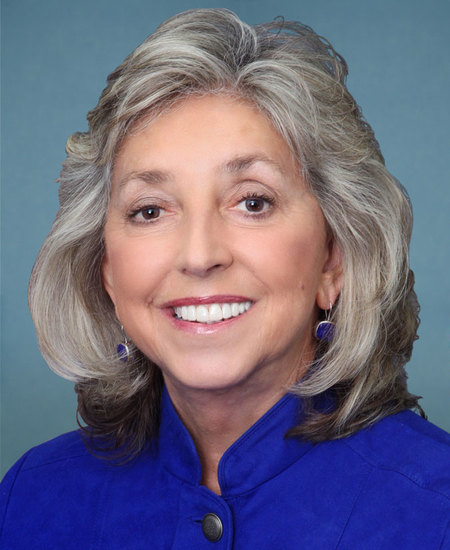
Rep. Dina Titus
Sponsored bills
Every Veteran Counts Act of 2023 This bill requires the Department of Veterans Affairs (VA) to establish and maintain a database of specified demographics (e.g., age) of veterans. The data must be in a machine-readable format and anonymized to protect sensitive personal information. The VA must provide access to the database on a publicly accessible website that is updated at least once a year. Additionally, the VA must report on the progress, challenges, performance, and opportunities of implementing its data strategy. The report must be made available on the VA's open data website in a machine-readable format.
Maddy summaryHR 3050, the Fair Adjudications for Immigrants Act, changes how immigration authorities define a "conviction" for deportation purposes. It specifically excludes dismissed, expunged, or vacated cases, probation without judgment, and cases under appeal from being counted as convictions. The bill also requires courts to issue a formal recommendation against removal before immigration penalties apply for certain convictions. This directly affects immigrants with past criminal records who have had these specific legal dispositions applied to their cases.
Maddy summaryHR 3011 establishes a 15-member task force within the Department of Defense to review and assess mental health services for active-duty military members, reservists, and their families. The task force, requiring half DOD personnel (including service surgeons and family members) and half external experts (like VA and SAMHSA staff), must submit a report within 12 months detailing improvements needed in areas like access to care, telehealth, reducing stigma, and transitioning care to veterans' services. The report will include specific recommendations for legislative or administrative changes, followed by annual progress reports to Congress over five years on implementing those recommendations. This bill creates a review mechanism but does not directly change existing mental health programs or funding.
Maddy summaryThe Protecting America's Workers Act expands workplace safety protections to public employees, including those working for state and local governments who were previously excluded from some OSHA protections. It strengthens whistleblower protections by prohibiting retaliation against employees who report safety concerns, refuse to perform dangerous tasks, or report work-related injuries. The bill requires employers to promptly report work-related deaths and hospitalizations, prohibits policies that discourage injury reporting, and mandates posting of employee safety rights information. It also increases penalties for safety violations and improves access to information for victims and families during workplace investigations. These changes apply to all employers covered by OSHA, with specific implementation timelines for state and local government workplaces.
Maddy summaryThis bill protects living organ donors from insurance discrimination by prohibiting life, disability, and long-term care insurers from denying coverage, raising premiums, or altering policy terms solely because someone donated an organ while alive. It also updates the Family and Medical Leave Act to include recovery from organ donation surgery as a qualifying health condition, allowing donors to take protected leave for this purpose. Additionally, the bill requires the Health and Human Services Secretary to update public educational materials about living donation benefits, risks, and insurance protections within six months of enactment. These changes directly affect living organ donors, insurers, employers, and healthcare systems by ensuring fair access to insurance and workplace leave.
Maddy summaryHR 2878 (CARE Act of 2023) requires federally funded research facilities (like those receiving NIH grants) to develop and publicly post adoption policies for dogs, cats, and rabbits no longer used in biomedical research. Key provisions mandate facilities to assess each animal’s health for adoption suitability, make reasonable efforts to place them through shelters, adoption organizations, or private arrangements, and publicly track adoption rates and outcomes. The bill directly affects over 240,000 companion animals used annually in U.S. research, ensuring transparency by requiring facilities to publish annual records on adoption numbers and euthanasia. It also provides legal immunity to facilities following these adoption policies, except for gross negligence.
Maddy summaryThis bill authorizes $350 million annually for fiscal years 2024-2026 to establish the "Baltic Security Initiative," a U.S. defense program focused on strengthening security cooperation with Estonia, Latvia, and Lithuania (the "Baltic countries"). It requires the Secretary of Defense to develop a strategy within one year to enhance military capabilities like missile defense, cyber resilience, long-range weapons, and coordination with NATO allies - including Poland - to deter Russian aggression and address security threats from Russia and China. The initiative operates under existing U.S. defense authorities (Title 10, U.S. Code) and mandates a report to Congress detailing how these security objectives will be achieved. The bill directly affects U.S. defense funding and the security planning of the three Baltic nations.
Maddy summaryThis bill extends the period during which survivors of Selected Reserve service members can access TRICARE Reserve Select health benefits. It changes the eligibility period from six months to three years after a service member's death. The law directly affects spouses and dependent children of Selected Reserve members who lose their sponsor. The key change is a straightforward extension of the benefit window, providing longer access to health coverage for military families.
Maddy summaryThe Child Care for Working Families Act establishes a federal entitlement program providing subsidized child care for working families with children under age 6 who are not yet in kindergarten. It creates a sliding fee scale where families at or below 85% of State median income pay no copayment, while higher-income families pay up to 7% of their income based on income thresholds. The bill requires states to develop quality rating systems for child care providers and ensures providers receive sufficient funding to meet quality standards, including wages equivalent to elementary educators. It prioritizes access for underserved populations including children with disabilities, infants and toddlers, children experiencing homelessness, and families in low-income communities. The program is funded with $20 billion for fiscal year 2024 and subsequent years through 2029.